Done!

Well, I figured it was about time I announced this on my blog (though now that I’ve added the Twitter widget to this site anyone could also have seen it there).  On Friday, April 4, 2014, I successfully defended the dissertation. Finally.  By Wednesday it will be deposited and I will officially have the rank of Ph.D.

I thought about doing some grandiose write-up about my experiences in this Ph.D. program, and the reasons why I did it, and the reasons why it turned out the way it did.  But then I remembered that I tend to avoid the graduate school advice conversations because I admit my reasons were not altogether financially and professionally sound or responsible.  And probably that’s because I don’t think that everything we do in life must be subjected to a cynical cost-benefit analysis.  And then I end up sounding like some kind of naive idealist, and who the hell needs those in today’s corporate education system?

So suffice to say, it is done, and I’m glad it is done.  For now my plans are to continue working on my topic and adding more content to this blog.  I am also working towards building a book on this subject, and I know that’s going to take a lot of time and effort over the next few months.

In the meantime, here’s the abstract:

—-

The Over-Education of the Negro: Academic Novels, Higher Education and the Black Intellectual

by

A. Lavelle Porter

Advisor: Robert Reid-Pharr

This dissertation focuses on the academic novel – a literary genre which fictionalizes the lives of students and professors in institutions of higher education. In particular this project focuses on academic novels written by black writers and which address issues in black higher education. This dissertation has two concurrent objectives: 1) to examine the academic novel as a particular genre of literature, and to highlight some specific novels on black American identity within this genre, and 2) to illustrate the pedagogical value of academic fiction. Through the ancient practice of storytelling, academic novels link the travails of the individual student or professor to a bigger story about the history and origin and purpose of colleges and universities. The “Introduction” provides a basic overview of the academic novel, the black academic novel, and an analysis of the history of black higher education through discourses of over-education. Chapter One, “Toward a Theory of the Black Academic Novel,” provides a literature review of criticism on academic fiction and makes connections with black literary criticism in order to create a framework for reading black academic novels. This chapter also includes a historical survey of black academic fiction leading up to the three novels in the following chapters, which were written after the 1980s, and which are framed by discussions of culture wars and capitalism. Chapter Two, “Culture Warriors,” is an examination of Ishmael Reed’s Japanese by Spring (1993) in the context of the “culture wars” and the development of multiculturalism in higher education. Chapter Three, “When Keeping it Real Goes Wrong,” examines Percival Everett’s Erasure (2001) and the politics of authenticity in black literary and cultural production. Chapter Four, “Homo Academicus,” is an interpretation of Samuel R. Delany’s The Mad Man (1994:2002) as an academic novel, showing how the novel articulates a queer black intellectual practice as a challenge to discourses of respectability, particularly during the HIV/AIDS epidemic. The “Conclusion” speculates on the future, and possible obsolescence, of the novel (including the black academic novel) as a literary form, and the role of black intellectuals in the digital humanities.

Ta-Nehisi Coates and Samuel R. Delany

5193MFJ7DHL

You may have noticed that Ta-Nehisi Coates has been on a tear lately. If you’re in any kind of black studies networks and you’ve been on the Internet in the past week then you’ve probably seen posts about his exchange with Jonathan Chait. Coates’s most recent response, “The Blue Period, An Origin Story” posted yesterday on April 1, is devastating, inspiring, uplifting. I want to take time to read it again, carefully, and also to listen, carefully, to the Nell Painter video that he posted with it. The article really resonated with me as someone whose first academic training was in history. I recognize many of the sources that he cited and wrote about.  I too have been trying to make sense of this same history, to try to cut off at the pass these cynical arguments about black progress and the imperatives to be “optimistic” (which is less about real optimism and more about alleviating other people’s discomforts).  Every college educated black person has heard some version of what Chait threw at him in their exchange.  We’ve had people tell us: Hey, you and your colleagues seem to be doing just fine. Why are you so angry?  We’re making progress here in America.  When are you going to let go of this bitterness and resentment?

But what really struck me about Coates’s piece is that he so eloquently grapples with the prior gaps in his own knowledge.  I’m impressed that he’s clearly been engaged in a serious study of black history, and American history, and slavery, and the place of America in a global culture and economy. And he clearly understands that education is always a work-in-progress. And he also understands that there are people on the Web now looking to build their brands off “social justice” and sell themselves as “experts” instead of seriously engaging with the meaning of this history.

I think now, four years after watching that video, and having read A History of White People, that I am a writer. And that is not a hustle. And this is not my “in” to get on Meet The Press, to become an activist, to get my life-coach game on. I don’t need anymore platforms. I am here to see things as clearly as I can, and then name them. Sometimes what I see is gorgeous. And then sometimes what I see is ugly. And sometimes my sight fails me. But what I write can never be dictated by anyone’s need to feel warm and fuzzy inside.

The whole article is a breath of fresh air in a cultural moment dominated by the wunderkind.  The web is littered with stories of 20something millionaire app developers and programmers and pundits and bloggers.  I just saw another one of those “30 under 30” articles flash across my twitter feed yesterday.  And last weekend Twitter was dominated by a non-troversy started by a 23 year old social media “activist.”  Why are we even listening to these twits?  Coates’s article is a lesson in the true humility of education. Nobody who is that young has it all figured out, not even the smartest and most accomplished ones. Learning takes time, and effort, and more time, and more effort.  It takes life experiences, it takes getting kicked in the ass a few times, and it requires constantly revisiting your prior ignorance and revising the things that you once believed to be true.

Yesterday, April Fools’ Day, was also Samuel R. Delany’s 72nd birthday.(Delany was a prodigy himself, having published nine science fiction novels in his twenties.) I’m looking forward to celebrating with him next week at Kelly Writers House in Philadelphia.  Coates’s piece actually reminded me of a passage from Delany’s excellent book About Writing, and I wanted to share it here:

“To learn anything worth knowing requires that you learn as well how pathetic you were when you were ignorant of it. The knowledge of what you have lost irrevocably because you were in ignorance of it is the knowledge of the worth of what you have learned. A reason knowledge/learning in general is so unpopular with so many people is because very early we all learn there is a phenomenologically unpleasant side to it: To learn anything entails the fact that there is no way to escape learning that you were formerly ignorant, to learn that you were a fool, that you have already lost irretrievable opportunities, that you have made wrong choices, that you were silly and limited. These lessons are not pleasant, The acquisition of knowledge – especially when we are young – again and again includes this experience.”   – Samuel Delany, About Writing, pg. 34-35

Samuel R. Delany: Another Roundtable

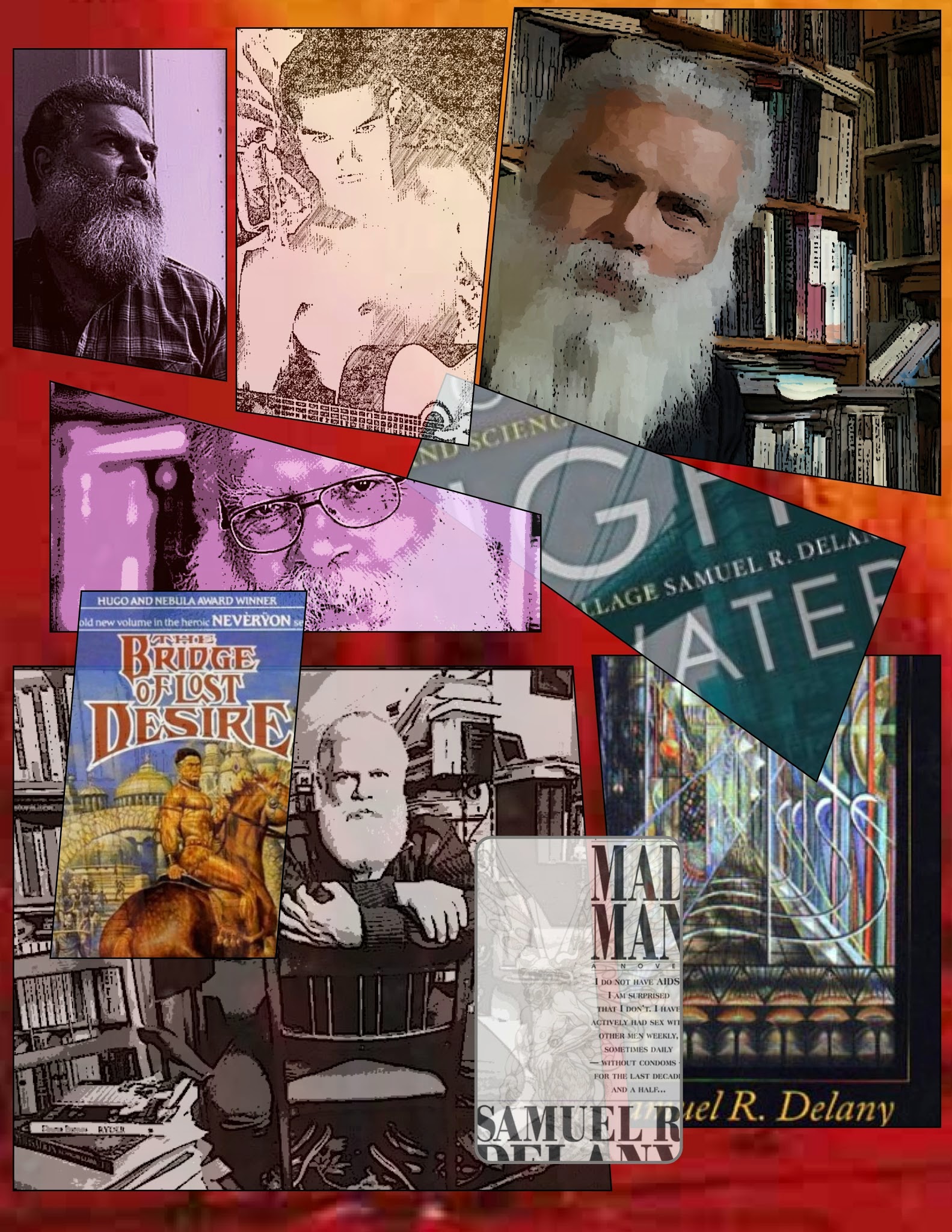
Delany Collage

Locus Magazine recently published a roundtable discussion about Samuel R. “Chip” Delany’s work, in honor of his being named by the Science Fiction Writers of America (SWFA) as the 2013 Damon Knight Memorial Grand Master.  Matthew Cheney decided to organize another roundtable to supplement and add to that discussion, and he asked me and several other writers to participate.  It is now published on The Mumpsimus blog.  Check it out, read it, and feel free to add to the conversation.

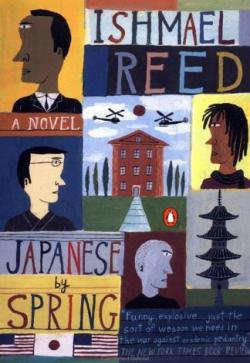
Academic Novel: Japanese by Spring (Draft)

japanese by spring - Cover 3_0

Here’s something that I’ve been meaning to do for a while. At the bottom of this post is an earlier and much shorter draft of my chapter on Ishmael Reed’s Japanese by Spring.  I presented this version back in November 2011 as part of the University of Pennsylvania’s conference Intersections: A Conversation Between African American and Asian American Studies.  It was posted on the conference website along with the other papers, all of which can still be accessed here.  Since it has been floating around on the web for a while (and shows up pretty high in the Google searches on Japanese by Spring) I wanted to go ahead and put it directly on this blog. Stupidly, I didn’t put my name on the original .pdf, not realizing it would be uploaded to a public conference site.  (A lesson to all the kids out there.)

Again, this was just a draft, and a shortened draft for the conference.  The final chapter version is about 40 pages with a more substantive discussion of The Culture Wars. I also added some commentary from Michele Wallace’s excellent essay “Ishmael Reed’s Female Troubles” from her book Invisibility Blues: From Pop to Theory. (The essay originally appeared in the Village Voice in 1986). And thanks to the UPenn conference I also got keyed into some more scholarship on Afro-Asian studies, so there’s more about that in the final chapter as well.

The chapter title is now: “Culture Warriors: Multiculturalism and the Black Professor in Ishmael Reed’s Japanese by Spring.”

So here’s the shorter draft version from 2011:

Black(ness) No More: Academia and the Culture Wars in Ishmael Reed’s Japanese by Spring

Storifying the Academy


STORIFYING THE ACADEMY: A PRIMER ON ACADEMIC FICTION

Back in September 2013 Inside Higher Ed published an article by Todd C. Ream about the show The Big Bang Theory and its depiction of tenure.  I hadn’t watched the show before and didn’t even realize it was about professors.  But I probably should have known about it. I study academic fiction – popular depictions of academia in novels and films and other creative forms – and I’ve tried to stay on top of the latest examples in the genre.  That article prompted a brief exchange among some academics on Twitter about other depictions of higher education in popular culture, and some of them pondered whether there had been any critical analysis on the subject.

I’ve seen these conversations played out online many times before.  Here’s how it usually goes:  Someone posts a listicle on what they believe to be the Top 10 academic novels or the Top 10 academic films.  Then a commenter comes along and writes, “Ooh, nice list, but what about [insert academic novel or film that they liked].”   And then someone else comes along and says, “Yeah, and what about [insert other academic novels and films].” And on and on it goes.

In the interest of moving these conversations forward, I thought it might be helpful to take a look at the field of academic fiction criticism.  Yes, there is such a thing.  Several scholars have written books and articles analyzing these depictions of academia in popular culture.

When it comes to academic novels the best place to start would be John Kramer’s thorough bibliography The American College Novel: An Annotated Bibliography, first published in 1981 and updated in 2004. The updated version lists 648 novels ranging from major novels written by critically acclaimed novelists and published by big corporate publishing houses, to independently published first novels by minor authors.  The bibliography is broken down into “student-centered” and “staff-centered” novels. Some critics in this field like to make a distinction between college novels which began to take form around the early 20th century, and which were mostly about the fleeting years of undergraduate life, and academic novels a genre that came about in the 1950s with books like Kingsley Amis’s Lucky Jim and Mary McCarthy’s Groves of Academe.  The latter novels tend to be about the “lifers” – grad students, professors and administrators, for whom academia is a career.  The distinction can be helpful sometimes, but I’ve tried not to be too deterministic about it.

Kramer also published another annotated bibliography, Academe in Mystery and Detective Fiction (first published in 1983, and expanded in 2000), which covers academic novels with mystery or detective plots set in academia, a sub-genre that includes one of the all-time greatest titles for any academic novel ever, Death in a Tenured Position (1986) written by Carolyn Heilbrun under her nom de plume Amanda Cross.

While the Kramer bibliographies focus on the United States, the academic novel really took form in England in the 19th century, and the earliest works were dominated by Oxford and Cambridge. John Dougill’s Oxford in English Literature: The Making and Undoing of the English Athens (1998) chronicles the many creative depictions of Oxford in novels, poetry, plays and films.  Most critics agree that the first college novel in the U.S. was Nathaniel Hawthorne’s Fanshawe (1828) a book based on his experiences as a student at Bowdoin College in Maine.  Early studies of the academic novel covered the genre in England and the U.S. and they included works such as Mortimer Proctor’s The English University Novel (1957) and John Lyons’s The College Novel in America (1963).  Then came books such as Ian Carter’s Ancient Cultures of Conceit (1990), Janice Rossen’s The University in Modern Fiction (1993), Kenneth Womack’s Postwar Academic Fiction (2002) and Elaine Showalter’s Faculty Towers: The Academic Novel and its Discontents (2005), which have all added more theoretical approaches to the genre.  There have also been some substantial critical articles on academic fiction such as “The Rise of the Academic Novel” a 2012 article in American Literary History by Jeffrey J. Williams in which he provides some statistical analysis of the growth of the academic novel, based in part on the data from the Kramer bibliographies.   (As you can tell, there continues to be an Anglo-American bias at work here, and one of the biggest critiques of this body of literature is that it needs to be more global.)

The interest in academic novels remains strong.  I’ve been astonished by the growing interest in the John Williams novel Stoner, a book I have written about before.  It was first published in 1965, but recently reissued in The New York Review Books Classic series in 2003, and it has been tearing up the literary Internet over the last five years as more and more readers have discovered it, and assigned it in classes and blogged about it.  There have been newer entries into the genre in recent years such as Mat Johnson’s Pym and Susan Choi’s My Education, not to mention a whole slew of self-published e-book romance novels and mystery novels set in academia.  (I can’t say I know too many of them well right now, but I’m working my way there slowly.)

As far as film goes, John Conklin’s Campus Life in the Movies: A Critical Survey from the Silent Era to the Present (2008) is the best book-length survey of college films, identifying 681 films that feature college campuses in some form.  The only beef I have with Conklin’s book is that he chose to exclude films about graduate students and professors in favor of movies about undergraduate life.  It’s a minor quibble, but leaves out great films such as the 2003 adaptation of Philip Roth’s The Human Stain, or the Mike Nichols directed 2001 HBO film Wit, based on the play by Margaret Edson and featuring Emma Thompson as John Donne scholar Vivian Bearing.  Wit is a wonderful film, that I consider among the best depictions of the scholarly life.  I’ve made a couple of feeble attempts at listing academic films on my own blog.  At some point I hope to write about more recent additions to the genre, including the stellar Israeli film Footnote (2011) about a pair of father and son Talmud scholars involved in a painful academic award mix-up, and the less than stellar, but still interesting, 2013 Tina Fey comedy Admission, which is mostly worth seeing for Lily Tomlin’s performance.

So what’s the point of all this?  For much of its history, the academic novel has been criticized as a trivial genre, a largely intramural body of literature only of interest to a limited, snobby world of academic elites and written by bitter professors who wanted to hash out petty disputes through thinly veiled caricatures of their institutions and colleagues.  Indeed, most of these critics acknowledge that the field of academic fiction is cluttered with just such books.  Nevertheless, these critics have also given us many reasons for why this genre deserves serious consideration, and have also proven that the settings of these stories are not as limited to elite spaces as they once were. The genre has evolved as the population of students at colleges and universities has grown. For me, the appeal of the academic novel is in the ancient practice of storytelling. I think people turn to academic novels and films because these works help us to understand the meaning of higher education by communicating what it feels like to be connected to these institutions.  Academic fiction speaks to the aspirations, disappointments and triumphs that students and professors experience in their academic lives, and it links the travails of the individual student or professor to a bigger story about the history and origin and purpose of higher education.

Just as the website Storify helps Internet users to collect disparate digital material from across the web and organize it into a singular, digestible narrative, the academic novel also takes the disparate information of academic life – the statistics, the history, the anecdotes, the experiences, the impressions – and turns all of that information into a compelling narrative that communicates to other people what it means to be a part of these institutions.

When high school students select a college to attend, they not only look at the facilities and the rankings and the graphs showing salaries of recent graduates, but inevitably they want to have conversations with students at these schools to try to get a sense of what it feels like to go there.  What they really want are the compelling stories about the institution, something beyond the data that will help them decide which school will be most fulfilling for them.  Like many other graduates of black colleges the TV show A Different World inspired my own decision to attend an HBCU. And in the summer before I went to Morehouse I rented Spike Lee’s School Daze from the local Blockbuster and watched it several times over. (There’s been talk of a sequel to the film swirling around for years. We’ll see if anything comes of it.)

I realize my topic is ridiculously reflexive, making me some kind of an academic ourobouros or a Möbius strip – an academic writing about academics writing about academia.  Yes, I’ve been asked before if I’ve considered writing an academic novel myself, and yes, it has occurred to me that it might be a head-trip to read an academic novel about a graduate student writing a dissertation on academic novels.  I’m not sure I’ll ever get to it, but I’m not afraid to throw that out there as a challenge.  If someone wants to scoop me on it, you’re welcome to it.

So has this subject really gone too far? Despite our claims about the critical importance of the academic novel, and its relevance to issues beyond the Ivory Tower, aren’t we critics of academic fiction and authors of academic novels, at the end of the day, really just a bunch of insular navel-gazers?  Maybe.  But I suspect that as long as people keep on going to college there will always be someone willing to tell her story about it, and someone else who will want to read it, and then maybe, just maybe, a curious critic will wander along later and find that book and feel an urge to read it, and write about it.