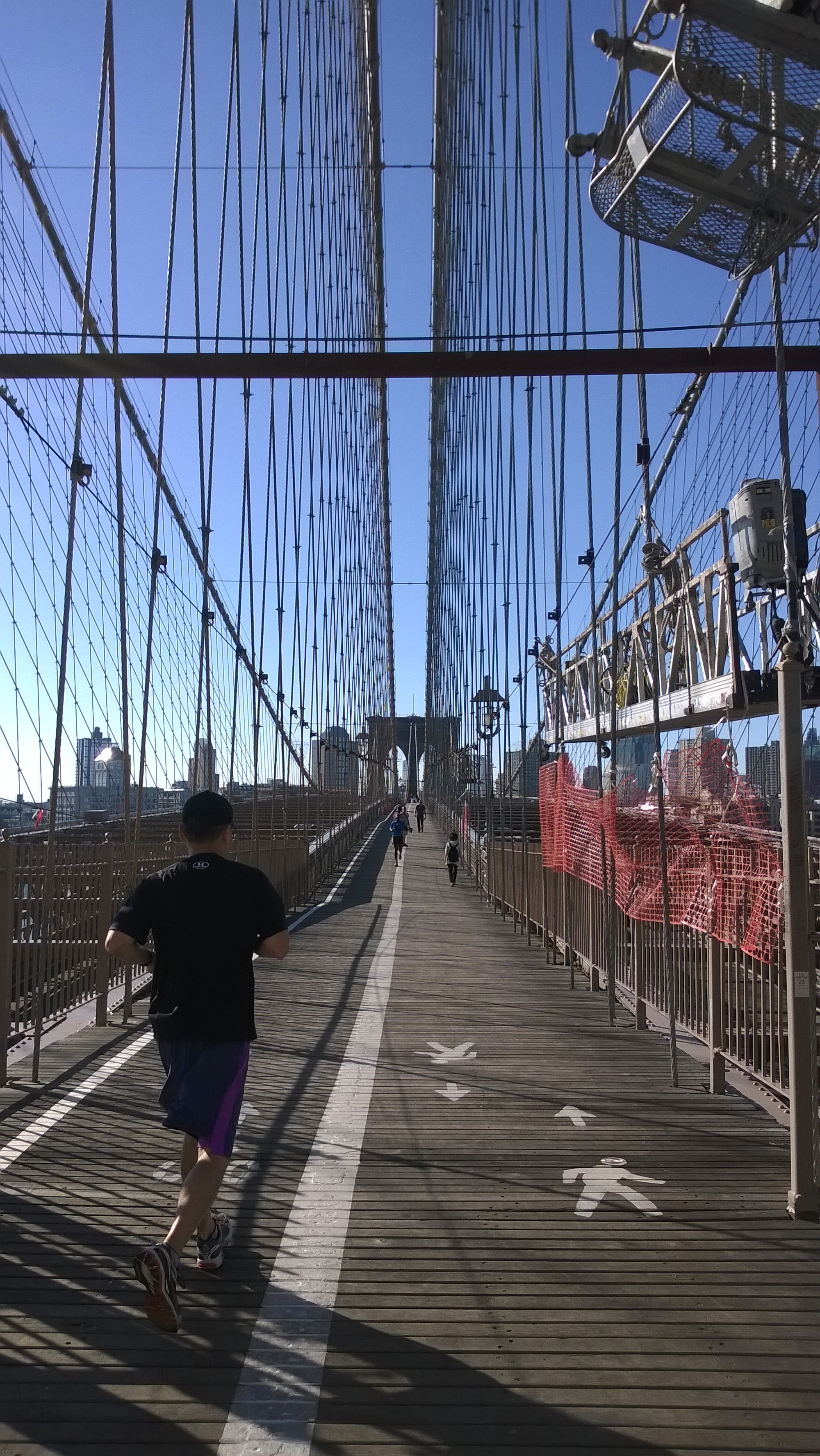
It’s been a month since I’ve updated the blog. For the last month or so I’ve been immersed in other writing projects. I submitted an article to a scholarly journal, I’ve worked on another creative project, and I spent a couple of weeks heavily immersed in studying The Brooklyn Bridge and Brooklyn Heights in order to lead a new tour that I just started last week. Through this process, and through observing how some other writers and academics use social media, I’ve learned that I’m just not very good at sharing my work-in-progress. From my observations, it seems that the most effective academic and literary social media users are those who can constantly update about what they are reading and writing. I just can’t do that. I’ve found that posting about my research online while I’m working on it can be a distraction for me until I get it into some kind of concrete form. It involves too much distraction in the way of other stories and controversies flooding my attention. And I’ve found that when someone actually does take an interest in my work, that can also sometimes bring on more obligations to interact. Furthermore, there are times when I just don’t want the whole world to know everything single thing that I’m doing and thinking, an attitude which seems increasingly quaint these days, and an attitude which, I believe, will eventually be seen as passive-aggressive and threatening. (“What are you hiding???!!! Why don’t you want people to know where you are and what you’re doing???!!!”)
My Brooklyn Bridge study has been instructive. I now have a two-hour tour that I feel fairly confident about, but it took a while to get there. I’ve been working on this for a while, but I really committed myself to it in the two weeks leading up to my first tour on July 8. I read David McCullough’s The Great Bridge, studied the internal scripts from my company, watched the Ken Burns documentary a few times, and consulted other books on the subject so that I could at least bluff my way through the engineering and architectural parts. I wrote a script, edited it, and then pared it down to two compressed pages that I can carry with me and consult on the tour route for facts, dates and quotes. And I’m still working on editing the script. I’m always adding and subtracting from tours. They’re never really “finished.” All along I felt little inclination to share all this information online, until now.
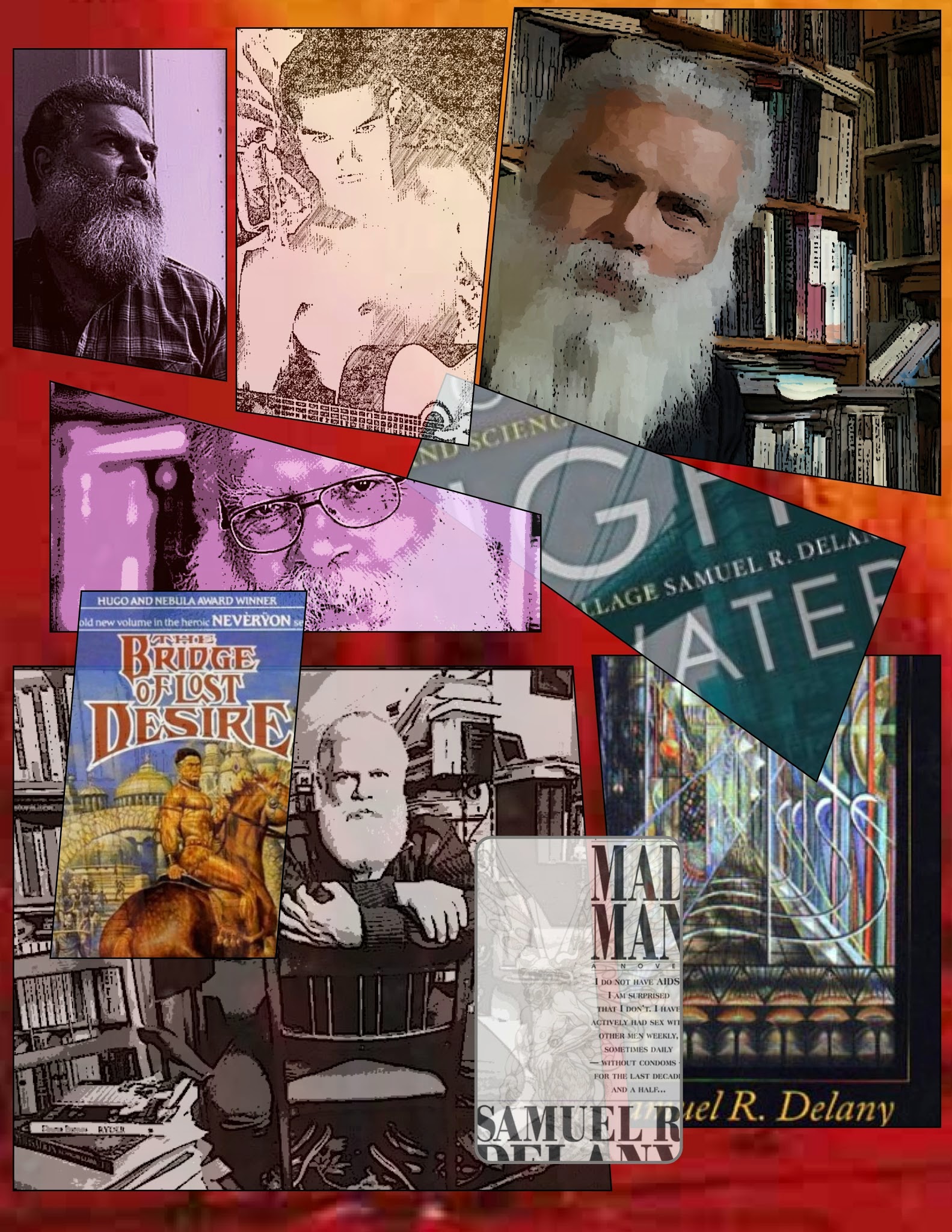
I’m not even sure how much longer I’ll do the Bridge tour. The fall approaches and I probably won’t be doing tours that much after August. (More about that later.) But the information has been helpful. Even though I knew that my tour guiding career might be winding down this summer I wanted to learn this tour because I thought it might be helpful with other research and writing that I’m doing. Studying for this tour sent me back to Samuel R. Delany’s novella Atlantis: Model 1924, which contains scenes on the Brooklyn Bridge, including an imagined meeting between the main character, Sam (based on Delany’s father), and the poet Hart Crane. I published a short article about Delany’s Atlantis in The Annals of Scholarship issue on Delany’s work, “Cruising the Disciplines.” (Which, unfortunately, is not available online, but can be ordered here). There are other literary connections to this tour as well, including Arthur Miller, Truman Capote, Norman Mailer, and Walt Whitman, all of whom have points of contact in Brooklyn Heights.
So I’m not sure what this all means for the writing part of my career. I wish I were better at doing that sort of sharing because it would probably mean a better online profile for me. But I can’t help it. I just find too much digital engagement a nuisance when I’m working on a piece of writing. I’d be much better off if I were able to tweet and blog about every book and article I’m reading and every film I’m watching, and then collate all of that into longer pieces of writing, but my mind doesn’t seem to work that way. So, the best I can do are these periodic updates about what I’m working on. Maybe I’ll get better at it as time goes on.
Note: You can watch Samuel Delany reading from Atlantis: Model 1924 and other writings in this series of videos filmed at Judson Memorial Church in 1999, originally released as Atlantis and Other New York Tales: https://www.youtube.com/playlist?list=PLC293E246B84BFC3D
Recently, I sat down with David Parsons for his podcast The Nostalgia Trap. As he describes it: “This podcast features interviews with academics, writers, poets, artists, filmmakers, and all sorts of other interesting folks, using their personal biographies as the starting point for wide-ranging conversations about the state of our world. By filling in the potholes on Memory Lane, we hope to see the road ahead more clearly.”
You can access the Episode 9 interview with me on The Nostalgia Trap website. This episode and other episodes of The Nostalgia Trap can also be downloaded on iTunes.
Locus Magazine recently published a roundtable discussion about Samuel R. “Chip” Delany’s work, in honor of his being named by the Science Fiction Writers of America (SWFA) as the 2013 Damon Knight Memorial Grand Master. Matthew Cheney decided to organize another roundtable to supplement and add to that discussion, and he asked me and several other writers to participate. It is now published on The Mumpsimus blog. Check it out, read it, and feel free to add to the conversation.
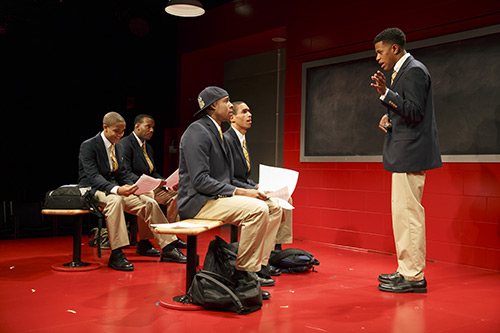
On Tuesday night I went to see Choir Boy written by Tarell Alvin McCraney and directed by Trip Cullam, now playing at the Manhattan Theater Club through August 4th.
The play certainly resonated with my interests in the history of black education, and I found it to be a lively and intelligent exploration of complex issues related to blackness, sexuality, music and culture. Being a graduate of an all-male historically black college (and one with a world-renowned glee club at that), I experienced many feelings of familiarity throughout the hour and half that we were there, feelings that resonated through the night and into the following days. I am deeply grateful to my friend Jordan for telling me about the play and inviting me to go see it.
Choir Boy is set in the Charles R. Drew Prep School for Boys, an all-male black boarding school in the South. The school is about to celebrate its 50th anniversary. The choir is an important part of the school’s project of racial uplift, and the play gestures to the historical significance of choirs in the history of black education. The Fisk Jubilee Singers is perhaps the most iconic of these black college choruses which were used to demonstrate the talent and discipline of black students, express the genius of black music, and to appeal to wealthy white philanthropists for support of these institutions.
The play features an openly gay lead character named Pharus Young (played by the wonderfully talented Jeremy Pope), who is the student director of the school’s acclaimed choir. “Flamboyant” might be a lazy and stereotypical term to describe him, but in this case it is precisely Pharus’s outgoing and energetic personality that animates the play and antagonizes other characters in the production. The playwright deftly uses this characterization to explore so many critical questions about black masculinity.
Pharus is among four other characters in the play who are in the school’s choir. The show begins with him singing the school’s alma mater when he is interrupted by an off-stage voice who calls him a “sissy” and a “faggot ass nigga.” This causes Pharus to stumble in the middle of the song. The school’s headmaster Dr. Morrow (played with booming gravitas by Chuck Cooper), did not hear the slur, and reprimands Pharus for flubbing the song at a critical moment in the commencement ceremony for that year’s graduating class. (The students in the play are ending their junior year and heading into their senior year). We find out that the verbal assault came from Dr. Morrow’s nephew Bobby Morrow, a fellow student who is Pharus’s macho adversary. The slur lends an air of tension from the outset, and it gets repeated a few more times throughout the play.
The production overflows with the sounds of black music, and particularly focuses on the history and meaning of the “Negro spiritual.” In one classroom scene Pharus delivers a stirring monologue about the meaning of spirituals and makes an argument that challenges idea that spirituals were always embedded with codes that helped slaves escape to freedom. I’m still not sure how well that point works in the play. Having studied black religion and history I was aware of this particular discussion, but I wondered how well that argument translated to audience members who may know less about the history of Negro spirituals. At the time I also felt that the whole argument was forcefully wedged into the play in an unnatural way. However, the discussion does help to escalate the conflict between Bobby and Pharus, because Bobby is so invested in the truth of spirituals as a practical tool of resistance, a side effect of his macho ideals of black manhood. The argument between the two is an example of complicated critical discussions about black aesthetics among scholars in African-American Studies (and Africana Studies), and about the “functional” nature of black art. Again, the gender representation is also important here, as Pharus makes an argument about black art that some might call “decadent” because he sees value in black creative expression as an end in itself, rather than seeing the need to justify art as a practical and functional tool of some larger political agenda. It is an argument a little more complex than a 100 minute play can handle, but I appreciated the attempt to bring it in. As I have thought about it afterwards I now have a better appreciation of how this scene relates to the rest of the play.
My criticism of the way this argument works in the play speaks to a larger problem of cohesion. The narrative at times felt fractured. Storylines that I hoped would get a more satisfying resolution never do. Songs sometimes erupt without much narrative framing. And yet, it is the music that is the thread which holds it all together. I loved the way that black music, not just gospel, but also hip-hop and R&B, is used as part of the play’s textual background. Clips of contemporary music by Frank Ocean and others boom throughout the theater as the characters change the set between scenes. And in a couple of scenes toward the end of the play, R&B song lyrics play a vital role in helping the characters to express troublesome feelings that they are otherwise reluctant to vocalize. Though music did not always flow as seamlessly through the storyline as I wanted it to, there were definitely some potent ideas evoked and explored here, and the singing was always powerful and arresting.
After absorbing the play, and having a couple of drinks with my friend at the Ninth Avenue Saloon, I walked out into the hot, humid Manhattan evening bumping my way through the aggravatingly slow crowds of tourists in Times Square. As I stood on the crowded Q train back to Brooklyn, my mind turned to a recent article written by Jafari Sinclaire Allen, a professor at Yale who taught the first LGBT studies course at Morehouse College last semester. Allen wrote a Huffington Post article “On a Black Queer Morehouse Commencement” in response to President Obama’s graduation address at the school this spring. As Allen points out in the beginning of the piece, both Michelle and Barack Obama have been criticized for comments made at their commencement speeches this spring, comments which some critics have interpreted as condescending in that they included a chastising tone that was not part of the Obamas’ usual commencement speeches at predominantly white schools. Ta-Nehisi Coates wrote a provocative piece in The Atlantic which explored the class politics at work in the Obamas’ HBCU speeches. But Jafari Allen goes on to praise President Obama for his daring acknowledgement of the presence of gay men in the Morehouse community, a particularly important act at a school which is seen as a bastion of black manhood, and at a school which has struggled to deal with issues of homosexuality and gender expression. (Vibe magazine’s sensational 2010 article “The Mean Girls of Morehouse” ruffled more than a few feathers.) Jafari Allen’s article goes into detail about how the politics of respectability plays such an important role in all of this. Many black folks are fearful that black gay men reflect badly on the image of the black community, and black LGBT people are often the targets of certain black nationalist ideas about the strong black family, reproduction, and appropriate manhood and womanhood.
Choir Boy addresses these ideas of gender and respectability at several points throughout the play. Dr. Morrow and the other boys criticize Pharus for the way that he talks and acts. In one stunning line, Dr. Morrow looks at Pharus with a look of disgust and says “your wrist”, a reminder of his embarrassing effeminacy. Pharus responds to him: “so is this all about my wrist?!” In a way, yes, it is! His “limp wrist” is a great symbol for certain expectations of black manhood and illustrates how any outward expression of homosexuality is seen by some as a threat to those expectations. Men who do not conform to norms of masculinity are often ostracized from the black community. And yet the black church and the gospel music industry has at times provided a small space for alternative forms of gender expression. Anyone who grew up in the black church is familiar with the “church sissy” whose sexuality may be an open secret, but who is given a “pass” because of his musical talents…just as long as he never explicitly says “I am gay and I love men.” And I wish I could say this is just an issue among straight homophobes, but even within the black gay community effeminate men are often devalued, and gay men who are “straight acting” are assigned a higher social and sexual value.
But I hope I am not giving the impression that these characters in the play are simply “types.” What was exciting about the play is that all of the characters are presented with intelligence and complexity. While Dr. Morrow is critical of Pharus, he is not a mean-spirited villain and we see his compassion for all the boys in the school. Like many black folks of the older generation, he is confused as to how to deal with the changes in the culture, including the acceptance of homosexuality, or their enthusiastic use of “The N Word.” Likewise, some of the most touching moments come in the friendship between Pharus and his straight roommate Anthony, a strapping straight baseball player who befriends and accepts Pharus and is one of the few people who does not expect him to change who he is. And Pharus himself is not a one-dimensional victim either. We get to see him being nasty and vindictive and condescending to the other boys, even though the play ultimately comes down on his “side.”
Most of all, the play works because it is a relatable coming of age story about the confusion of adolescence, a story that transcends race and culture. The dialogue is sharp and lyrical and often hilarious, and is delivered by the actors with skill and impressive timing. And these choir boys can “sang” ya’ll! The musical talent on stage is formidable and shines throughout the whole story.




 THE BLACKADEMIC LIFE: THE BLOG