On Blogging and the Brooklyn Bridge

WP_20140705_031

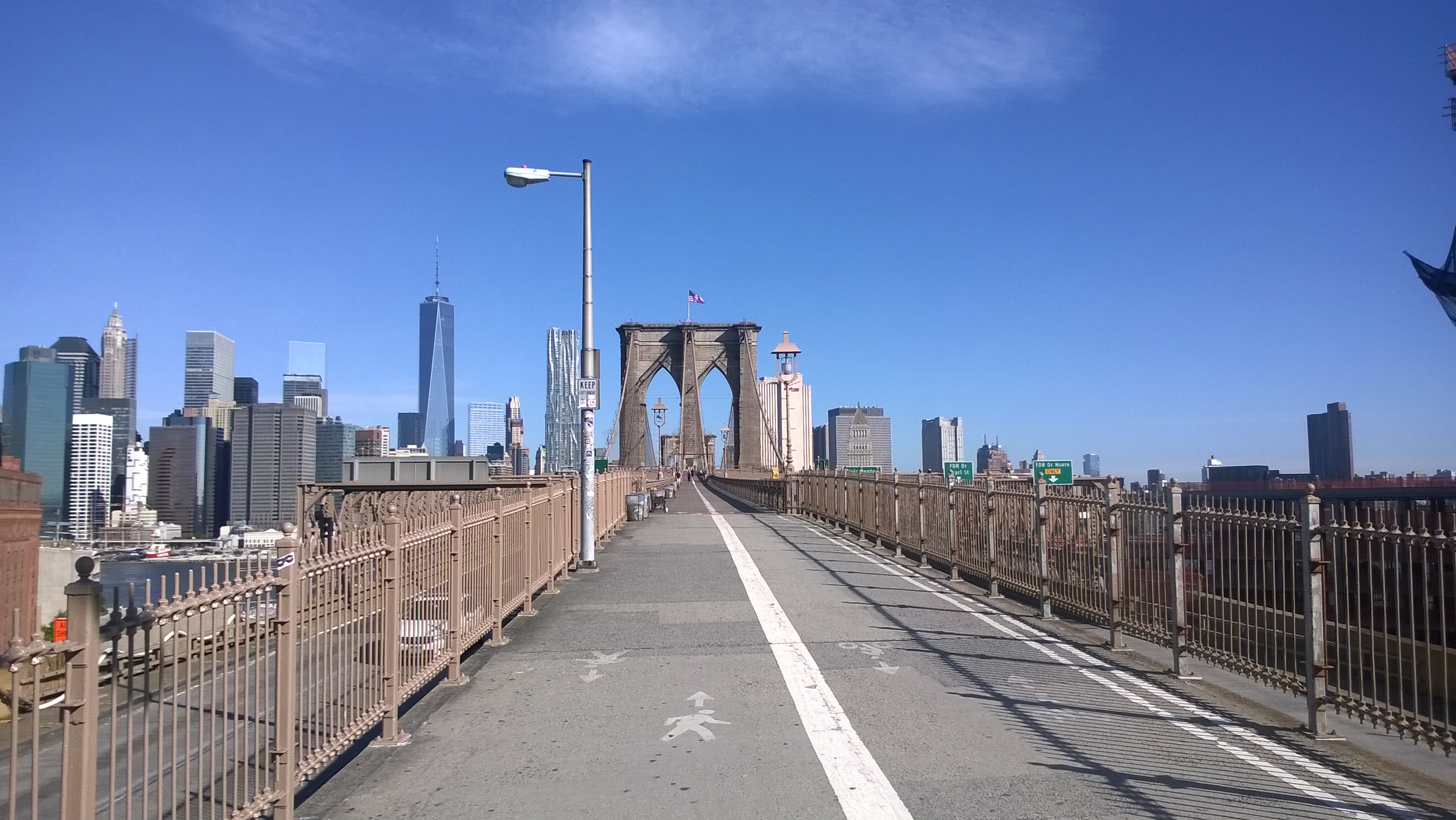
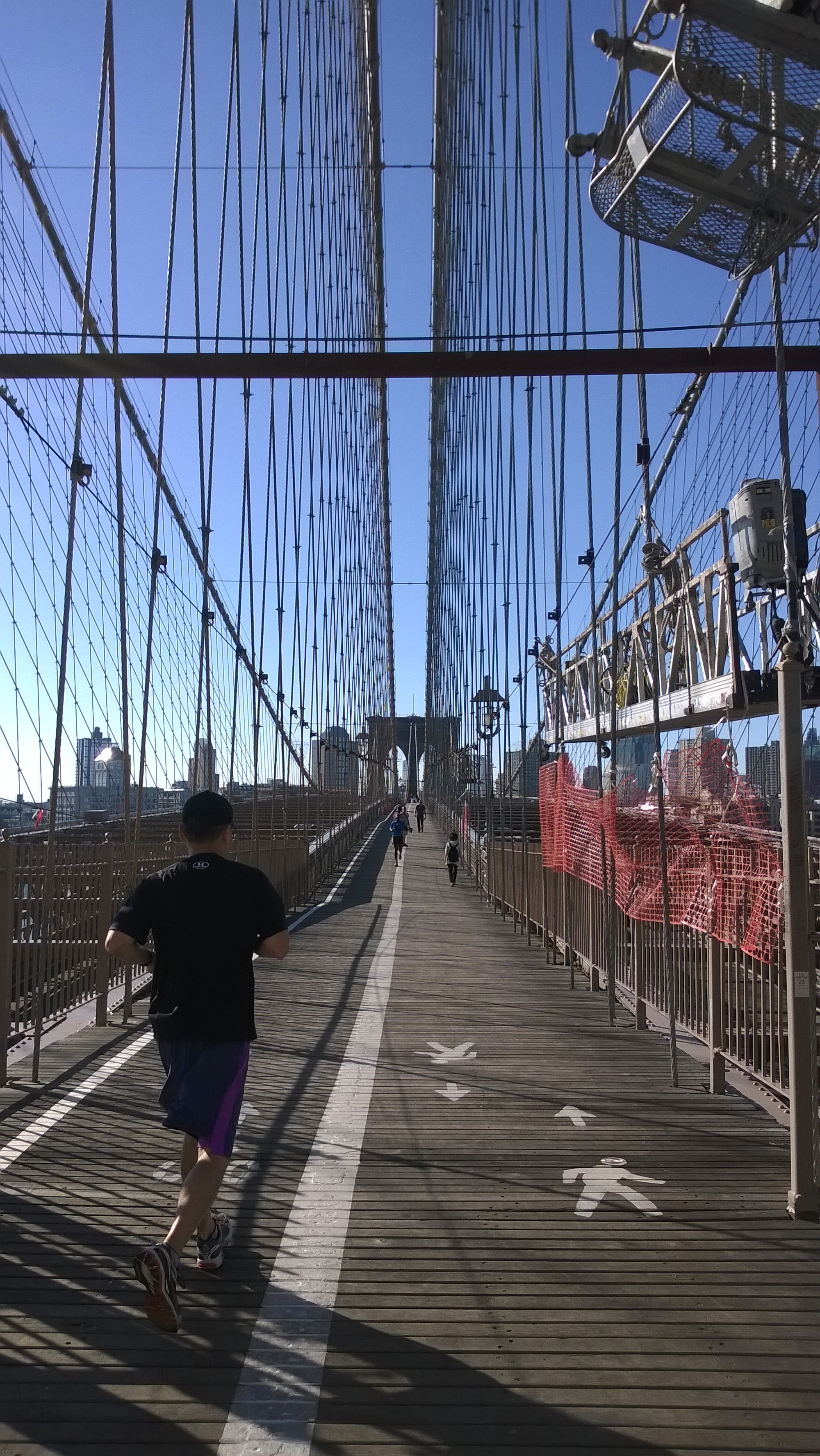
It’s been a month since I’ve updated the blog. For the last month or so I’ve been immersed in other writing projects. I submitted an article to a scholarly journal, I’ve worked on another creative project, and I spent a couple of weeks heavily immersed in studying The Brooklyn Bridge and Brooklyn Heights in order to lead a new tour that I just started last week. Through this process, and through observing how some other writers and academics use social media, I’ve learned that I’m just not very good at sharing my work-in-progress. From my observations, it seems that the most effective academic and literary social media users are those who can constantly update about what they are reading and writing. I just can’t do that. I’ve found that posting about my research online while I’m working on it can be a distraction for me until I get it into some kind of concrete form. It involves too much distraction in the way of other stories and controversies flooding my attention. And I’ve found that when someone actually does take an interest in my work, that can also sometimes bring on more obligations to interact. Furthermore, there are times when I just don’t want the whole world to know everything single thing that I’m doing and thinking, an attitude which seems increasingly quaint these days, and an attitude which, I believe, will eventually be seen as passive-aggressive and threatening. (“What are you hiding???!!! Why don’t you want people to know where you are and what you’re doing???!!!”)

WP_20140705_002

My Brooklyn Bridge study has been instructive. I now have a two-hour tour that I feel fairly confident about, but it took a while to get there. I’ve been working on this for a while, but I really committed myself to it in the two weeks leading up to my first tour on July 8. I read David McCullough’s The Great Bridge, studied the internal scripts from my company, watched the Ken Burns documentary a few times, and consulted other books on the subject so that I could at least bluff my way through the engineering and architectural parts. I wrote a script, edited it, and then pared it down to two compressed pages that I can carry with me and consult on the tour route for facts, dates and quotes. And I’m still working on editing the script. I’m always adding and subtracting from tours. They’re never really “finished.” All along I felt little inclination to share all this information online, until now.
WP_20140706_001
I’m not even sure how much longer I’ll do the Bridge tour. The fall approaches and I probably won’t be doing tours that much after August. (More about that later.) But the information has been helpful. Even though I knew that my tour guiding career might be winding down this summer I wanted to learn this tour because I thought it might be helpful with other research and writing that I’m doing. Studying for this tour sent me back to Samuel R. Delany’s novella Atlantis: Model 1924, which contains scenes on the Brooklyn Bridge, including an imagined meeting between the main character, Sam (based on Delany’s father), and the poet Hart Crane. I published a short article about Delany’s Atlantis in The Annals of Scholarship issue on Delany’s work, “Cruising the Disciplines.” (Which, unfortunately, is not available online, but can be ordered here). There are other literary connections to this tour as well, including Arthur Miller, Truman Capote, Norman Mailer, and Walt Whitman, all of whom have points of contact in Brooklyn Heights.

So I’m not sure what this all means for the writing part of my career. I wish I were better at doing that sort of sharing because it would probably mean a better online profile for me. But I can’t help it. I just find too much digital engagement a nuisance when I’m working on a piece of writing. I’d be much better off if I were able to tweet and blog about every book and article I’m reading and every film I’m watching, and then collate all of that into longer pieces of writing, but my mind doesn’t seem to work that way. So, the best I can do are these periodic updates about what I’m working on. Maybe I’ll get better at it as time goes on.

WP_20140705_022

Note: You can watch Samuel Delany reading from Atlantis: Model 1924 and other writings in this series of videos filmed at Judson Memorial Church in 1999, originally released as Atlantis and Other New York Taleshttps://www.youtube.com/playlist?list=PLC293E246B84BFC3D

The Nostalgia Trap

Image


Recently, I sat down with David Parsons for his podcast The Nostalgia Trap.  As he describes it: “This podcast features interviews with academics, writers, poets, artists, filmmakers, and all sorts of other interesting folks, using their personal biographies as the starting point for wide-ranging conversations about the state of our world. By filling in the potholes on Memory Lane, we hope to see the road ahead more clearly.”

You can access the Episode 9 interview with me on The Nostalgia Trap website.  This episode and other episodes of The Nostalgia Trap can also be downloaded on iTunes.


Reading Long Division in Mississippi

longdivisionbook

Reading Long Division in Mississippi

“Is it a book for dubs or a book for us?”

“Us mostly,” I told her. “But it’s complicated. It’s a book for us and a few dubs, I guess.”

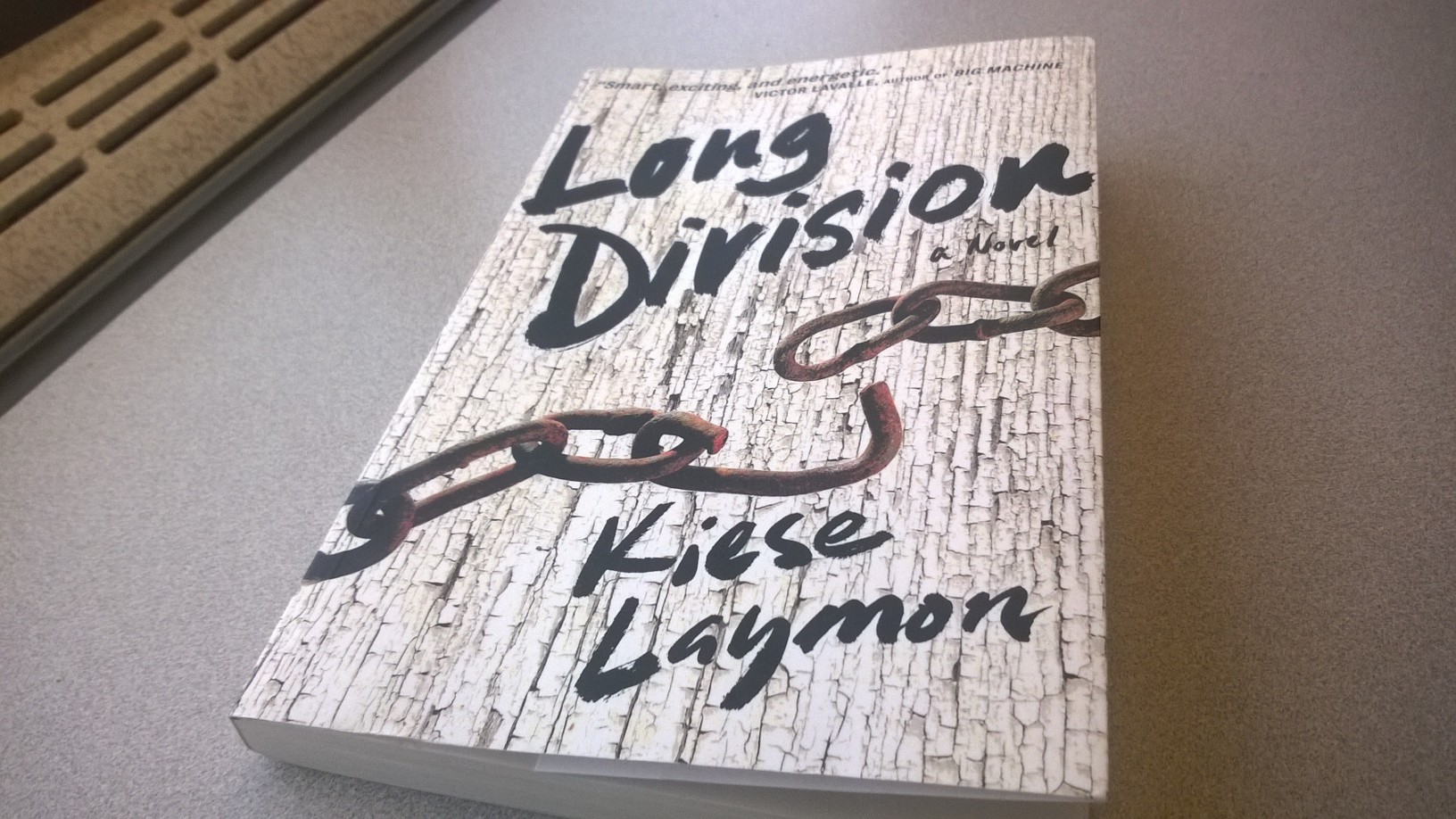
There’s not much I can say about Kiese Laymon’s Long Division that hasn’t already been said. The novel has been well-received critically, and having read it three times now I personally believe it deserves every sentence of these accolades. Zandria Robinson’s take on the novel on New South Negress probably comes closest to my own feelings about it. Like her, I also wanted to sit with the book for a while and absorb it before I attempted to put together any kind of coherent public thoughts on it. Being that it’s a novel written by a young black male English professor from Mississippi, and which deals with hip-hop and time travel and language (among many other things), I knew this was a novel that I would have to read and reckon with. Even now I think I can only provide some partial comprehensions and incomplete understandings. But that feels OK. I think this is a book that invites re-reading and one I will come back to again and again as I hear from others who have read it. It is a novel that I am looking forward to putting it into that all-important laboratory of the classroom, to see how students (especially the ones younger than myself) respond to it.

Long Division is a story about a 14-year-old kid named Citoyen “City” Coldson, and it begins in 2013, in Jackson, Mississippi, where City and his classmate LaVander Peeler are preparing for a televised competition “Can You Use that Word in a Sentence”, a contest that requires students to use an unusual word in a “correct, appropriate and dynamic” sentence. The novel starts with Coldson and Peeler busting crude jokes on each other in the way that teenagers often do. Right away, you get the sense that this is a novelist with an ear for the dialogue of youngsters. Like the best episodes of South Park Laymon captures that dynamic vulgarity that teenagers throw at each other when adults aren’t around. Early in the story the arrogant LaVander Peeler flexes his sentence-making muscles to signify on City:

“African Americans are generally a lot more ignorant than white Americans, and if you’re an African-American boy and you beat not only African-American girls but white American boys and white American girls, who are, all things considered, less ignorant than you by nature – in something like making sentences, in a white American state like Mississippi – you are, all things considered, a special African-American boy destined for riches, unless you’re a homeless white fat homosexual African-American boy with mommy issues, and City, you are indeed the white fat homosexual African-American boy with mommy issues who I shall beat like a knock-kneed slave tonight at the Nationals.” Then he got closer to me and whispered, “One sentence, Homosexual. I shall not be fucked with.”

We learn that LaVander was once caught and reprimanded by their teacher for using the word “faggot” in school, and so henceforth refers to City by the clinical term Homosexual – again, just the sort of inappropriate silliness one expects from school kids, and which is rendered hilariously throughout the novel. The rest of the book is full of examples of the clumsy, awkward ways that the kids deal with big issues like sexuality and race and history. City actually likes girls, but he admits to some attraction to LaVander, and queerness is more than an after-thought in the story.  Instead it is written in as an essential part of this complex vision of the South rendered in the novel, a vision which again and again insists upon complexity where monolithic simplicity about the region usually suffices and passes as common sense.

The second chapter introduces us to another version of Long Division, a mysterious book without an author that is set in 1985 and also features a character named City Coldson, and which rings familiar to the 2013 narrative introduced in the first chapter. In the background of the 2013 story is a missing black teenage girl named Baize Shepard, whose face is being flashed on TV screens and passed around on flyers in hopes that she will be found. 2013 City reads Long Division set in 1985 and starts to notice references to himself, to Baize, and other elements of the place where he lives. Meanwhile 1985 City finds a hole in the woods behind his grandma’s house and discovers that stepping down into the hole allows him to travel between 1964, 1985 and 2013. This recursive quality of the novel-within-a-novel reminded me of Samuel Delany’s Dhalgren, where the main character, Kid, carries around a notebook that contains elements of the very novel that we, the readers are already reading. (Certainly there are plenty of other precedents for this metafictionality.) In 1985 City has a crush on a young girl named Shalaya Crump. I immediately knew what Laymon was talking about when he wrote that the surname “Crump” is a familiar name, but one he’s never seen represented in literature. And I immediately felt some affinity for all the familiar things that I found in the novel – the difficult country-ass made-up black names, and the familiar cultural and musical references to the South, and the young black kids coming-of-age in a still hostile South, trying to make sense of the world and their place in it.

Like the characters in Long Division, I too, read a strange book called Long Division while I was in Mississippi. I read it on a trip that I took a couple of weeks ago to my hometown of Meridian. I decided to take the Amtrak this time. It’s a 24 hour trip on the Crescent Line from NYC to MEI. The shoddy airline service into my hometown and the expensive cost of plane tickets in the summer season made me decide to give the train another shot. The length of the trip was a bit tedious, but I enjoyed the ride – the steady rumble of the train on the tracks that gave the ride an almost meditative quality, the sound of the train horn as we sped through the backwoods and small towns of the Southeast through the night, and the familiar country manners of the train crew, mostly Southerners themselves, and the pleasant salt-of-the-Earth passengers, quick to give each other a hand with getting bags down from the racks, or apologizing as they swayed back and forth bumping into other seated passengers, getting used to the unsteady footing of walking around the swaying cars. I read through Long Division during the trip, seated in my assigned coach seat, or back in the lounge car, where I read the novel at one of the big comfortable tables, charged my phone in the outlet next to my seat, and sipped on $2 cups of coffee from the food counter, putting the book down after reading a few pages to scribble a thought or two into my notebook, then picking it back up again. I continued reading the novel when I got back home, lying in my childhood bedroom in my parents’ house, listening to the “Quiet Storm” show of R&B slow jams on one of the local black radio stations at night, just as I did years before.

From reading interviews with Kiese Laymon online, and reading the other book he published in 2013, a collection of essays titled How to Slowly Kill Yourself and Others in America, I know that he grew up in Jackson, MS and that his mother taught at Jackson State University. My hometown, Meridian, is 80 miles to the east of Jackson along I-20, close to the Alabama border. I saw in the novel’s main character City my own younger self, looking in the bathroom mirror, turning my head from side to side worried about whether the barber got my line straight enough, trying to brush out those waves and look fresh going to mall, about the only exciting teenage activity for a preacher’s kid in Meridian. City, and Shalaya, and Baize and LaVander reminded me of my own nephews now, 14 and 16 and 22, carrying around their own wave brushes, walking around the mall the way I did years ago. It reminded me of the awkwardness of being a black teenager in that city, and it filled me with sadness knowing how they are being judged and will continue to be judged, and how they’ll have to learn to steel themselves against the constant slights and dismissals that will come their way, in the same painful way that I did growing up in that most white supremacist of white supremacist states, where muhfuckas never loved us and never will.

I have to admit, I started reading Long Division with some healthy skepticism. Was this just another one of those black literary fiction novels marketed as an authentic take on the black experience, but which turns out to be a guidebook for white liberals on Negro folkways? Was this just another a saccharine coming-of-age story about lost innocence or some shit? Basically, I had all my defenses up going into this thing when I first read it, and page by page Kiese just knocked them all down. I laughed out loud at its craziest lines, I ruminated over the meanings of its most challenging scenes (I’m still not sure what to make of Jewish Evan Altshuler and The Klan in 1964, or Pot Belly chained up in the shed in 2013, or what happens to Baize Shepard in the end), and I reminisced on the memories it conjured up from my own awkward Mississippi childhood. This is a novel full of the blues, the Holy Ghost, the crunkness, the lying, the testifying and the signifying. It brought to mind Oukast’s Aquemini (quoted in the epigraph), and Ralph Ellison’s Invisible Man, and Octavia Butler’s Kindred, and Zora Neale Hurston’s Their Eyes Were Watching God.

Long Division is a novel about fatness, blackness, time travel, fantasy, digital technology, language, sexuality, religion, compassion, retribution, and forgiveness. It is a vibrant expression of the power of the written word, about the art of fiction, about the novel’s persistence against the technological odds. Yes, it is also a reckoning with our home state’s ugly past and present, still festering in white resentment about being forced to change their “traditions.” That resentment was unmistakably on display in the Republican primary campaigns that were going on while I was there, as I watched the 10 o’clock news broadcasts showing gray-haired fat old white folks sitting in community centers and churches around the state, listening to all the bullshit promises made by their Godly, respectable politicians in suits, and shaking their fists at Obummer and his gay liberal Muslim gun-haters coming to enslave the white Christians with their socialist health care system, or something. (Also, Benghazi.)

All the while the novel is shot through with wicked humor. In an interview at the back of the book Laymon says: “I don’t trust people or writing that are afraid of laughter.” The comparisons to Invisible Man are abundant in the reviews I’ve seen, and I know every black male writer with even a whiff of satire in his work ends up being compared to Ellison sooner or later. But in this instance the comparison is apt, and I suspect that picking apart the connections between Ellison’s writing and Long Division will keep the critics busy for a while.

But this is not just a novel for me and my own subjective reminiscences about life in Mississippi. It would be a mistake to take this only as another “identity” novel. Laymon has gifted us with one of the most innovative novels to explore our complicated relationship to the Internet. The book pressed upon me an idea: Perhaps the only way we can understand how we live now in this media-dense environment is to alienate ourselves from it long enough and from enough distance to get any kind of perspective on it. The network is so immersive, so demanding of our attention, so totalizing in its saturations, that it seems increasingly difficult to contemplate the fullness of the thing since we have become so dependent on it for so much of our information. 1985 City’s trip into 2013 really captured the strangeness of the way we live now; just how much we are emotionally invested in our devices, the way we use language on social media, the immersion in the constant barrage of frivolous spectacles on the screens in our homes. This is not just a novel about 21st century Southern life, but one that also pushes toward understanding the technological quandaries that humanity continues to put itself in with every new invention.

Long Division is a richly textured novel that rewards re-reading, with a complexity that doesn’t reveal all of itself to you right away, that expresses what Walt Whitman meant when he wrote that “for all is useless without that which you may guess at many times and not hit.” This is the kind of novel that keeps you guessing about its many allusions and meanings, that is seductive and elusive in all the best ways. The episodes in 1964 hearken back to Freedom Summer, as the 50th anniversary commemorations of that summer are upon us. Laymon just did an insightful interview for Guernica with filmmaker Stanley Nelson, director of a new PBS documentary about Freedom Summer. 1985 Long Division gives us a taste of the South in the crack era, and that familiar scapegoat that I grew up with, of youngsters raised up North in the wild streets of Chicago (and other cities) being sent back down South and allegedly bringing all their gang ties and violence back with them. 2013 Long Division gives us youth culture filtered through the Internet with its YouTube-fueled microcelebrities, and all its strange linguistic formations created by the compressed text of Twitter and Instagram and Vine, and the ever-shifting, improvisational slang of the viral Internet.

Reading Long Division again on my return trip back to NYC, as I looked at the book sitting there on the formica table in the lounge car, I thought about how the book addresses the very object of the book itself. Long Division as a material text is a character in the novel. It was Ezra Pound who said that “Man reading should be man intensely alive. The book should be a ball of light in one’s hand.” Yeah, that all sounded so much more profound before a person could actually walk around with an actual “ball of light” in her hands in the form of a glowing, dynamic digital device that connects you to a global communications network full of endless information and amusements. At its best Laymon’s Long Division helps us to recapture the idea of the book as an object of wonder and mystery, as something apart from the network, imbued with its own unique magic. It attempts to make that magic accessible to people who have never really been included in literary culture.  Repeatedly I’ve heard Laymon say in interviews that he wanted to write a book to people who have not been written to.  Long Division cuts right to the matter of why we read novels in the first place, of why we need stories, of the place of the book in our digital lives, and of the beauty and pleasures of language, all filtered through a Southern way of seeing the world.

Ms. Mentor on the Academic Novel

I don’t know how I’ve managed to get this far without mentioning the “Ms. Mentor” articles on academic novels that have appeared in The Chronicle of Higher Education for the past several years. I’ve certainly been aware of them, and have plucked a few novel reading recommendations from them since I’ve been working on this project.  The latest installation “Writing Academic Novels for Fun and (Little) Profit” was just published in The Chronicle on June 2. The column is ostensibly about how one might go about writing an academic novel, but it’s also a pretty good primer on some of the genre’s conventions, which, admittedly, are not always so fresh.

I also noticed this part: “Academic novels are no longer a rarefied genre, skewed a bit toward the Anglophile, as they were nearly 10 years ago, when Elaine Showalter wrote her elegant and witty survey, Faculty Towers: The Academic Novel and Its Discontents.” Well yeah, that’s pretty much what my whole dissertation was about. It’s not so much that the academics novels have changed. The change is that critics are now finding, reading and analyzing all those novels out there that are not just about Oxford, Cambridge, Yale or Harvard.

Ms. Mentor’s article ends with a list of suggested readings. To that list I would add my own bibliography of black academic novels. You might also check out the Schoolsville blog, which has running lists of  academic novels from various locations.

Over the summer, I’ll be posting more about academic novels, including Buchi Emecheta’s Double Yoke, a novel that I admit I overlooked in my dissertation. I think Emecheta’s work, (including Double Yoke and Second-Class Citizen, among others) is pressing and relevant now that the education of women in Nigeria has become a big topic in international news over the past several weeks.

I have a lot more thinking, reading and writing to do on Emecheta’s work before I feel up to posting something substantial here, but so far I can say that excluding her work in my dissertation was a major oversight on my part. And I think her writing could help to provide a critical link between the academic novel and the academic memoir, between the black American academy which was the focus of my own work, and the diaspora to which that work is connected. One of the big questions I struggled with in the dissertation is why are there so few academic novels by black women? One way I tried to answer that question is to point to the academic memoir as a genre that more women seem to have taken up in lieu of academic novels. Stephanie Evans’s book Black Women in the Ivory Tower looks at the memoirs written by black women academics such as Fanny Jackson Coppin, Mary Church Terrell, Zora Neale Hurston, Lena Beatrice Morton, Rose Butler Brown, and Pauli Murray. In my initial proposal I also sketched out a chapter on Paule Marshall’s The Chosen Place, the Timeless People, and that is another novel that I am working on including in the book project.

So between Ms. Mentor’s article and my own suggestions you should have plenty of academic novel reading options to choose from this summer.

You can check out the previous Ms. Mentor columns here:

http://chronicle.com/article/A-Novel-Form-of-Revenge/48089

http://chronicle.com/article/Novel-Academic-Novels/127748

http://chronicle.com/article/Novel-Academic-Novels-the/132155/


More Thoughts on Graduate School

11scba

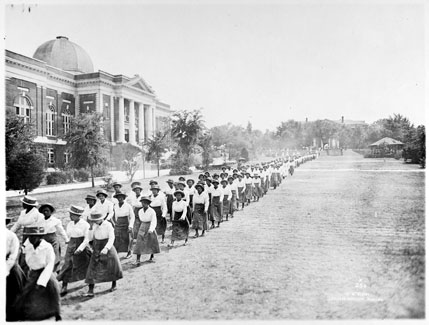
Women students of Tuskegee Institute marching in rows on campus, c. 1910s (from The Schomburg Center for Research in Black Culture http://digital.nypl.org/schomburg/images_aa19/toc.html )

I wasn’t really satisfied with what I wrote in my last post, so I decided to put together some more informal thoughts on finishing the degree.

In my previous post I said I avoid the “grad school advice” conversations, but that’s not really accurate. The truth is, I give graduate school advice all the time, and I’m willing to have that conversation with anyone who wants to have it. Giving this kind of counsel is part of my job as a professor. I work as an adjunct now, and in an adjunctified higher education system, I can’t tell my students to go have those conversations with their “real professors.” We’re the only “real professors” that our students are going to get most of the time, and that means being involved in all sorts of informal academic and career advisement, including writing recommendations and serving as references. And if I’m eventually fortunate enough to land a position where I advise graduate students, I’ll have these conversations with them as well. I’m far from the first person to point this out: we academics are now in the awkward position of having to discourage students from following in our footsteps. We can’t in good conscience tell them that there will be adequate jobs with adequate pay if they enter the profession now.

That said, I also agree with Tressie McMillan Cottom when she wrote that the “Don’t Go to Grad School” advice shouldn’t apply to everyone. As bad as the academic teaching market is now, college enrollments are still up, and students are still going, and there is still a dire shortage of women and faculty of color in academia. I see this reflected in the institution where I teach now, where the majority of students are black and brown. But the faculty? Well, not so much. It was a bit jarring in my first few weeks there to be repeatedly mistaken for a student when I walked into faculty spaces. And I ain’t that young anymore. That seems to happen less now that I’ve taken to wearing a jacket and tie regularly. But then that decision has led to a couple of weird encounters with an older white female colleague who seems to think that my wearing a blazer and a tie is somehow an invitation to come up to me and start patronizing me about my clothes and then complaining about the style of dress and habits of the students (again, most of whom are black and brown). Remember, I’m from Mississippi, so I’m well-schooled in the ways of white folk when it comes to pitting black folks against each other. Her unsolicited comments reminded me why I always count the Battle Royale scene in Ralph Ellison’s Invisible Man among the most powerful literary allegories for black politics in America.

What I really meant to say in that last post is that I tend to stay away from conversations about grad school advice online. Conversations in this medium tend to devolve into arguments with pompous douchebags bloviating about “choices” and “supply and demand” and “the market.” And, just as often, those conversations also involve listening to academics whose politics I mostly agree with, but who also portray themselves as pious, innocent victims in a way that I’m not entirely comfortable with either. Maybe I don’t want to be that innocent. Maybe I really did “get over” by going to grad school. Maybe I like the fact that academia has afforded me a chance to do work that I actually enjoy doing (some of the time) instead of working at some soul-sucking job that I hated (all of the time). And maybe even with some debt and terrible job prospects, the Ph.D. has put me into a career that has, thus far, allowed me to live peaceably with the world, particularly given my own less-than-outgoing personality. Maybe, unlike some of my colleagues whose families are littered with advanced degrees, it means something to me to be the first Ph.D. in the family. Maybe I figured out, from experience, that all work sucks anyway (ALL.OF.IT.) and that work is a curse (hey, it even says so in the bible, Genesis 3:17-19), and so I’d rather work at something in the long run that gives me some pleasure and meaning in my life, even if it means making a little less money and being a little less respectable in the eyes of my hot-shot corporate classmates from undergrad who are making five times more than I ever will.

I went into this with very different personal expectations about what kind of life I would have with a career in academia, particularly going into English. I figured that for me, the house-car-2.5kids-retirement-in-Florida thing probably wasn’t going to happen anyway, and that I probably live more frugally now than most people are willing to live. I’ve scraped through with adjunct jobs and walking tours, and not everyone can do that. And I also happen to be the kind of queer who identifies with the old school queers who saw getting off the path of respectability as one of the benefits of queer life, instead of all these gay assimilationists now who want to get married and be monogamous suburbanites. (Not that there’s anything wrong with that!)

I’ve also been the beneficiary of sheer dumb luck. I happen to have parents who have remained financially stable and healthy into their later years. (A teacher and a mechanic used to be able to do such things in America). I don’t have children to provide for, or other family members in dire need of support. It’s just the roll of the dice. One catastrophe could have changed all that. I say this because I hate listening to pretentious jerkoffs giving advice to other people without taking into consideration that other people may not be leading such a charmed existence, and might have responsibilities which limit the sacrifices they can make for their profession. I’ve been able to be responsibly irresponsible only because I haven’t had those kinds of responsibilities forced upon me by the circumstances of life. Getting the Ph.D. was a calculated gamble, and there’s still the possibility I could lose big. And there are times when I do regret not being able to do certain things for my family that I might have been able to do had I gone into a different line of work.  But I don’t regret the last few years either.  I’ve been able to do the kind of research and writing and intellectual engagement that I’ve wanted to do, and I do believe that I’ve put myself in a position to do more interesting and worthwhile projects that will pay off in the future.  But there are no guarantees.

I also know how to distinguish my own individual reasons for going into academia from the bigger picture about the academic labor system.  The professoriate in the American higher education system is sickeningly exploited through and through. From the conversations I’ve had with my own students about adjuncts, I know that  few of them even knew what an adjunct was before I told them. Now they know. And every student who comes through any class of mine will always know, because they deserve to know the truth about their own educations, and because this should be a part of their political literacy.

So, yes, I always advise people to tread carefully when it comes to grad school, but I don’t always say “don’t go.” That’s the irony I was going for with the theme of “over-education” in my dissertation. As black folks we’ve been “over-educated” since the first ones of us learned to read and write. And as of now, there are nowhere near enough black PhDs and professors to tell black students not to pursue a career in higher education. (The same goes for other minority groups as well.) Even some of those white academics you see online snarking about academia are at least lobbing their insults at the academy with degrees in hand.  And I’d even say that to students from  all backgrounds. Maybe academia really is the right fit for you if you’re passionate enough about it and willing to fight for it, and if you can find a way to do it responsibly without bankrupting yourself.

Yes, it’s a tough racket, and it will probably mean not living like a baller. And if you have family obligations, you do have to take those into consideration. And yes, you do have to be careful because your love for your discipline and your commitment to teaching and your loyalty to your students WILL be abused by the institutions you work for again, and again, and again, and you need to be prepared to push back against that abuse when it’s necessary.

My grad school advice is more along the lines of Charles Bukowski’s advice in “So You Want to be a Writer.”     

if it doesn’t come bursting out of you
in spite of everything,
don’t do it.
unless it comes unasked out of your
heart and your mind and your mouth
and your gut,
don’t do it.
if you have to sit for hours
staring at your computer screen
or hunched over your
typewriter
searching for words,
don’t do it.
if you’re doing it for money or
fame,
don’t do it…

It shouldn’t have to be this way. It shouldn’t take that kind of reckless sacrificial commitment to be a teacher. I wish we lived in a culture where the citizenry actually supported education and believed it was worthwhile to pay educators a fair wage, instead of believing in the cynical politicians who have turned teachers and professors into boogeymen. I wish the institutions that hire us now actually gave us the resources to do the jobs that we are asked to do, instead of expecting us to go above and beyond as the norm. But that’s not our reality right now.

I also know that the situation will never change without people getting involved on the inside, doing whatever we can in order to try to create something different, by whatever means are necessary.  Sometimes you really do have to be in the game to change the game.