

(Published in the GC Advocate, September 2011 issue)
Teacher Don’t Teach Me Nonsense
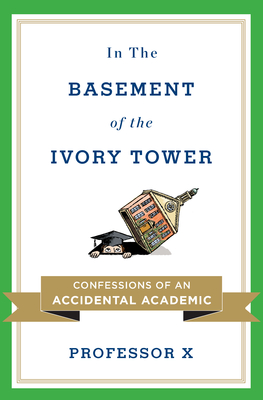
Professor X. In the Basement of the Ivory Tower: Confessions of an Accidental Academic. Viking Press, 2011.
Alex Kudera. Fight for Your Long Day. Atticus Books, 2010.
1. So it seems we are finally getting around to a real conversation about higher education. Several noteworthy books on higher education have been published over the last couple of years, including books by scholars such as Lewis Menand, Martha Nussbaum, Andrew Hacker and Claudia Dreifus. Last year PBS released the documentary College, Inc., which raised the profile of the for-profit college industry and seems to have encouraged more public scrutiny of the dubious financial practices at for-profit colleges. Most of these critiques of higher education seem to revolve around three core issues: 1) The decline of tenure and the rise of adjunct labor as the industry standard, 2) the escalating costs of enrollment and the increasing amounts of loan debt students take on to cover the costs, and 3) the overall corporatization of the university, which is the driving force behind the other two issues. We can debate about whether profit driven education is good or bad, but we can’t dispute the fact that institutions of higher education are increasingly run like corporations, and that students are now as much “customers” as they are learners. And there’s a lot of chatter out there now about how students are being sold a sham product. One Silicon Valley entrepreneur is offering talented young people money not to go to college and to develop startup projects instead. He insists they will learn more from their real world experiences than from writing papers on Beowulf.
2. One piece that broke through the clutter of commentary on higher education was “In the Basement of the Ivory Tower” an article published in The Atlantic and written by a pseudonymous author, Professor X. The article touched a nerve and went viral in the academic world largely because of the author’s contention that higher education may not be right for everyone, and that here in the U.S. we may be leading people to financial ruin by insisting that higher education be accessible for all who want to attend, even if they are not prepared for college level work. In the book version of In the Basement of the Ivory Tower Professor X has expanded on the article and absorbed some of the livid critical responses that flooded the message boards and listservs. The resulting book is an elegant and forceful volume that uses the college writing course as a microcosm for higher education. The hidden identity of Professor X presents a bit of problem when it comes to accepting the veracity of what is written. We do know he is a middle-aged heterosexual married white male who has an M.F.A., if the autobiographical information included in the book is accurate. Having worked as an English professor myself I can say I experienced the shock of recognition at several points throughout the book as he describes what it is like teaching freshman composition.
3. Some of the critiques of In the Basement of the Ivory Tower are mistaken. I didn’t get the impression that Professor X is some kind of neo-conservative with Bell Curve-inspired ideas about the limitations of the intellect among certain groups of people. What the book does depict is the incredible stress that the new corporate paradigm of higher education is placing on students and teachers. Students are taking out more loans than ever to cover the cost of school. Many of them are being coerced to enroll in higher education even though they are unprepared for it, and may not get much out of it. Teachers are expected to do more teaching with less job security, and to teach more students with less resources. The resulting situation is one where real learning gets sacrificed for economic efficiency, and both students and professors are feeling exploited and cheated by the sitution.
4. Cyrus Duffleman (aka Duffy or The Duff) is the protagonist of Alex Kudera’s academic novel Fight For Your Long Day. Like Professor X he also has an MFA and is also an adjunct professor. I’ve written about academic fiction for this paper before. These are novels, films, stories or plays that are set in universities and deal with the lives of professors and students. I am interested in the fictional stories we tell about academic life and how those stories shape and influence the way that we think about higher education. Canonical works of academic fiction such as Kingsley Amis’s 1954 novel Lucky Jim are known for satirizing university life. There have been recent entries into the genre such as J. Courtney Sullivan’s Commencement (2010) set at prestigious Smith College. There’s also the hit film The Social Network (and we all know what that’s about). But I have found few novels that deal with life at the state colleges, community colleges and for-profit colleges that make up the fastest growing segment of higher education today. In Fight For Your Long Day Cyrus Duffleman is an adjunct instructor of English in Philadelphia who shuttles between classes at multiple campuses and works a graveyard shift as a security guard. Alex Kudera’s book is precisely the sort of academic novel I was hoping to see – one that obliterates the old images of genteel pastoral college life and shows what higher education actually looks like today in these times of corporate education, economic anxiety, digital distraction and political paranoia.
5. One thing that Professor X does well with In the Basement of the Ivory Tower is to show how this new form of higher education compromises the grading process. Again, students see themselves as consumers, and therefore a college education becomes something that they purchase rather than something they earn through their work and diligence. The more cynical students realize this and leverage it to their advantage. “We’re paying your salary” they say, explicitly or implicitly, “so I am entitled to my A.” And what can the professors do about it, when all the professors are adjuncts and their own position in the university is tenuous? This significantly diminishes their authority in the classroom, even if they actually have time to give students a good teaching experience, which too many of them do not have. Professor X seems to have tried valiantly to maintain some evaluation standards despite this situation. I can’t say I did the same in my own teaching experience. (I have taught at two CUNY colleges, but I am not currently teaching.) I didn’t give out all A’s but I did find it difficult to penalize students by being a stickler when I barely had time to keep up with the assignments myself.
6. The difficulties in higher education are also exacerbated by the new digital reality we all live in. It is impossible to ban electronic devices from classrooms entirely. Some students take notes on laptops, and you know they are on Facebook or Twitter or off searching the web while you are lecturing. And they are all texting on the phones under their desks. Furthermore the scattered impulsive way that they absorb information has made them bad writers and impatient readers. Professor X stresses the point that writing is difficult and that it takes a level of time and effort that seems hard for students to justify in their get-money-fast worldview. It is hard to convince someone that careful, elegant writing matters in world where Snooki can get a seven figure advance for “writing” a book, and when more people read Chad Ochocinco’s Twitter feed last Sunday than will ever read both of these books combined.
7. College writing instructors often use autobiographically themed prompts to get students to write in freshman composition. I wonder what will happen when Facebook’s new Timeline format turns out to be as transformative as people are saying it will be. We won’t even have memoir as a reliable subject to prime the writing process. People will get used to narrating their lives through digital interfaces. Writing about yourself in full sentences and paragraphs will seem boring and pointless.
8. In Fight For Your Long Day one of the schools that Cyrus Duffleman teaches for is Liberty Tech, a for-profit school designed to prepare students for work in homeland security. The school has invested in digitalization, and the CEO of the school says that “the age of the printed word is over. Online research and education is the future.”
“In this thinking,” Kudera writes, “the CEO recognizes the adjunct instructor of freshman writing as just another middle man who could be eliminated. Like the book itself, a relic of the past, his quarterly ‘nonbinding noncontract’ is just another waste of paper.” Later in the book he imagines a scenario that I have often thought about myself: Classrooms full of U.S. college students taught through satellite hookups to professors in other parts of the globe. “The fifteen grand a year they were paying the graduate student has become fifteen hundred for a hungrier South Asian. And they’re whip smart. A friend of mine sat in on a Shakespeare seminar and said it was excellent. Fharard knew the Bard, better than most Aussies and many Brits. That’s globalization and progress.”
9. Professor X writes about the problem of rampant plagiarism in one of his chapters. Students now aren’t even clever enough to be good plagiarizers. As he says, “They don’t copy from academic journals. They just take the first thing that Google belches up.”
10. I haven’t included a lot of plot synopsis for each of these books here. Even if I did want to include more summary of the books I would have just lifted some text from some of the other reviews online, and rewritten the sentences so that it sounds like I am paraphrasing in my own voice. I would take care to make sure I didn’t cite all of the same passages that other reviewers have cited, and I would add some quotes I didn’t see in other reviews to make mine look more original.
Chances are, whatever rote information I was going to share about these books has already been written up anyway, so why waste time trying to come up with original sentences that will end up sounding like everything else that is already out there? I have often used this sort of cut and paste technique as a way to prime other pieces of writing as well. I don’t keep the same text completely but I use the words of others to get me started, and eventually what I end up with looks like “original” writing. Is that plagiarism?
11. To write a truly good review would have required me to read and absorb both of these books at a level of intensity that I am not willing to commit to right now. I have other things to do including another job that requires heavy memorization, two big presentations coming up, and finally finishing that blasted dissertation. Normally I like to read a book at least twice before reviewing it. The best way to write about a book is when you already have some of the details committed to memory and the writing flows easily. I read through both of these books one time each and skimmed back through them after that. My plan is to turn in this review to the editor, then promptly toss both of these books aside so I can move on to doing the next thing.
12. Yes, I have jacked the enumerated style of this essay from recent popular books such as David Shields’s Reality Hunger, and Wayne Koestenbaum’s Humiliation. Get used it. More and more people will be writing essays in this form.
13. The truth is, I don’t know how I would handle being an undergrad in this digital environment with the ubiquity of high-speed connections, iPhones, YouTube and Facebook. It is a marvel that any undergraduates ever finish writing a non-plagiarized paper given the assault on the senses that they experience every hour of their waking lives. I have enough of a background in reading physical books that I still feel at ease writing longer pieces. As Professor X pointed out, the biggest problem with teaching writing today is that students do not read, and therefore it is impossible to teach someone what competent writing looks like when they cannot recognize it from their own reading experiences.
14. Warning to any other reviewers: One side effect of In the Basement of Ivory Tower is that it makes you extremely self-conscious about grammar. Professor X has obviously taught plenty of writing courses, and absorbed a wide range of composition teaching advice. I even admit that this may have contributed to some of the anxiety that made my review even later than it already was. I began to think that if I’m going to review a book complaining about the decline of student writing, I better make sure my own language is in top shape. That led to procrastination, which led to delays in getting this done when other tasks started to intrude. I have found more than a few awful sentences and paragraphs in the pieces that I have published in this paper before. I’m sure I will find some in this one too.
15. So let’s just be cynical for a minute and accept that students really are consumers now. That’s the way it is. We live in a capitalist economy, and the invisible hand of the market urges all institutions toward commercial efficiency. Adapt or die.
Fine. Then what kind of product are students being sold? Like the companies that sell diet pills and light beer, the students are being sold a lifestyle. And like those other products the advertisements for college are just as bogus. Students are being duped with the age-old practice of the bait and switch. On the subway in New York you see advertisements for CUNY that show students mugging it up with award winning professors. CUNY does have a few of those, but most of the students who enroll are unlikely to be chilling with Nobel Prize winning profs. No they will be taught in courses where enrollments have been expanded to laughable proportions, and they will be taught by adjuncts. Some of their professors might be graduate students themselves, some of their professors will be career adjuncts with little prospect of becoming full professors. Just this week a discussion broke out on our English department listserv over an ad someone posted seeking a grader to help grade papers for a jumbo course at one of the CUNY colleges. This course has an enrollment of over 100 students, and jumbo courses like this are becoming the norm. (These are NOT the lecture courses you find at some big state schools where students are broken up into sections and taught by teaching assistants in a more intimate setting. These are full courses…taught by one professor…with no TA’s.)
16. Professor X mentions one of the ugliest realities of the new adjunct paradigm. The more one teaches as an adjunct the less likely one is to be hired as a full time professor. Colleges want to hire full professors with hot shot credentials who just graduated from brand name schools and may eventually publish books that will gain some notice. At most schools there is no way to work your way up to tenure by being a dutiful adjunct professor. The harder you work at being a good teacher the more you get tainted with the stain of “career adjunct.” You can piece together a meager salary from teaching four or five courses at $3,000 a pop, but you will not move up the ladder by being a good team player. You may in fact be dooming yourself to adjunct purgatory by being devoted to educating your students.
17. One thing I liked about Fight For Your Long Day is that it feels very much like a 21st century novel. Kudera depicts a world of higher education where the aspirations of learning and self-improvement still exist, but they exist alongside a world full of the crass, crude, and pornographic, a world that militates against contemplation and learning, a world where everything from violence to paranoia to frivolous pop culture is filtered through the interactive screens that nearly all of the students carry around with them everywhere they go. The book is full of allusions to current events, politics and pop culture, and is probably oversaturated with too many references, but even in that sense it feels familiar.
I didn’t like the fact that the book had thinly drawn secondary characters. But then again, thinly drawn characterizations are sometimes all we are able to get from our students when they are being throttled through the higher education assembly line. I went to a small liberal arts college where I knew my professors and they became mentors. I went back to attend a retirement celebration for one of them last year. I haven’t seen any of the students I taught in my courses since the classes ended, and barely saw them outside of class when they were enrolled.
18.
“To the young, schooling seems relentless, but we know it is not. What is relentless is our education, which, for good or ill, gives us no rest. That is why poverty is a great educator. Having no boundaries and refusing to be ignored, it mostly teaches hopelessness. But not always. Politics is also a great educator. Mostly it teaches, I am afraid, cynicism. But not always. Television is a great educator as well. Mostly it teaches consumerism. But not always.
It is the ‘not always’ that keeps the romantic spirit alive in those who write about schooling. The faith is that despite some of the more debilitating teachings of culture itself, something can be done in school that will alter the lenses through which one sees the world; which is to say, that non-trivial schooling can provide a point of view from which what is can be seen clearly, what was as a living present, what will be as filled with possibility.
What this means is that at its best, schooling can be about how to make a life, which is quite different from how to make a living. Such an enterprise is not easy to pursue since our politicians rarely speak of it, our technology is indifferent to it, and our commerce despises it. Nonetheless, it is the weightiest and most important thing to write about.” – Neil Postman, The End of Education: Redefining the Value of School (1995).



 THE BLACKADEMIC LIFE: THE BLOG