Reading DeLillo’s White Noise in the Summer of Ferguson

white-noise1
Reading DeLillo’s White Noise in the Summer of Ferguson

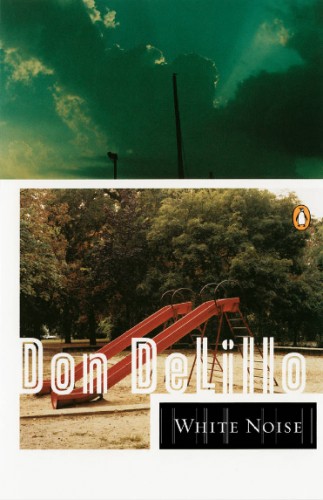
This summer I endeavored to knock a few books off the old “should-have-read-it-a-long-time-ago” list.  Don DeLillo’s White Noise is one of those academic novels that I’ve name-dropped plenty of times before, but still had not read.  So, in early August, comfortably ensconced in my new digs in Jersey, I sat down and dug into it.  A couple weeks later, just before the start of the semester, I found myself assigned to teach a course on Contemporary American Fiction. I quickly assembled a syllabus that included White Noise and leaned heavily toward academic novels, including The Human Stain, On Beauty, Erasure and Open City.  (OK, Open City may not be an academic novel exactly, but I’m hoping that reading it again will help me decide).

While reading White Noise, I was also keeping up with the escalating situation in Ferguson, Missouri after the killing of Mike Brown on August 9.  Like so many other folks on Twitter I watched what started as a steady stream of tweets by people on the ground in St. Louis turn into a national and international story.

When I came to the end of Section II of White Noise the infamous “Airborne Toxic Event” chapter – I immediately noticed correlations to what I was watching unfold on social media.  The main character of White Noise is Jack Gladney, professor of “Hitler Studies” at the College-on-the-Hill. (Gladney can’t read or speak a lick of German, by the way). Jack, his fourth wife Babette, their three kids, along with their neighbors, have been evacuated from their suburban homes because of a train car spill that has left a mysterious toxic cloud hovering in the area.  Section II ends with the family in a building in nearby Iron City, housed with other evacuees. A man with a small, portable TV set walks around the building and goes on an epic tirade about the media and how it has neglected their plight:

Don’t they know it’s real?  Shouldn’t the streets be crawling with cameramen and soundmen and reports? Shouldn’t we be yelling out the window at them, ‘Leave us alone, we’ve been through enough, get out of here with your vile instruments of intrusion’…What exactly has to happen before they stick microphones in our faces and hound us to the doorsteps of our homes, camping out on our lawns, creating the usual media circus?  Haven’t we earned the right to despise their idiot questions? (162)

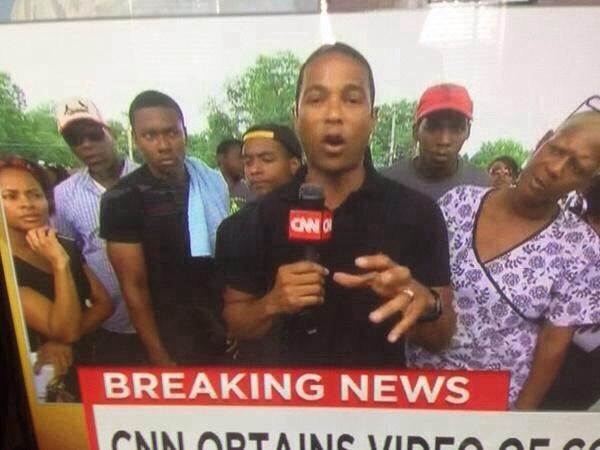
Is this not exactly how things went down in Ferguson?  First there was an outcry that mainstream media was neglecting the story.  But once that mainstream media arrived, and acted like its obnoxious mainstream media self, then came the outcry for the reporters to leave.  The media spectacle produced one particularly indelible image of CNN’s resident black pathologist Don Lemon, surrounded by a group of St. Louis residents giving him mad side-eye.
donlemonferguson
In fact, the media mess got so bad that journalist Ryan Schuessler voluntarily left the scene, and poignantly explained his reasons for doing so, citing the arrogant selfishness of the talking head divas who parachuted in and immediately started throwing their weight around.

In my class I assigned part of Kathleen Fitzpatrick’s The Anxiety of Obsolescence to read along with the novel.  Chapter 3 of the book, “Spectacle,” is specifically about DeLillo’s work, and Fitzpatrick uses some noteworthy media theorists (Postman, McLuhan, Baudrillard, among others) to pick apart the media critique in the novel (while also remaining suspicious of how discourses of obsolescence deployed by straight white male writers are too often imbued with specific racial and gender politics). One of the great things that White Noise does so well is to show the discomfiting ways televisionized populations have come to rely on mainstream media narratives to validate their suffering.  From the Airborne Toxic Event, to the people on a terribly turbulent plane ride that managed to make it to the ground unscathed, the novel shows characters repeatedly turning to television news to narrate and give meaning to their own traumatic experiences.

This is a particularly dangerous game for black folks when corporate media is as  hostile to black life as it is.  (Yes, even that so-called “liberal” media who covered the event deflected conversations away from the injustice of a police murder and toward tired, insulting debates about sagging pants and black parenting).  That media attention is a terribly recursive loop that is difficult, maybe even impossible, to escape.  Attracting national attention was absolutely essential to the growth of the Ferguson movement and has resulted in an international outcry against the Ferguson police and their malicious mishandling of both the shooting and the protests. (Their hostility and incompetence are not even up for discussion).  At the same time, Don Lemon and the rest came swooping onto the scene with their “idiot questions” about black behavior, because they know those hot-button topics will generate the predictable ratings numbers and page views that they need to satisfy their advertisers.

White Noise is also a novel that begs to be read through the critical lenses of race and class privilege.  In my own classroom it took a while for students to get around to it – I’m getting better at shutting up and letting them talk things through on their own – but eventually, they hit the key points about race and class that were staring us all in the face.  Clearly these characters are folks whose anxieties, fears and consumption habits are not universal, but are directly related to the level of comfort and privilege that they take for granted.  When the cloud first forms, and before they ever considered having to evacuate, Jack Gladney says:

These things happen to poor people who live in exposed areas.  Society is set up in such a way that it’s the poor and the uneducated who suffer the main impact of natural and man-made disasters.  People in low-lying areas get the floods, people in shanties get the hurricanes and tornadoes.  I’m a college professor.  Did you ever see a college professor rowing a boat down his own street in one of those TV floods?  We live in a neat and pleasant town near a college with a quaint name.  These things don’t happen in places like Blacksmith. (114)

That passage conjured images in my mind of the horrors of the 5th ward during Hurricane Katrina, and the projects in Red Hook and Coney Island during Hurricane Sandy (among many other unfortunate scenes).  I noticed some early reviewers of White Noise cited the Bhopal disaster in India, which happened in December 1984, just a few weeks before the novel hit bookstores in 1985.  Bhopal was a real live Airborne Toxic Event, except there were no fancy microbes to clean up the air, and people are still living with the after-effects of the company’s callous negligence some 29 years later.

But I now think about the story of David Hooks– a 59 year old white man in Georgia  – who on September 24 was killed by DEA agents who barged into his house with a no-knock warrant.  No drugs were found.

Surely such things only happen to people in the hood who voluntarily choose to live around drug dealers, right? Surely such things do not happen to polite law-abiding white citizens, do they?  As the Ferguson story grew, white nationalists found a cause celebré in Darren Wilson, raising over a half million dollars (to date) for his legal defense (and, apparently, for lap dances and beers, at his discretion).  But more level-headed white folks have (hopefully) looked at the body armor and tanks and tear gas on the streets of Ferguson and have realized that the urban militarism deployed against the protesters there won’t stay confined to the hood for long. Hopefully they realize now (if Occupy Wall Street didn’t show them before) that all those chickens that people have warned about – perpetual wars in other places leading to escalated militarism in police forces domestically – have indeed come home to roost.

For the most part our conversations about White Noise in class didn’t get this politically topical.  Again, I tried to stay out of the way and let them think their own way through it.  We did talk about race, religion, class and gender.  But they also spoke quite eloquently about the age of television and how televisual media has come to dominate our self-perception. They talked about fear of death in the novel (one of its biggest topics given the whole storyline with the experimental drug Dylar that Babette is taking to quell her death fears), and I was proud to hear them deal with a such a heavy and discomfiting topic with maturity, intelligence and humor.

Consumerism was another one of the big themes we lingered on.  There’s a lot of shopping in the book. DeLillo eschews the pastoral in favor of the bright, sterile artificiality of shopping malls and supermarkets.  In one rapturously written scene set in a massive shopping mall DeLillo writes:

We moved from store to store, rejecting not only items in certain departments, not only entire departments, but whole stores, mammoth corporations that did not strike our fancy for one reason or another.  There was always another store, three floors, eight floors, basement full of cheese graters and paring knives.  I shopped with reckless abandon.  I shopped for immediate needs and distant contingencies.  I shopped for its own sake, looking and touching, inspecting merchandise I had no intention of buying, then buying it.  I sent clerks into their fabric books and pattern books to search for elusive designs.  I began to grow in value and self-regard.  I filled myself out, formed new aspects of myself, located a person I’d forgotten existed.  Brightness settled around me. (83-84)

Here then, is the 21st century.  Maybe it has always been this way.  On one side of town an unarmed black teenager takes six bullets to the body and the head from the gun of a policeman, his lifeless corpse left to rot in the street for hours afterward, the officer who shot him filing no report, and charged with nothing.  Meanwhile, on the other side of town people go from store to gleaming store, shopping for cheese graters and paring knives, feeling good about themselves and their comfortable lives.  The dread of White Noise, the dread that the shoppers try to placate with their shopping, is that maybe the boundary between these two sides of town is far more permeable than they want to admit, or imagine.

DeLillo, Don. White Noise. New York: Penguin, 1985.

Fitzpatrick, Kathleen.  The Anxiety of Obsolescence: The American Novel in the Age of Television.  Nashville: Vanderbilt University Press, 2006.

Academic Film: Admission

Tina Fey, Wallace Shawn and Gloria Reuben in Admission (2013)

Tina Fey, Wallace Shawn and Gloria Reuben in Admission (2013)

By now you’ve probably seen that New Republic article “Don’t Send Your Kid to the Ivy League”, and all the rebuttals, and all the rebuttals to the rebuttals. In the article William Deresiewicz provides a rather thorough and convincing (if unoriginal) critique of elite college preparation. It’s a hyper-competitive process that begins at infancy (for kids from elite families), encourages the most cynical and cutthroat behavior from students, and, as Deresiewicz and others have argued, undermines the very purposes of college. (Personally, I liked the way the film The History Boys dealt with all this in a British context.) My biggest problem with the article (besides his swipe at race-based affirmative action) is that he had very little to say about public universities, community colleges and for-profit colleges where the students aren’t all college-prep-programmed youngsters, and where “admissions” operates under a whole different paradigm. This is by far the largest and fastest growing segment of higher education, and the one that most of us will encounter. He can critique the Ivy League all he wants, but the kind of prestige signified by an Ivy League education is one that is remarkably resilient, even among those of us who are happy with our non-Ivy League educations, or who never attended college at all. To some degree I think we all buy into and attach value to the prestige of being affiliated with an Ivy League institution, even when we should know better.

In my “Storifying the Academy” article that I posted a few months ago I made a backhanded comment about the recent academic film Admission. After viewing it again, I stand corrected. There’s more to this film than Lily Tomlin’s performance (though she does have some great lines). Admission is actually an interesting examination of the admissions process, this ritual of rejection and acceptance that millions of students put themselves through each year. The film dramatizes what this process means for the administrators and students involved, and what this process says about the way higher education functions, particularly at its most elite levels.

Like most academic films and novels, this one has been judged according to how well it represents the real-life academy. Suffice to say there are exaggerations and embellishments, but not all of them are bad. When the film was released in theaters in 2013, Inside Higher Ed hosted a discussion with some actual admissions officers about the veracity of the film. Vulture published an interview with Jean Hanff Korelitz, author of the novel upon which the screenplay is based, and screenwriter Karen Croner.  Korelitz and Croner provide an interesting discussion about the process of bringing this particular novel to the big screen, and also about how film adaptations often differ from their novels.   (And since I began with the New Republic article it is also worth noting here that William Deresiewicz himself has written about academic fiction before: see “Love on Campus”)

In her study of academic fiction The University in Modern Fiction: When Power is Academic, Janice Rossen writes about the ways that power, inclusion and exclusion define university life. For Rossen, Thomas Hardy’s Jude the Obscure is the exemplary academic novel because its main character yearns to be a part of Christ Church, Oxford, but as a working-class stone mason and an autodidact he really stood no chance to enter the hallowed walls of the university. He didn’t have the proper training and pedigree, and there was no way for him to work his way into that kind of prestige.

Admission follows the story of Portia Nathan (Tina Fey), an admissions officer at Princeton. The Director of Admissions (Wallace Shawn) is distressed over the fact that Princeton has fallen to number 2 in the U.S. News & World Report rankings. (Of course, we don’t really put any stock in those rankings, do we? They’re just fun to look at, right?) And so he sends his admission team out to find the freshman class that will put them back on top.

Portia accepts an invitation from John Pressman (Paul Rudd), the principal of The Quest School, an alternative high school with an eccentric curriculum, to come speak to his students about admission to Princeton. It is there that Portia meets a modern-day “Jude the Obscure” in the form of Jeremiah, a student with a terrible academic record, who also happens to be a brilliant autodidact who has aced every AP test that he took (without taking any AP classes) and has a near perfect score on his SATs.

In one sequence Portia gives her admissions spiel to students at an elite prep school, where, decked out in uniforms, they listen to her with respect and obedience. Cut to her scene at Quest, however, and Portia finds herself giving the same talk in a barn (part of the school’s hands-on learning environment) and facing a barrage of snarky questions and comments from a bunch of smart-aleck students such as: “Why should I apply to an elitist institution with a history of anti-black, anti-gay and anti-female oppression?” and “Wouldn’t you be better off sitting in your room reading books?” and “Don’t people just need a college degree if you want to pursue the societally approved definition of success?” As one student puts it, “what we want is to leave the planet better than we found it.” The questions and comments are certainly valid and refreshing to hear, but they also represent a certain sarcastic and cynical attitude toward formal education that has become all too cheap and easy. Portia finally fires back at them with a spirited defense of her profession. “I have a question for all of you. Just how will you leave the planet better? Do you want to eradicate disease? Well, you’re going to need a medical degree. If you want to create new drug therapies, that’s a Ph.D. If you want to defend the innocent and secure justice for all, I regret to inform you that you will have to go to law school!” And I think she was right to push back against their knee-jerk sarcasm. It’s easy to lapse into this snarky attitude about higher education. Yes, higher ed has certainly earned those doubts with its constant tuition increases, expensive textbook extortion schemes, and its massive student loan debt system. But I doubt any of us really wants to have surgery performed by a self-taught doctor whose only training came from reading Gray’s Anatomy and studying biology and chemistry MOOCs on Academic Earth.

Portia soon finds out (MAJOR SPOILER) that Jeremiah may be the son that she gave up for adoption years ago when she carried out an unexpected pregnancy while a student at Dartmouth. And then on top of that emotional bombshell, she experiences an embarrassing and humiliating breakup in a hilarious bit where her nebbish English professor boyfriend (Michael Sheen) leaves her in the middle of a dinner party by confessing that he’s impregnated a colleague who Portia describes as “that vile Virginia Woolf scholar.”

It’s obvious why Portia’s judgment about Jeremiah is skewed when it comes to his chances for admission. The breakup has left her emotionally out of sorts, and learning about Jeremiah brought back so many difficult questions about her life choices. Portia is so intent on him getting into Princeton because she feels he deserves it, because she wants him close to her, and because in her worldview, this is the best thing that she can do for him. In the process she fails to consider one simple idea: Maybe it is Princeton that doesn’t deserve to have Jeremiah. Maybe he would be better off somewhere else – say a liberal arts college like Reed College – where his eccentricity would be seen as an asset rather than a liability.

The film deserves credit for its portrayal of women in positions of authority in the academy. There’s an interesting give and take between Portia and her colleague Corinne (Gloria Reuben) who are both vying to be the new Director of Admissions. Throughout the film we see women having to negotiate child-rearing and babysitting, the difficulty of getting “emotional” as a woman in a professional setting, and jokes about the need for “sisterhood” even as they are in fierce competition for the same positions.

Mostly the film worked for me because it shows the irresistibility of these hierarchies of prestige. Getting into Princeton means something. Winning an appointment as an Ivy League professor means something. Even for those of us who claim we don’t believe in such hierarchies, we still lapse into celebrating that prestige, when say, an Ivy League school happens to hire a scholar whose work that we really like, or when one of our own children or family members or friends gets accepted or hired by one of these schools. Being admitted into those halls is incredibly validating, a powerful signifier of status and success, and that kind of prestige has been centuries in the making.  Admission makes the case that even when we’re at our most critical of Ivy League prestige, it can’t easily be shaken, least of all by those who are deeply embedded within it.

Ms. Mentor on the Academic Novel

I don’t know how I’ve managed to get this far without mentioning the “Ms. Mentor” articles on academic novels that have appeared in The Chronicle of Higher Education for the past several years. I’ve certainly been aware of them, and have plucked a few novel reading recommendations from them since I’ve been working on this project.  The latest installation “Writing Academic Novels for Fun and (Little) Profit” was just published in The Chronicle on June 2. The column is ostensibly about how one might go about writing an academic novel, but it’s also a pretty good primer on some of the genre’s conventions, which, admittedly, are not always so fresh.

I also noticed this part: “Academic novels are no longer a rarefied genre, skewed a bit toward the Anglophile, as they were nearly 10 years ago, when Elaine Showalter wrote her elegant and witty survey, Faculty Towers: The Academic Novel and Its Discontents.” Well yeah, that’s pretty much what my whole dissertation was about. It’s not so much that the academics novels have changed. The change is that critics are now finding, reading and analyzing all those novels out there that are not just about Oxford, Cambridge, Yale or Harvard.

Ms. Mentor’s article ends with a list of suggested readings. To that list I would add my own bibliography of black academic novels. You might also check out the Schoolsville blog, which has running lists of  academic novels from various locations.

Over the summer, I’ll be posting more about academic novels, including Buchi Emecheta’s Double Yoke, a novel that I admit I overlooked in my dissertation. I think Emecheta’s work, (including Double Yoke and Second-Class Citizen, among others) is pressing and relevant now that the education of women in Nigeria has become a big topic in international news over the past several weeks.

I have a lot more thinking, reading and writing to do on Emecheta’s work before I feel up to posting something substantial here, but so far I can say that excluding her work in my dissertation was a major oversight on my part. And I think her writing could help to provide a critical link between the academic novel and the academic memoir, between the black American academy which was the focus of my own work, and the diaspora to which that work is connected. One of the big questions I struggled with in the dissertation is why are there so few academic novels by black women? One way I tried to answer that question is to point to the academic memoir as a genre that more women seem to have taken up in lieu of academic novels. Stephanie Evans’s book Black Women in the Ivory Tower looks at the memoirs written by black women academics such as Fanny Jackson Coppin, Mary Church Terrell, Zora Neale Hurston, Lena Beatrice Morton, Rose Butler Brown, and Pauli Murray. In my initial proposal I also sketched out a chapter on Paule Marshall’s The Chosen Place, the Timeless People, and that is another novel that I am working on including in the book project.

So between Ms. Mentor’s article and my own suggestions you should have plenty of academic novel reading options to choose from this summer.

You can check out the previous Ms. Mentor columns here:

http://chronicle.com/article/A-Novel-Form-of-Revenge/48089

http://chronicle.com/article/Novel-Academic-Novels/127748

http://chronicle.com/article/Novel-Academic-Novels-the/132155/


Done!

Well, I figured it was about time I announced this on my blog (though now that I’ve added the Twitter widget to this site anyone could also have seen it there).  On Friday, April 4, 2014, I successfully defended the dissertation. Finally.  By Wednesday it will be deposited and I will officially have the rank of Ph.D.

I thought about doing some grandiose write-up about my experiences in this Ph.D. program, and the reasons why I did it, and the reasons why it turned out the way it did.  But then I remembered that I tend to avoid the graduate school advice conversations because I admit my reasons were not altogether financially and professionally sound or responsible.  And probably that’s because I don’t think that everything we do in life must be subjected to a cynical cost-benefit analysis.  And then I end up sounding like some kind of naive idealist, and who the hell needs those in today’s corporate education system?

So suffice to say, it is done, and I’m glad it is done.  For now my plans are to continue working on my topic and adding more content to this blog.  I am also working towards building a book on this subject, and I know that’s going to take a lot of time and effort over the next few months.

In the meantime, here’s the abstract:

—-

The Over-Education of the Negro: Academic Novels, Higher Education and the Black Intellectual

by

A. Lavelle Porter

Advisor: Robert Reid-Pharr

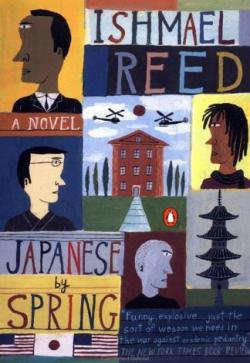
This dissertation focuses on the academic novel – a literary genre which fictionalizes the lives of students and professors in institutions of higher education. In particular this project focuses on academic novels written by black writers and which address issues in black higher education. This dissertation has two concurrent objectives: 1) to examine the academic novel as a particular genre of literature, and to highlight some specific novels on black American identity within this genre, and 2) to illustrate the pedagogical value of academic fiction. Through the ancient practice of storytelling, academic novels link the travails of the individual student or professor to a bigger story about the history and origin and purpose of colleges and universities. The “Introduction” provides a basic overview of the academic novel, the black academic novel, and an analysis of the history of black higher education through discourses of over-education. Chapter One, “Toward a Theory of the Black Academic Novel,” provides a literature review of criticism on academic fiction and makes connections with black literary criticism in order to create a framework for reading black academic novels. This chapter also includes a historical survey of black academic fiction leading up to the three novels in the following chapters, which were written after the 1980s, and which are framed by discussions of culture wars and capitalism. Chapter Two, “Culture Warriors,” is an examination of Ishmael Reed’s Japanese by Spring (1993) in the context of the “culture wars” and the development of multiculturalism in higher education. Chapter Three, “When Keeping it Real Goes Wrong,” examines Percival Everett’s Erasure (2001) and the politics of authenticity in black literary and cultural production. Chapter Four, “Homo Academicus,” is an interpretation of Samuel R. Delany’s The Mad Man (1994:2002) as an academic novel, showing how the novel articulates a queer black intellectual practice as a challenge to discourses of respectability, particularly during the HIV/AIDS epidemic. The “Conclusion” speculates on the future, and possible obsolescence, of the novel (including the black academic novel) as a literary form, and the role of black intellectuals in the digital humanities.

Academic Novel: Japanese by Spring (Draft)

japanese by spring - Cover 3_0

Here’s something that I’ve been meaning to do for a while. At the bottom of this post is an earlier and much shorter draft of my chapter on Ishmael Reed’s Japanese by Spring.  I presented this version back in November 2011 as part of the University of Pennsylvania’s conference Intersections: A Conversation Between African American and Asian American Studies.  It was posted on the conference website along with the other papers, all of which can still be accessed here.  Since it has been floating around on the web for a while (and shows up pretty high in the Google searches on Japanese by Spring) I wanted to go ahead and put it directly on this blog. Stupidly, I didn’t put my name on the original .pdf, not realizing it would be uploaded to a public conference site.  (A lesson to all the kids out there.)

Again, this was just a draft, and a shortened draft for the conference.  The final chapter version is about 40 pages with a more substantive discussion of The Culture Wars. I also added some commentary from Michele Wallace’s excellent essay “Ishmael Reed’s Female Troubles” from her book Invisibility Blues: From Pop to Theory. (The essay originally appeared in the Village Voice in 1986). And thanks to the UPenn conference I also got keyed into some more scholarship on Afro-Asian studies, so there’s more about that in the final chapter as well.

The chapter title is now: “Culture Warriors: Multiculturalism and the Black Professor in Ishmael Reed’s Japanese by Spring.”

So here’s the shorter draft version from 2011:

Black(ness) No More: Academia and the Culture Wars in Ishmael Reed’s Japanese by Spring