Cuts by Malcolm Bradbury

bradburycutscover

Bradbury, Malcolm. Cuts.  Picador, 1987.

A few months ago I read the short novel Cuts by Malcolm Bradbury.  The book immediately caught my attention with its emphasis on budget cuts as a recurring theme.  The novella is a critique of Thatcherite Britain in the 1980s, and for me it immediately resonated with our current moment of austerity in higher education, with talk of slashing budgets, reducing staff and dissolving academic departments.

I have to say upfront that I haven’t yet read the more important Bradbury academic novels, namely Eating People is Wrong (1959) and The History Man (1975).  So I admit that Cuts may be an odd book to write about, and I can’t say that it is necessarily representative of Bradbury’s body of work.  That said, I did find the book interesting enough to jot down a few notes about it after I finished it.

In Cuts, all of the budget trimming is juxtaposed against the extravagant and wasteful spending of the TV and film industry.  Supposedly this book was based on Bradbury’s experience working on the televised adaptation of The History Man.

Henry Babbacombe is a lecturer and obscure novelist who unexpectedly ends up being courted to help write a television drama, though he had never written for television before.  Later, he finds out he got hired for the gig because his literary agent was sleeping with a network executive, and she had goaded the executive into getting one of her writers hired for the job.

The novel works well as a satire of the entertainment industry and it is filled with images of the coarseness of people who work in an industry obsessed with only the most immediately profitable ideas.  (Even when those very ideas are so looney that it is obvious they will never even make a profit).

In this case Babbacombe finds out that writing for television involves little writing at all.  He is constantly bombarded with so many phone calls and couriers and trips that he barely even gets the script started.  He’s called into London to meet with the producer when he only has a skeleton of the script started.  When he gets there he realizes they are not interested in “writing” at all, but in trying to build a show based on marketing and on whatever big name actors they can convince to star in it.

Bradbury shows the disconnect between the isolated writing that a novelist does and the writing-by-committee that happens in TV and film production.  As an academic novel it is interesting in the way that the main character tries to understand the place of literature in a media saturated world.  It brought to mind Kathleen Fitzpatrick’s study The Anxiety of Obsolescence: The American Novel in the Age of Television, a book that deals with the influence of media on literature.  Fitzpatrick actually argues in favor of engagement with new forms of media and she questions whether the discourse of obsolescence (in literary fiction at least) is partly driven by fears that women and minorities and the lower classes are encroaching on the authority and influence once wielded by a few esteemed and well-connected white male writers.

Appropriately enough, I recently watched a documentary about screenwriting called Tales from the Script which included some similar observations that Bradbury makes in Cuts. The film is composed of conversations with several screenwriters who have successfully had screenplays produced in Hollywood.   One of the screenwriters talked about this being a “post-content” era.  Fewer films are being made from stories or scripts composed by writers.  Instead they are often  cobbled together from focus groups, market research, and imitations of previous films that have been successful at the box office.

When Babbacombe is first hired to write the script, he goes back to the small university where he has been teaching evening literature classes and he asks the department chair for an impromptu leave of absence.  He intends to keep teaching there, but knows he will need time away given the demands that the producers are asking from him. The chair bristles at his request and informs Babbacombe that because of budget concerns they were looking to axe a couple of people anyway.  Babbacombe had just made it easier for the chair to cut him since the chair could use Babbacombe’s new gig to justify that he didn’t really need the teaching job anyway.

The novel ends with a ridiculous scene on the set of the production in Zurich, Switzerland.  Babbacombe’s script is hardly a script at all, and he has just been swept along in the mad swirl of activity around the production.

As a brief tale about the state of education in a chaotic age dominated by entertainment and profit, Bradbury’s Cuts provides a rather perceptive look at what it means to be an academic and a writer amid the noise and rancor of the 21st century.

Academic Novel: The Third Generation

thethirdgeneration

Chester Himes.  The Third Generation. 1954. New York: Thunder’s Mouth Press, 1989.

“..for I the Lord thy God am a jealous God, visiting the iniquity of the fathers upon the children unto the third and fourth generation of them that hate me.”  -Exodus 20:5

Chester Himes’s The Third Generation happens to be the third Himes novel that I’ve read, after If He Hollers Let Him Go, and Cotton Comes to Harlem.  (The latter was made into a classic film directed by Ossie Davis). The Third Generation has more in common with the political indignation of If He Hollers Let Him Go, than with the detective novels such as Cotton Comes to Harlem. Himes is rightly celebrated as an innovator in detective fiction, and he took his experiences in the streets and in prison and lent them to his crime stories.  Both The Third Generation and If He Hollers Let Him Go depict the precariousness of life for black Americans in an era when the legal and political rights of black people were severely limited, and the possibilities of fully-realized black citizenship remained in question.  (Not to say that the question has been definitively settled today either.)  Both novels were published after WWII, and both mention, among other things, the disillusionment of a people as they realized that service in war time had not helped improve their political status at home.

The Third Generation tells the story of a Southern black family in the early 1900s living and working among the black colleges of the south.  Professor William Taylor, the patriarch of the family, is an expert metallurgist and blacksmith who works as a professor of industrial education.  Through the course of the novel the family moves to several different schools and locations to follow his career, including to black colleges in Missouri, Mississippi and Arkansas.

Looking at biographical sketches of Himes’s life one finds that The Third Generation is a heavily autobiographical novel in many ways.  Like Professor Taylor in the novel, Chester Himes’s father also taught industrial education at black colleges in the South, and their family moved as often as the Taylor family does in the book. Like Lillian Taylor, Himes’s mother was also a light-skinned woman whose deep ambivalences about her black lineage rubbed off on her children.  Like Charles in the novel, Himes’s life was also beset by a series of horrible misfortunes.  Himes’s brother suffered an accident from a chemistry experiment, similar to the one depicted in the book which left the character’s older brother William permanently blind.  Like Charles, Himes also dropped out of Ohio State University and fell in with the hustlers, whores and gamblers of Cleveland.  And like Charles, Chester Himes also experienced a near-fatal plunge down an elevator shaft as a young man, an accident that left him with crushed vertebrae and several broken bones.  He never completely covered from these injuries, spending the rest of his life in chronic pain.   Himes served eight years of a twenty year prison sentence for armed robbery in the Ohio State penitentiary, and upon his release moved out to Los Angeles to work on the docks (the material for If He Hollers Let Him Go).  He eventually left the country to live in Paris among the black expatriate community there, where he began his publishing career in earnest.

The Third Generation begins with William and Lillian Taylor and their three boys, Thomas, William, and Charles, moving from Professor Taylor’s teaching post in Missouri, to a new position at a small black college in Mississippi (based on Alcorn A&M where Himes’s father taught.)  Himes’s use of third person narration allows the narrative to float in and out of the consciousness of all of the characters, giving us insight into the circumstances that brought William and Lillian together, as well as exploring the growing consciousness of their young sons.  But mostly the story follows the youngest son Charles as he adjusts to life in the different places where his family lives.

Of course, the reason that I am writing about this novel is because of its depictions of black higher education.  Perhaps the best source for the historical background that frames the book is James Anderson’s The Education of Blacks in the South, 1860-1935. In that book, Anderson describes the hunger for education among the former slaves of the South and the way in which black educators, many of them self-taught under slavery, helped to found black schools and colleges.  One important point that Anderson emphasizes is that “both schooling for democratic citizenship and schooling for second-class citizenship have been basic traditions in American education,” and that these types of schooling often co-existed.  While industrial education was a means of providing training for black laborers in the South, that education often de-emphasized the type of humanistic thought that would lead to questions about the social status of black Americans.  In the novel, Himes depicts the governor of Mississippi as a supporter of black higher education (strictly separate, of course), and the governor spends time at the college and gets to know the professors.  But the governor also warns Professor Taylor against teaching students the wrong things, particularly teaching them about materials coming from a militant association in the North that puts out a magazine edited by “a fiery, angry writer, revered among the Negroes as a great messiah, and feared and hated by whites throughout the South.”   The reference is to W.E.B. Du Bois, the NAACP, and the Crisis magazine that Du Bois was editing at the time.

Look through the criticism on the academic novel, and you will see a heavy emphasis on the genre’s Anglo-American heritage. Through the 19th century and into the 20th century the default idea of the college student was that of a young man (presumably white and presumably wealthy) who, in his late teenage years, is living away from the bourgeois home for the first time.  In England the first academic novels tended to be set in Oxford or Cambridge, or in the United States among the Ivy Leagues.  However the story of the post-WWII university in the U.S. is the story of an expansion of higher education to working class students, racial and ethnic minorities and women.  With measures such as the G.I. Bill, with the establishment of new regional colleges, and with the development of community colleges, more working class students were brought into contact with the university.

Novels such as The Third Generation and Sutton Grigg’s Imperium and Imperio provide us with depictions of higher education among the historically black colleges founded in the late 19th century, schools with a mission to educate the children of former slaves.  In Himes’s case he sought to depict the so-called “Third Generation” to which he belonged, the generation of young people coming of age in the early 20th century, the sons and daughters of the sons and daughters of slaves.  In one section Himes describes what these institutions meant for the students and professors at these schools:

“Professor Taylor liked it there.  In spite of the indignities there was a certain inalienable dignity in the work itself, in bringing enlightenment to these eager young black people.  It wasn’t as if they could come there with the easy assurance of an upper Bostonian enrolling in Harvard.  For what they learned, they and their mothers and fathers and sisters and brothers paid in privation, in calico in January, corn-pone diets and pellagra deaths.  Professor Taylor was one of them, a little short, black, pigeon-toed bowlegged, nappy-headed man; he’d come from the same background with the same traditions; he was just more fortunate” (68).

As far as the Taylor family goes, much of the novel’s tension comes from the struggle between Professor Taylor and his wife Lillian, who is more or less the “tragic mulatta” figure in the novel, though it would be a mistake to reduce her only to that.  Lillian is traumatized by her liminal position between the black and white communities.  She feels that she is white enough that she should be allowed to live as a white woman and she takes risks by going into town and passing for white.  In one scene she goes to a white dentist, and upon leaving his office runs into a black friend who calls her “Lillian” and the dentist storms out into the street and calls the police to have her arrested.  It is only Professor Taylor’s good relationship with the governor that saves them from further trouble.  Lillian also tries to groom her boys for respectability, clamping down on their manners, and lamenting the fact that the smooth straight hair of the childhood gave way to the rough, kinky hair of their adolescence.  She even blames William for bringing them to Mississippi in the first place where she and her sons would be darkened by the harsh summer sun, and her boys would be made wild by the unrefined rural life of the place.

As the boys grow older they move off from the family, and William and Lillian’s marriage further deteriorates until they are living separately by the end of the novel.  William unfortunately loses his job as professor and has to take on work as a waiter in order to make ends meet.  Charles makes a run at going to college at Ohio State but eventually drops out and falls into a life of crime, and gets caught passing bad checks all over Cleveland.

The novel is not merely a sociological document of a particular time and place in black  history, but it is also full of aesthetic pleasures of Himes’s writing, such as his depictions of the lush landscape of the South and the exuberance of the people who live there, or his depictions of the shenanigans that the young Taylor boys manage to get themselves into, or the wrenching fights between Lillian and William that make the home an awkward and unpleasant place for them and the boys alike.  Throughout the novel we see the Taylors adjusting to the technological and political changes of the times, seeing the first cars take over the road, playing records on their new phonograph machine, witnessing the passing of The Great War, seeing the new fashions of the 20s take over, and living through the emotional joys and pains of their lives.

The Taylors desperately try to hold on to their personal dignity as they suffer the indignities of living in a society designed to restrain and subordinate them.  In the naturalistic ending to the novel we see the characters beaten down by forces beyond their control.  There are several factors that contribute to Charles’s downfall in the end: guilt over the injury to his brother, his own physical damage, and the emotional scars of the hatred between his parents are among them.  Eventually his life veers into a degradation that his family tries unsuccessfully to help him avoid.

I will admit that at 350 pages this can be a tedious novel to work through.  The language is always clear and engaging, but there are points at which the narrative bogs down with perhaps more details than we need.  Despite whatever flaws the critic might find in it, the novel is an important book about black education, and a rare look at the lives of a striving black academic family in the early years of black higher education.  The Third Generation is an example of the literary accomplishments achieved by an intelligent, resourceful and scrappy writer who defied the odds to become a great artist, and whose body of work deserves a prominent place in American literature and rewards the intelligent attention given to it.

Black Academic Fiction: A Working Bibliography

Cherise Boothe, seated, and LisaGay Hamilton in Adrienne Kennedy's

Cherise Boothe, seated, and LisaGay Hamilton in Adrienne Kennedy’s “The Ohio State Murders” staged by the Theater for a New Audience at the Duke on 42nd Street, in November 2007.

Below is a bibliography of black academic fiction works that I have been able to identify so far.  Once again,  the annotated bibliographies The American College Novel (2004) and Academe in Mystery and Detective Fiction (2000) were rather helpful in locating several of the novels that I list here.

This bibliography is organized under the broad rubric of “academic fiction” to include different creative forms. I think this list shows the impressive range and diversity of academic fiction produced by black artists exploring many different aspects of higher education. However, once I got into the research process I decided that focusing on the genre of the novel gave me better critical possibilities.  (More about that later)

Essentially, I am focusing on works that have some significant content about  higher education or intellectualism as a major part of the plot.  I have excluded those works which might have an academic character or two but which don’t really deal with academic/intellectual life.  When I began this project, I intended to focus on black writers who have written academic fiction, and mostly that focus remains the same.  However, I do include some non-black authors whose books explore black higher education  (Philip Roth’s The Human Stain is one of the most prominent examples).  Though I have done my fair share of reading, I will admit I haven’t vetted every single book on the list yet, so some cuts and additions are likely to happen.  The list is an ongoing project and suggestions are welcome.

BLACK ACADEMIC FICTION: A WORKING BIBLIOGRAPHY

NOVELS

Anderson, Walter. Pledge Brothers. Arlington: Milk and Honey, 2001.

Appiah, Kwame Anthony. Avenging Angel. New York: St. Martin’s Press, 1991.

Beatty, Paul. The White Boy Shuffle. New York: Picador, 1996.

Bradley, David. The Chaneysville Incident. New York: Harper & Row, 1981.

Briscoe, Connie.  Big Girls Don’t Cry.  New York: HarperCollins, 1996.

Butler, Tajuana. Sorority Sisters. New York: Villard, 2001.

Carter, Stephen.  The Emperor of Ocean Park. New York: Vintage Books, 2002.
—-. New England White: A Novel. New York: Vintage, 2007.

Colter, Cyrus.  A Chocolate Soldier. New York: Thunder’s Mouth Press, 1988.

Delany, Samuel R. The Mad Man. Rutherford: Voyant Publishing, 2002.
—-. Dark Reflections.  New York: Carroll & Graff, 2007.

Du Bois, W.E.B. The Quest of the Silver Fleece: A Novel. 1911. New York: Random House, 2004.
—-. The Ordeal of Mansart, Vol. 1 of The Black Flame Trilogy. 1957. New York: Oxford University Press, 2007.
—-. Mansart Builds a School, Vol .2 of The Black Flame Trilogy. 1959. New York: Oxford University Press, 2007.
—-. Worlds of Color, Vol 3. of The Black Flame Trilogy. 1961. New York: Oxford University Press, 2007.

Ellison, Ralph.  Invisible Man.  New York: Random House, 1952.

Everett, Percival.  American Desert. London: Faber and Faber, 2004.
—-. Erasure.  New York: Hyperion, 2001.
—-. Glyph. Graywolf Press, 1999.
—-. I Am Not Sidney Poitier. St. Paul: Graywolf Press, 2009.

Gay, Phillip. Academic Affairs.  1st Books, 2003.

Grant, Tracy. Hellified.  New York: Visao, 1993.

Griggs, Sutton. Imperium in Imperio: A Study of the Negro Race Problem.1899. New York: Modern Library, 2003.

Heron, Gil-Scott.  The Nigger Factory. 1972.  Edinburgh: Cannongate Press, 2001.

Himes, Chester.  The Third Generation. 1954. New York: Thunder’s Mouth Press, 1989.

Hughes, Althea. Walking the Line. Arlington: E.R.L., 2000.

Jackson, C. R. Mistrustful. College Park: Media Management International, 2000.

Johnson, Mat.  Pym: A Novel.  New York: Spiegel and Grau, 2011.

Johnson, T. Geronimo. Welcome to Braggsville. New York: HarperCollins, 2016.

Larsen, Nella. Quicksand. 1928. New Brunswick: Rutgers University Press, 1986.

Marshall, Paule.  The Chosen Place, The Timeless People.  New York: Random House, 1969.

McKnight, Reginald. He Sleeps: A Novel.  New York: Macmillan, 2002.

Moon, Bucklin. Without Magnolias. New York: Doubleday, 1949.

Morse, L.C. Sundial. 1986. Bloomington: iUniverse, 2010.

Murray, Albert. The Spyglass Tree.  New York: Pantheon, 1991.

Peterson, Brian. Move Over, Girl. New York: Villard, 1998.

Raboteau, Emily.  The Professor’s Daughter. New York: Henry Holt and Co., 2005.

Redding, J. Saunders.  Stranger and Alone. New York: Harcourt, Brace, 1950.

Reed, Ishmael. Japanese by Spring.  New York: Atheneum, 1993.

Robinson, C. Kelly. Between Brothers.  New York: Villard, 1999.

Rosenman, John B. The Best Laugh Last. New Paltz: Treacle, 1981.

Roth, Philip. The Human Stain. New York: Vintage, 2000.

Smith, Zadie. On Beauty: A Novel.  New York:  Penguin, 2005.

Stribling, T. S. Birthright. 1922. Delmar, N.Y. : Scholars’ Facsimiles & Reprints, 1987.

Thomas-Graham, Pamela. A Darker Shade of Crimson. New York: Simon and Schuster, 1999.
—- . Blue Blood. New York: Simon and Schuster, 1999.
—-. Orange Crushed. New York: Simon and Schuster, 2004.

Tyree, Omar.  Colored, on White Campus: The Education of a Racial World. Washington, D.C.: Mars Productions, 1992.  Re-issued and re-titled as Battlezone.  Wilmington: Mars Productions, 1994.

Walker, Alice. Meridian. New York: Simon and Schuster, 1976.

Whitehead, Colson. The Intuitionist. New York: Random House, 1999.

Williams, Dennis A. Crossover. New York: Summit Books, 1992.

Williams, Robyn. Preconceived Notions.  Chicago: Lushena Books, 1991.

Woodson, Jon. Endowed, a Comic Novel.  CreateSpace, 2012.

PLAYS

Jones, Leroi (Amiri Baraka).  The Slave (1964).  In Dutchman and The Slave: Two Plays. New York: Morrow, 1967.

Kennedy, Adrienne. The Ohio State Murders.  New York: Samuel French, 2009.

Rux, Carl Hancock. Talk. New York: Theater Communications Group, 2004.

FILMS

Birthright. Dir. Oscar Micheaux. 1939. Kino Lorber, 2016.

Brother to Brother. Dir. Rodney Evans. DVD. Wolfe Releasing, 2004.

Dear White People. Dir. Justin Simien. Code Red, 2014.

Drumline
. Dir. Charles Stone, III. 2002.  DVD. 20th  Century Fox, 2003.

The Great Debaters. Dir. Dentzel Washington. 2007. DVD. Harpo Films, 2008.

Higher Learning
. Dir. John Singleton. 1995. DVD. Sony Pictures, 2001.

Mooz-lum.  Dir. Qasim Basir.  2010. DVD. Rising Pictures, 2011.

The Nutty Professor.  Dir. Tom Shadyac. 1996. DVD. Universal Studies, 2007.

School Daze. Dir. Spike Lee. 1988. DVD.  Sony Pictures, 2001.

Train Ride. Dir. Rel Dowdell. Ruff Nation Films. 2000. DVD.

Something the Lord Made. Dir. Joseph Sargent. 2004. DVD. HBO Films, 2004.

TELEVISON

A Different World. (1987-1993). Executive Producer, Bill Cosby.  Carsey-Werner Productions. DVD. 2005.

Dear White People. Netflix, 2017 – .

The Quad. Black Entertainment Television (BET). 2016.

STORIES

Du Bois, W. E. B. “Of the Coming of John.”  The Souls of Black Folk.  (1903). Boulder: Paradigm Publishers, 2004.

—-. “Tom Brown at Fisk in Three Chapters.” 1888.  Creative Writings by W. E. B. Du Bois: A Pageant, Poems, Short Stories, and Playlets. Ed. Herbert Aptheker. New York: Kraus-Thomson Organization, 1985.

Dumas, Henry. “The University of Man.” Echo Tree:  The Collected Short Fiction of Henry Dumas. Minneapolis: Coffee House Press, 2003. 176-188.

Hughes, Langston. “Professor.” 1935. Short Stories: Langston Hughes. New York: Farrar, Straus and Giroux, 1996.

Marshall, Paule.  “Brooklyn.” Soul Clap Hands and Sing. 1961. Washington, DC: Howard University Press, 1988.

McPherson, James. Hue and Cry. New York: Little Brown & Co., 1968.

OTHER

Bell, Derrick.  Faces at the Bottom of the Well: The Permanence of Racism.  New York: Basic Books, 1992.

—- And We Are Not Saved: The Elusive Quest for Racial Justice. New York: Basic Books, 1987.


UPDATED: 14 March 2017

Academic Fiction Criticism: A Working Bibliography

catherprofessorshouse
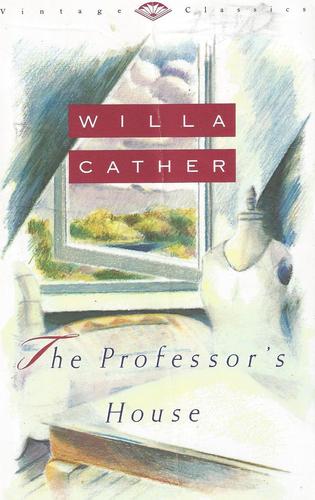
Here is a very rough bibliography of critical works on academic fiction. I thought this could be a way to do some productive crowd-sourcing, while hopefully contributing something useful to others who might be interested in this genre. My plan is to update this list with new sources as I find them.  So please consider this a work-in-progress rather than a fixed authoritative bibliography. And if you have any suggestions, feel free to drop me an email or leave a message in the comments.

I should also mention that this list includes some critical works on academic films which I was not aware of when I wrote my “Top 10” articles on academic films.  I’ve noticed that I have received quite a few hits on those particular posts.  If anyone is interested in finding more academic films and a deeper analysis of academia on screen, John Conklin’s Campus Life in the Movies is a particularly helpful resource, with a far more extensive listing of films than the ones I posted in my articles.

For a list of academic novels, the best resources are John Kramer’s annotated bibliographies The American College Novel (2nd edition, 2004) and Academe in Mystery and Detective Fiction (2nd edition, 2000).  Both of these books have been extremely helpful in locating academic novels by black writers in particular.  (The next bibliography that I post here will be a list of black academic fiction.)

ACADEMIC FICTION CRITICISM: A WORKING BIBLIOGRAPHY

BOOKS

Bosco, Mark and Kimberly Rae Connor, eds. Academic Novels as Satire: Critical Studies of an Emerging Genre.  Ceredigion, UK: Edwin Mellen Press, 2007.

Carter, Ian.  Ancient Cultures of Conceit: British University Fiction in the Post War Years.  London and New York: Routledge, 1990.

Conklin, John E. Campus Life in the Movies: A Critical Survey from the Silent Era to the Present. Jefferson: McFarland, 2008.

Dougill, John.  Oxford in English Literature: The Making and Undoing of the English Athens. Ann Arbor: University of Michigan Press, 1998.

Edgerton, Susan et al, eds.  Imagining the Academy: Higher Education and Popular Culture.  New York: Routledge, 2005.

Hinton, David B. Celluloid Ivy: Higher Education in the Movies 1960-1990. Lanham: Scarecrow Press, 1994.

Kramer, John E., Jr. The American College Novel: An Annotated Bibliography. 2nd ed.   Lanham: Scarecrow Press, 2004.

Kramer, John E., Jr. Academe in Mystery and Detective Fiction. 2nd ed. Lanham: Scarecrow Press, 2000.

Lyons, John O. The College Novel in America. Carbondale: Southern Illinois University Press, 1962.

McGurl, Mark.  The Program Era: Postwar Fiction and the Rise of Creative Writing. Cambridge: Harvard University Press, 2009.

Moseley, Merritt.  The Academic Novel: New and Classic Essays.  Chester: Chester Academic Press, 2007.

Proctor, Mortimer.  The English University Novel.  Berkeley: University of California Press, 1957.

Rawat, Vinod Kumar. Knowledge-Power/Resistance: Beyond Bacon, Ambedkar and Foucault. Gurgaon: Partridge Publishing India, 2014.  

Rossen, Janice.  The University in Modern Fiction: When Power is Academic.  London: St. Martin’s Press, 1993.

Showalter, Elaine. Faculty Towers: The Academic Novel and Its Discontents. Philadelphia: University of Pennsylvania Press, 2005.

Tobolowsky, Barbara and Pauline J. Reynolds (eds.). Anti-Intellectual Representations of American Colleges and Universities. New York: Palgrave Macmillan US, 2017.

Umphlett, Wiley Lee. Movies Go to College:  Hollywood and the World of the College-Life Film. Madison: Farleigh-Dickinson University Press, 1984.

Womack, Kenneth.  Postwar Academic Fiction: Satire, Ethics, Community.  New York: Palgrave, 2002.

ARTICLES

Anderson, Christian K. and John R. Thelin. “Campus Life Revealed: Tracking Down the Rich Resources of American Collegiate Fiction.” The Journal of Higher Education. 80.1 (2009): 106-113.

Begley, Adam. “The Decline of the Campus Novel.” Lingua Franca. September 1997.

Brown, Stephanie. “J. Saunders Redding and the African American Campus Novel.” The Postwar African American Novel: Protest and Discontent, 1945-1950. Jackson: University Press of Mississippi, 2011. 132-160.

De Mott, Benjamin. “How to Write a College Novel.”  The Hudson Review , 15.2 (1962): 243-252.

Edemariam, Aida. “Who’s Afraid of the Campus Novel?” The Guardian. 2 October 2004. http://www.theguardian.com/books/2004/oct/02/featuresreviews.guardianreview37

Foster, Travis. “Campus Novels and the Nation of Peers.” American Literary History. 26.3 (2014): 462-483

Green, Charles. “The Droves of Academe.” The Missouri Review. 31.3 (2008): 177-188.

Kramer, John. “College and University Presidents in Fiction.”  The Journal of Higher Education. 52.1 (1981): 81-95.

Leuschner, Eric.  “Body Damage: Dis-Figuring the Academic in Academic Fiction.”  The Review of Education, Pedagogy, and Cultural Studies. (2006) 28: 339-354.

Marshall, Megan.  “Academic Discourse and Adulterous Intercourse: What Campus Novels Can Teach Us.”  Atlantic Online. August 2006. http://www.theatlantic.com/doc/200608/campus-novels

Pinsker, Sanford. “Who Cares if Roger Ackroyd Gets Tenure?” Partisan Review. 66 (1999): 439-52.

Rogers, Jenny. “Old, Boring, White, and Mean: How Professors Appear on the Small Screen.” The Chronicle of Higher Education. 12 November 2012.  http://chronicle.com/article/Old-Boring-WhiteMean-/135730/

Thelin, John and Barbara Townsend. “Fiction to Fact: College Novels and the Study of Higher Education.”  Higher Education: Handbook of Theory and Research. 4th ed. New York: Agathon Press, 1988. 183-211.

Tierney, William G. “Academic Freedom and Tenure: Between Fiction and Reality.”  The Journal of Higher Education. 75.2 (2004): 161-177.

Williams, Jeffrey. “Teach the University.” Pedagogy: Critical Approaches to Teaching Literature, Language, Composition and Culture.  8.1 (2007): 25-42.

—-. “The Rise of the Academic Novel.”  American Literary History. 24.3 (2012): 561-589.

—-. “Unlucky Jim: The Rise of the Adjunct Novel.” The Chronicle of Higher Education.  12 November 2012. http://chronicle.com/article/Unlucky-Jim-the-Rise-of-the/135606

DISSERTATIONS AND MASTER THESES

Fullerty, Matthew H. G. The British and American Academic Novel. The “Professorromane”: The Comic Campus, The Tragic Self.  Diss. The George Washington University, 2008.  


UPDATED 10 May 2017.  

Toni On! New York in Harlem

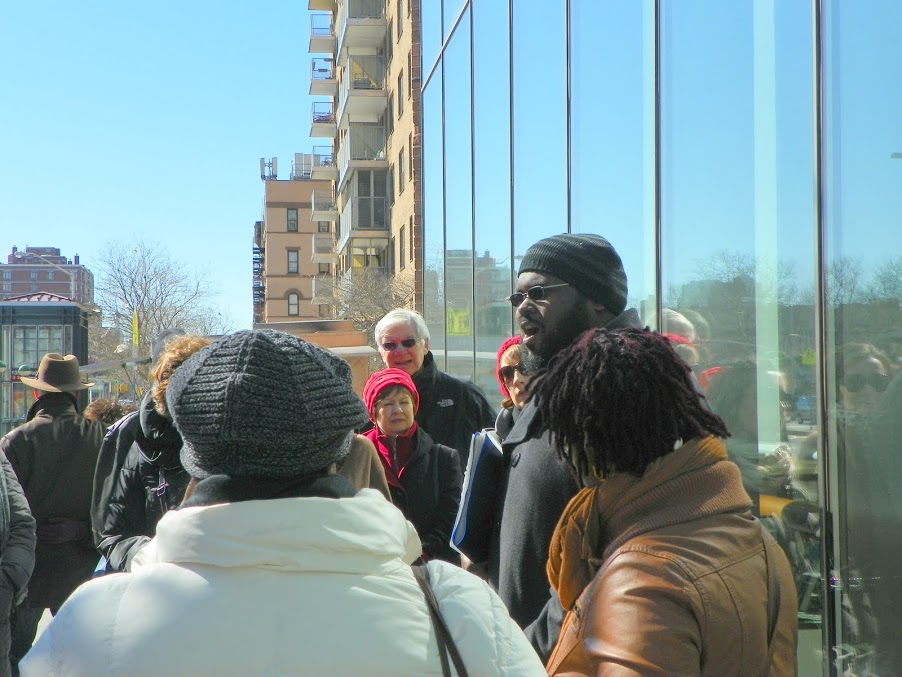
So now for something a little different:  Here’s a link to a recent episode of Toni On! New York, a local travel program in NYC, which features a couple of minutes of me talking about Harlem history for Black History Month:

http://newyork.cbslocal.com/2013/02/16/toni-on-new-york-paying-homage-to-black-history-month-with-a-trip-to-harlem/

The show usually features Seth Kamil of Big Onion Walking Tours giving some background on the history of different areas where the show is filmed.  For this one he asked me to fill in and talk about Harlem. My part is mostly in the first segment, but the whole show is very well done and worth watching.  I liked that it features some great local Harlem businesses including Harlem Heritage Tours, Make My Cake bakery, Amy Ruth’s Restaurant, Dinosaur Bar-B-Q, and the historic Apollo Theater.

100_4798

Big Onion Walking Tour of Historic Harlem – February 2012. (Photo by Millard Cook)