Teacher Don’t Teach Me Nonsense

(Published in the GC Advocate, September 2011 issue)

Teacher Don’t Teach Me Nonsense

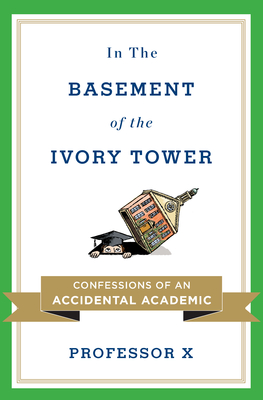
Professor X.  In the Basement of the Ivory Tower: Confessions of an Accidental Academic.  Viking Press, 2011.

Alex Kudera.  Fight for Your Long Day.  Atticus Books, 2010.

1. So it seems we are finally getting around to a real conversation about higher education.   Several noteworthy books on higher education have been published over the last couple of years, including books by scholars such as Lewis Menand, Martha Nussbaum, Andrew Hacker and Claudia Dreifus.  Last year PBS released the documentary College, Inc., which raised the profile of the for-profit college industry and seems to have encouraged more public scrutiny of the dubious financial practices at for-profit colleges.  Most of these critiques of higher education seem to revolve around three core issues:  1) The decline of tenure and the rise of adjunct labor as the industry standard, 2) the escalating costs of enrollment and the increasing amounts of loan debt students take on to cover the costs, and 3) the overall corporatization of the university, which is the driving force behind the other two issues.  We can debate about whether profit driven education is good or bad, but we can’t dispute the fact that institutions of higher education are increasingly run like corporations, and that students are now as much “customers” as they are learners.  And there’s a lot of chatter out there now about how students are being sold a sham product.   One Silicon Valley entrepreneur is offering talented young people money not to go to college and to develop startup projects instead.  He insists they will learn more from their real world experiences than from writing papers on Beowulf.

2. One piece that broke through the clutter of commentary on higher education was “In the Basement of the Ivory Tower” an article published in The Atlantic and written by a pseudonymous author, Professor X.  The article touched a nerve and went viral in the academic world largely because of the author’s contention that higher education may not be right for everyone, and that here in the U.S. we may be leading people to financial ruin by insisting that higher education be accessible for all who want to attend, even if they are not prepared for college level work.  In the book version of In the Basement of the Ivory Tower Professor X has expanded on the article and absorbed some of the livid critical responses that flooded the message boards and listservs. The resulting book is an elegant and forceful volume that uses the college writing course as a microcosm for higher education.  The hidden identity of Professor X presents a bit of problem when it comes to accepting the veracity of what is written.  We do know he is a middle-aged heterosexual married white male who has an M.F.A., if the autobiographical information included in the book is accurate.  Having worked as an English professor myself I can say I experienced the shock of recognition at several points throughout the book as he describes what it is like teaching freshman composition.

3. Some of the critiques of In the Basement of the Ivory Tower are mistaken.  I didn’t get the impression that Professor X is some kind of neo-conservative with Bell Curve-inspired ideas about the limitations of the intellect among certain groups of people.   What the book does depict is the incredible stress that the new corporate paradigm of higher education is placing on students and teachers.   Students are taking out more loans than ever to cover the cost of school.  Many of them are being coerced to enroll in higher education even though they are unprepared for it, and may not get much out of it.   Teachers are expected to do more teaching with less job security, and to teach more students with less resources. The resulting situation is one where real learning gets sacrificed for economic efficiency, and both students and professors are feeling exploited and cheated by the sitution.

4.  Cyrus Duffleman (aka Duffy or The Duff) is the protagonist of Alex Kudera’s academic novel Fight For Your Long Day.  Like Professor X he also has an MFA and is also an adjunct professor.  I’ve written about academic fiction for this paper before.  These are novels, films, stories or plays that are set in universities and deal with the lives of professors and students.   I am interested in the fictional sto­ries we tell about aca­d­e­mic life and how those stories shape and influ­ence the way that we think about higher education.    Canonical works of academic fiction such as Kingsley Amis’s 1954 novel Lucky Jim are known for satirizing university life.  There have been recent entries into the genre such as J. Courtney Sullivan’s Commencement (2010) set at prestigious Smith College.  There’s also the hit film The Social Network (and we all know what that’s about).  But I have found few novels that deal with life at the state colleges, community colleges and for-profit colleges that make up the fastest growing segment of higher education today.  In Fight For Your Long Day Cyrus Duffleman is an adjunct instructor of English in Philadelphia who shuttles between classes at multiple campuses and works a graveyard shift as a security guard.   Alex Kudera’s book is precisely the sort of academic novel I was hoping to see – one that obliterates the old images of genteel pastoral college life and shows what higher education actually looks like today in these times of corporate education, economic anxiety, digital distraction and political paranoia.

5. One thing that Professor X does well with In the Basement of the Ivory Tower is to show how this new form of higher education compromises the grading process. Again, students see themselves as consumers, and therefore a college education becomes something that they purchase rather than something they earn through their work and diligence.  The more cynical students realize this and leverage it to their advantage.  “We’re paying your salary” they say, explicitly or implicitly, “so I am entitled to my A.”  And what can the professors do about it, when all the professors are adjuncts and their own position in the university is tenuous?  This significantly diminishes their authority in the classroom, even if they actually have time to give students a good teaching experience, which too many of them do not have.  Professor X seems to have tried valiantly to maintain some evaluation standards despite this situation.  I can’t say I did the same in my own teaching experience.  (I have taught at two CUNY colleges, but I am not currently teaching.)  I didn’t give out all A’s but I did find it difficult to penalize students by being a stickler when I barely had time to keep up with the assignments myself.

6.  The difficulties in higher education are also exacerbated by the new digital reality we all live in.  It is impossible to ban electronic devices from classrooms entirely.   Some students take notes on laptops, and you know they are on Facebook or Twitter or off searching the web while you are lecturing.  And they are all texting on the phones under their desks.  Furthermore the scattered impulsive way that they absorb information has made them bad writers and impatient readers.  Professor X stresses the point that writing is difficult and that it takes a level of time and effort that seems hard for students to justify in their get-money-fast worldview.  It is hard to convince someone that careful, elegant writing matters in world where Snooki can get a seven figure advance for “writing” a book, and when more people read Chad Ochocinco’s Twitter feed last Sunday than will ever read both of these books combined.

7. College writing instructors often use autobiographically themed prompts to get students to write in freshman composition.  I wonder what will happen when Facebook’s new Timeline format turns out to be as transformative as people are saying it will be.  We won’t even have memoir as a reliable subject to prime the writing process.  People will get used to narrating their lives through digital interfaces.  Writing about yourself in full sentences and paragraphs will seem boring and pointless.

8. In Fight For Your Long Day one of the schools that Cyrus Duffleman teaches for is Liberty Tech, a for-profit school designed to prepare students for work in homeland security.  The school has invested in digitalization, and the CEO of the school says that “the age of the printed word is over.  Online research and education is the future.”

“In this thinking,” Kudera writes, “the CEO recognizes the adjunct instructor of freshman writing as just another middle man who could be eliminated.  Like the book itself, a relic of the past, his quarterly ‘nonbinding noncontract’ is just another waste of paper.”   Later in the book he imagines a scenario that I have often thought about myself:  Classrooms full of U.S. college students taught through satellite hookups to professors in other parts of the globe. “The fifteen grand a year they were paying the graduate student has become fifteen hundred for a hungrier South Asian.  And they’re whip smart. A friend of mine sat in on a Shakespeare seminar and said it was excellent.  Fharard knew the Bard, better than most Aussies and many Brits.  That’s globalization and progress.”

9. Professor X writes about the problem of rampant plagiarism in one of his chapters.  Students now aren’t even clever enough to be good plagiarizers.  As he says, “They don’t copy from academic journals.  They just take the first thing that Google belches up.”

10. I haven’t included a lot of plot synopsis for each of these books here. Even if I did want to include more summary of the books I would have just lifted some text from some of the other reviews online, and rewritten the sentences so that it sounds like I am paraphrasing in my own voice.   I would take care to make sure I didn’t cite all of the same passages that other reviewers have cited, and I would add some quotes I didn’t see in other reviews to make mine look more original.

Chances are, whatever rote information I was going to share about these books has already been written up anyway, so why waste time trying to come up with original sentences that will end up sounding like everything else that is already out there?    I have often used this sort of cut and paste technique as a way to prime other pieces of writing as well.  I don’t keep the same text completely but I use the words of others to get me started, and eventually what I end up with looks like “original” writing.  Is that plagiarism?

11. To write a truly good review would have required me to read and absorb both of these books at a level of intensity that I am not willing to commit to right now.  I have other things to do including another job that requires heavy memorization, two big presentations coming up, and finally finishing that blasted dissertation.  Normally I like to read a book at least twice before reviewing it.  The best way to write about a book is when you already have some of the details committed to memory and the writing flows easily.  I read through both of these books one time each and skimmed back through them after that.  My plan is to turn in this review to the editor, then promptly toss both of these books aside so I can move on to doing the next thing.

12.  Yes, I have jacked the enumerated style of this essay from recent popular books such as David Shields’s Reality Hunger, and Wayne Koestenbaum’s Humiliation.  Get used it.  More and more people will be writing essays in this form.

13. The truth is, I don’t know how I would handle being an undergrad in this digital environment with the ubiquity of high-speed connections, iPhones, YouTube and Facebook. It is a marvel that any undergraduates ever finish writing a non-plagiarized paper given the assault on the senses that they experience every hour of their waking lives.   I have enough of a background in reading physical books that I still feel at ease writing longer pieces.  As Professor X pointed out, the biggest problem with teaching writing today is that students do not read, and therefore it is impossible to teach someone what competent writing looks like when they cannot recognize it from their own reading experiences.

14.  Warning to any other reviewers:  One side effect of In the Basement of Ivory Tower is that it makes you extremely self-conscious about grammar.  Professor X has obviously taught plenty of writing courses, and absorbed a wide range of composition teaching advice.  I even admit that this may have contributed to some of the anxiety that made my review even later than it already was.  I began to think that if I’m going to review a book complaining about the decline of student writing, I better make sure my own language is in top shape.  That led to procrastination, which led to delays in getting this done when other tasks started to intrude.  I have found more than a few awful sentences and paragraphs in the pieces that I have published in this paper before.  I’m sure I will find some in this one too.

15.  So let’s just be cynical for a minute and accept that students really are consumers now.  That’s the way it is. We live in a capitalist economy, and the invisible hand of the market urges all institutions toward commercial efficiency.  Adapt or die.

Fine.  Then what kind of product are students being sold?  Like the companies that sell diet pills and light beer, the students are being sold a lifestyle.  And like those other products the advertisements for college are just as bogus.  Students are being duped with the age-old practice of the bait and switch.  On the subway in New York you see advertisements for CUNY that show students mugging it up with award winning professors.  CUNY does have a few of those, but most of the students who enroll are unlikely to be chilling with Nobel Prize winning profs.  No they will be taught in courses where enrollments have been expanded to laughable proportions, and they will be taught by adjuncts.  Some of their professors might be graduate students themselves, some of their professors will be career adjuncts with little prospect of becoming full professors.   Just this week a discussion broke out on our English department listserv over an ad someone posted seeking a grader to help grade papers for a jumbo course at one of the CUNY colleges.  This course has an enrollment of over 100 students, and jumbo courses like this are becoming the norm.  (These are NOT the lecture courses you find at some big state schools where students are broken up into sections and taught by teaching assistants in a more intimate setting.  These are full courses…taught by one professor…with no TA’s.)

16.  Professor X mentions one of the ugliest realities of the new adjunct paradigm.  The more one teaches as an adjunct the less likely one is to be hired as a full time professor.  Colleges want to hire full professors with hot shot credentials who just graduated from brand name schools and may eventually publish books that will gain some notice.  At most schools there is no way to work your way up to tenure by being a dutiful adjunct professor.  The harder you work at being a good teacher the more you get tainted with the stain of “career adjunct.” You can piece together a meager salary from teaching four or five courses at $3,000 a pop, but you will not move up the ladder by being a good team player.  You may in fact be dooming yourself to adjunct purgatory by being devoted to educating your students.

17.  One thing I liked about Fight For Your Long Day is that it feels very much like a 21st century novel.  Kudera depicts a world of higher education where the aspirations of learning and self-improvement still exist, but they exist alongside a world full of the crass, crude, and pornographic, a world that militates against contemplation and learning,  a world where everything from violence to paranoia to frivolous pop culture is  filtered through the interactive screens that nearly all of the students carry around with them everywhere they go.  The book is full of allusions to current events, politics and pop culture, and is probably oversaturated with too many references, but even in that sense it feels familiar.

I didn’t like the fact that the book had thinly drawn secondary characters. But then again, thinly drawn characterizations are sometimes all we are able to get from our students when they are being throttled through the higher education assembly line.   I went to a small liberal arts college where I knew my professors and they became mentors.  I went back to attend a retirement celebration for one of them last year.  I haven’t seen any of the students I taught in my courses since the classes ended, and barely saw them outside of class when they were enrolled.

18.
“To the young, schooling seems relentless, but we know it is not.  What is relentless is our education, which, for good or ill, gives us no rest.  That is why poverty is a great educator.  Having no boundaries and refusing to be ignored, it mostly teaches hopelessness.  But not always.  Politics is also a great educator.  Mostly it teaches, I am afraid, cynicism.  But not always.  Television is a great educator as well.  Mostly it teaches consumerism.  But not always.

It is the ‘not always’ that keeps the romantic spirit alive in those who write about schooling.  The faith is that despite some of the more debilitating teachings of culture itself, something can be done in school that will alter the lenses through which one sees the world; which is to say, that non-trivial schooling can provide a point of view from which what is can be seen clearly, what was as a living present, what will be as filled with possibility.

What this means is that at its best, schooling can be about how to make a life, which is quite different from how to make a living. Such an enterprise is not easy to pursue since our politicians rarely speak of it, our technology is indifferent to it, and our commerce despises it.  Nonetheless, it is the weightiest and most important thing to write about.”    – Neil Postman, The End of Education:  Redefining the Value of School (1995).

The Mad Man

“I Will Not Descend Among Professors and Capitalists”: Academia, the Body and Political Economy in Samuel R. Delany’s The Mad Man.

This presentation is part of a dissertation project on academic novels and the politics of black intellectuals. Samuel R. Delany’s The Mad Man (1994) is an academic novel set in New York in the 1980s during the HIV/AIDS crisis. The novel is narrated by John Marr, a black gay graduate student in philosophy. Described by Delany as a “pornotopic fantasy” The Mad Man combines the world of academic philosophy with scatological fantasies of public sex on the streets of New York. In The Mad Man Delany stresses the centrality of the body (and all of its messy functions) to the production of philosophical ideas. In particular I would like to put Delany’s novel in conversation with the work of Norman O. Brown. In books such as Life Against Death (1959) and Love’s Body (1966), Brown examined the relationship between psychoanalysis, spirituality and commerce. I am reading The Mad Man as an academic novel and I am interested in how Delany uses this genre to explore complex ideas about race, sexuality, education, and money.

Africana Studies Dissertations Discussions at IRADAC (Institute for Research on the African Diaspora in the Americas and the Caribbean)

Room 8402,CUNY Graduate Center
October 14, 2011, 12pm-2pm

Some helpful links:
-Steven Shaviro wrote a couple of interesting posts  on his blog about The Mad Man here and here.
-Coincidentally, Shaviro also wrote a great piece about Norman O. Brown as well.
-A good (auto)biography of Samuel R. Delany can be found here (written by his critical alter-ego “K. Leslie Steiner”)
-And to tip my hand a bit, the title I’m using is not from Delany but from Walt Whitman’s notebooks for Leaves of Grass, specifically this page which appears just before the first lines that made it into the poem.  Whitman scholar Ed Folsom mentioned this line in the wonderful PBS documentary on Whitman and I thought it resonated with the ideas in Delany’s novel.

It’s been a long time…

Not only has the summer come and gone, but the fall semester is now in mid-terms. Yikes!  I avoided posting things here over the summer because I wanted to get some reading and writing done with minimal digital distraction. It  seems I may finally finish this dissertation that I keep yammering on about.

A few things I have coming up:

-Another book review for the GC Advocate is done.  I’ll post that in a few days.

-I’m giving a talk on Samuel Delany’s The Mad Man on October 14 in the IRADAC program at the Graduate Center. (Details in another post)

-I’ll be presenting again on Ishmael Reed’s Japanese by Spring, this time at the University of Pennsylvania’s conference on Asian-American and African-American studies in November.

-More to come soon…

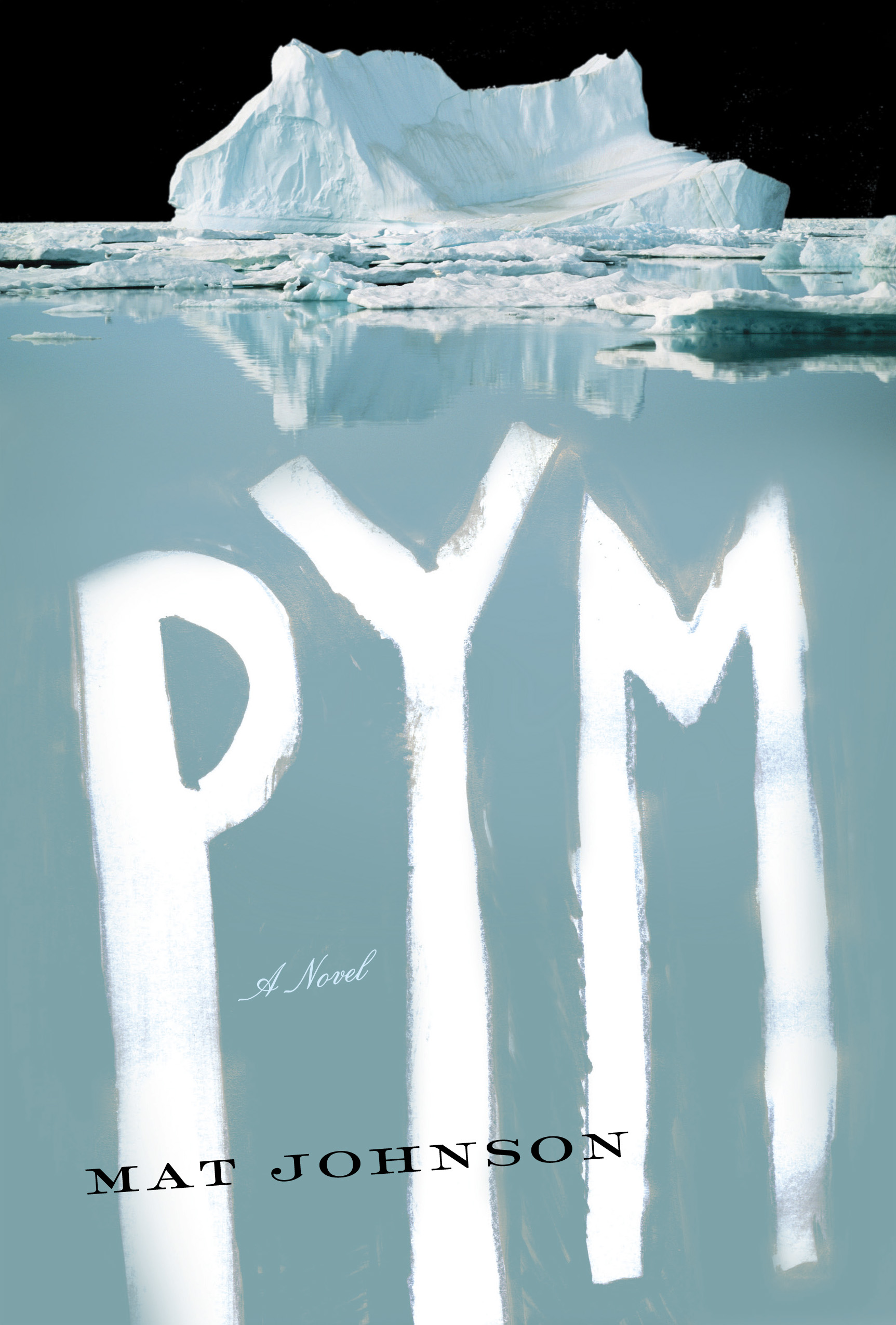
Pym

Pym: A Novel by Mat Johnson. Spiegel & Grau (2011).

When the first reviews of Mat Johnson’s Pym began circulating online, a couple of friends emailed me links about the book. They knew that I am working on a dissertation about academic novels, and they figured (correctly) that this novel would be right up my alley. The narrator of Pym is a self-described “blackademic” named Christopher Jaynes, the only black professor in the English department at a Northeastern liberal arts college.  Mat Johnson is a professor of creative writing at The University of Houston, and the author of four other novels, including the historical fiction work The Great Negro Plot about the 1741 slave revolt conspiracy in New York City.

My own research is on academic novels written by black writers and/or featuring black characters.  Some other examples in this genre include Percival Everett’s Erasure, Ishmael Reed’s Japanese by Spring, and Zadie Smith’s On Beauty. Writers of black academic novels have used the device of fiction to comment on the state of higher education and also to address political questions about the role of the black intellectual.  At some point in all of these novels, there is some discussion as to whether the black intellectual does or does not have a specific obligation to apply their knowledge and talents to the social and political problems facing the African-American community.  The characters are also forced to confront, in one way or another, the idea that black intellectuals do or do not act as representatives of the entire race.  Then of course there is the very idea of “race” itself which complicates matters even further with the contested boundaries of identity, skin color, and ancestry.  In Pym Mat Johnson uses an inventive blend of satire, literary criticism, and even a bit of science fiction, to examine how the idea of race continues to bedevil us in 21st century America.

The quest for tenure is a staple of the academic novel plot.  True to form Pym begins with Christopher Jaynes being denied tenure, in part because of his refusal to sit on the “Diversity Committee.” His argument is that “The Diversity Committee has one primary purpose: so that the school can say it has a diversity committee…People find that very relaxing.  It’s sort of like, if you had a fire, and instead of putting it out, you formed a fire committee.” Another reason why Jaynes is rejected for tenure is because his colleagues don’t think his research interests are quite black enough.   Though he’s competent in black literature, Jaynes is also interested in the proverbial Dead White Men, and the one that fascinates him most is Edgar Allen Poe.  He is particularly obsessed with The Narrative of Arthur Gordon Pym of Nantucket (1838), the only novel Poe ever published, and by all accounts a highly idiosyncratic mess of a work.  We can assume that at some point, probably in a graduate school seminar, our man Jaynes got his hands on a copy of Toni Morrison’s Playing in the Dark: Whiteness and the Literary Imagination. (Morrison’s book is never mentioned outright in Pym but it looms large in the background.)  In that influential work of literary criticism Morrison argued that there has always been an “Africanist” presence in American literature, even when the authors may not have consciously written about black subjects.  For Jaynes this theory helps to explain some of Poe’s wacky racial characterizations.

In Poe’s novel, Arthur Gordon Pym is a sailor who, in a series of wild events, ends up on a ship in the South Seas. Eventually the ship nears Antarctica where the crew comes upon a strange tropical island called Tsalal populated by a group of dark-skinned natives.  Among the crew of Pym’s ship is a man named Dirk Peters.  He is identified by Poe as a “half-breed Indian,” but Jaynes thinks that Poe’s description of him sounds awfully Negroid, especially compared to the way Poe had described black characters in his other stories.  Jaynes’s big intellectual breakthrough comes when he stumbles on to the holiest of holy grails for an American literary scholar – an unpublished pre-Civil War manuscript, and finds out that it was written by an African-American man named Dirk Peters who, it turns out, was a real person and not just a fictional character in Poe’s novel.  He tracks down a descendant of Peters in Gary, Indiana named Mahalia Mathis who is none too happy about her ancestor being called an African-American.  She professes to be a proud “Native American,” and she drags Jaynes to a meeting for an organization that turns out to be full of other delusional black folks claiming to be way more Indian than they obviously look. Jaynes’s investigations eventually lead him on his own wild expedition to Antarctica. The trip is arranged by a cousin named Booker Jaynes, described as “the world’s only civil rights activist turned deep sea-diver.”  Chris is joined by his childhood friend Garth Frierson, a tubby black bus-driver from Detroit with a weakness for Little Debbie snack cakes (a habit that ends up coming in handy on their trip in the most improbable way).  Of course there’s a romantic storyline involved, and in this case the romantic interest is Chris Jaynes’s ex-girlfriend Angela Latham, a businesswoman who has just remarried, and whose new husband unexpectedly joins them on the trip.  I won’t ruin too much about their trip to Antarctica, but the excursion turns into a mad cap adventure that involves: a group of weird humanoid snow creatures; the secret Biosphere-style compound of a neo-conservative American painter; “Arthur Gordon Pym” himself; and maybe even the end of the world.

The closest literary cousin to Pym is Percival Everett’s 2001 academic novel Erasure which deals with the discourse of racial authenticity in American cultural and literary history.  In Pym Chris Jaynes feels that he has been rejected by his academic colleagues because he was working on a project that was not “black” in the most immediately legible way.  It is no mistake that he ends up being replaced on the faculty by a self-anointed “Hip-Hop Theorist” named Mosaic Johnson.  Jaynes insists that he wasn’t being evasive by studying white writers.  In fact he was staring deep into the heart of whiteness itself to try to understand the race question.  As he says, “It wasn’t that I was an apolitical coward, running away from the battle.  I was running so hard toward it, I was around the world and coming back in the other direction.”  By the end of the novel Jaynes has done just that – and in a much more literal way than he ever imagined when he started out.

Through some clever bits of literary criticism inserted in the novel, Jaynes discusses the importance of the slave narrative to all forms of black literature that have come after it.  But he also admits to some feelings of exhaustion about the subject.  “I am bored with the topic of Atlantic slavery.  I have come to be bored because so many boring people have talked about it.  So many artists and writers and thinkers, mediocre and genius, have used it because it’s a big, easy target.”  However, he goes on to acknowledge that the topic is simply unavoidable in American history.  “It is the great story, the big one, the connector that gives the reason for our nation’s prosperity and for our very existence within it.”  The history of slavery and the racial codes that evolved out of it have thoroughly infiltrated the American psyche, and race continues to permeate American politics.  We’re all getting the ultimate object lesson in this right now with the ongoing saga of our first black president and the controversies over his racial identity, religious beliefs and place of birth.  Mat Johnson’s Pym is one of many examples of how black artists have tried to use humor and satire to ease the sting of racism, or to undermine the idea of race itself by exposing its absurdities.  There is a long and celebrated history of this kind of irreverence in black stand-up comedy. (Johnson cites the comedian Paul Mooney in one of his footnote digressions.)  But even with the best efforts in humor, or scholarship, or activism, the specter of race will not be so easily exorcised.  And it certainly won’t be removed just by uttering the word “post-racial.” If there is one big, corny, clichéd lesson to take from a novel like Pym, it is that the only way out is through.

(This review will be published in the May 2011 issue of the GC Advocate)

From Nieuw Haarlem to “New” Harlem

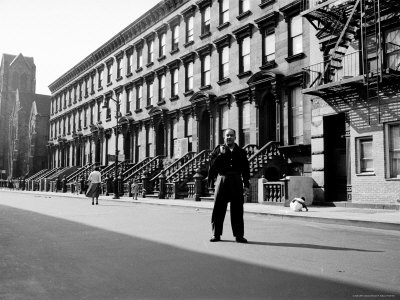
Poet Langston Hughes standing on a street in Harlem

From Nieuw Haarlem to “New” Harlem*

Jonathan Gill. Harlem: The Four Hundred Year History from Dutch Village to Capital of Black America.  New York: Grove/Atlantic, 2011.

Sharifa Rhodes-Pitts.  Harlem is Nowhere: A Journey to the Mecca of Black America.  New York: Little Brown and Company, 2011.

Jeffrey Perry. Hubert Harrison: The Voice of Harlem Radicalism, 1883-1918. New York: Columbia University Press, 2009.

If you want an interesting glimpse of what Harlem is like in 2011, go there on a Sunday morning.  Tour buses pull up to the sidewalk on 125th street and dump out scores of tourists near the Apollo Theater.  Take a walk up Seventh Avenue (now Adam Clayton Powell Jr. Boulevard).  In Harlem’s heyday, this wide boulevard was the preferred destination for Sunday “strollers,” black residents of Harlem who went to church decked out in their best formal attire and showed off on the promenade afterward.  This fashion phenomenon prompted some people to say Seventh Avenue was “like Easter Sunday 52 Sundays out of the year.”  These days Seventh Avenue on Sunday morning is clogged with “strollers” of a different sort: casually dressed tourists – many of them in blue jeans and T-shirts, which, if you know anything about black churches, is way too casual for the regal ritual of a black church Sunday morning anywhere in America.  The tourists come to Harlem and walk up and down the avenue to stop in one of the neighborhood’s churches hoping to hear some of this rousing, foot-stomping black gospel music they’ve heard so much about.  Most mornings it looks like there are more white people going into the churches than black folks. Outside of one the biggest and most popular churches, Abyssinian Baptist Church on 138th Street, the line often extends around the corner for the 11am service.  The ushers regularly have to turn dozens of tourists away.

I’m not being self-righteous when I talk about seeing white tourists in Harlem. You might even say I’m one of the parties to blame.  Since 2008 I have worked as a New York City walking tour guide.  Leading these tours, often with 25 or so people tagging along behind me, there’s no way to be inconspicuous. Heckling is a regular occurrence.  One time a middle aged black woman came up and started talking to my group. She began quizzing me about what I was telling the group.  You can never tell what’s going to happen when people stop by and cut in on a tour, but I’ve been doing this long enough to know that when New Yorkers on the street want to get chatty it is usually best to just let them speak their piece and move on.  Most of the time people turn out to be warm and interesting and informative.  Other times, they might be silly or hostile.  But it’s always interesting, so I just let it ride.  At first this particular woman began frantically pointing out some interesting places, such as a downstairs location that was once a bar where a scene from Superfly was filmed, and a corner where there was once a store owned by Brooklyn Dodgers catcher Roy Campanella.  Then she suddenly flipped on me, “You need to tell them to upgrade your stuff man.  You ain’t even from Harlem!” And then she walked away still muttering “He ain’t even from Harlem” and then kept shouting and pointing at me and my group from across the street.  It was then I noticed the woman wasn’t just being contrary with me, and that maybe she wasn’t all there.  But, crazy or not, she definitely had a point.

No ma’am, I ain’t from Harlem.  I was born and raised in Mississippi.  I’ve been living in New York for nine years.  I’m now a graduate student working on a Ph.D. in English.  The tour company I work for specifically hires graduate students.  Our guides are all serious researchers on New York history, but we may not necessarily be fully authentic native New Yorkers.  I am black, so I knew that I could at least play the black identity card when I started doing tours of Harlem.  I’m a graduate of Morehouse College, a historically black college in Atlanta, GA, the same school where Abyssinian Baptist Church pastor the Rev. Calvin O. Butts, III graduated (along with a number of other notable African-American men).  I have a B.A. in history, focusing on African-American history, and the dissertation I am working on deals with black literature and higher education.  But despite all of this, no, I can’t claim to be from Harlem.

I understand this kind of nativism.  That sense of ownership over place is pervasive throughout New York, but is especially prevalent in Harlem, a neighborhood with a proud history and tradition of black independence.  I don’t even need to repeat all the names of Harlem luminaries and all the important organizations that started there.  However, over the past decade gentrifiers have begun to move in.  125th St. is now filled with snazzy chain stores, (there’s an American Apparel there now for chrissakes, not to mention two Starbucks).  The price of housing has skyrocketed with new glass condos going up on the avenues.  Venerable black owned businesses have closed.  And now legions of curiosity seeking tourists are clogging the sidewalks to listen to people who aren’t even from Harlem talking about the history of the neighborhood.  I can understand why some folks might be a little sour.

But…someone else might say…New York neighborhoods have always evolved.  The Jewish immigrants have all gone from the Lower East Side.   The Italians have all gone from Little Italy.  New York’s ethnic history is one of constant movement and displacement.  This is an argument that our contemporary gentrifiers have noted well and have effectively incorporated into their arsenal.  Nativism just doesn’t work in New York. New York neighborhoods have always been a revolving door if you’re purely talking about racial and ethnic identity.  Adding economics and power to the mix, however, requires looking at things little differently.

These three recent published books all deal with the history of Harlem, this neighborhood that was once known as The Capital of Black America.  Jonathan Gill’s study of Harlem history begins in the early 1600s with the encounters between the Lenape Indians and the first Dutch explorers to set foot on the island.  Within days after the Dutch arrival there were violent clashes between the two groups.  In these first clashes between people who had been inhabiting the island for decades (at least) and these new arrivals from half a world away, Gill sees, “a foretaste of Harlem’s future.”

It is no secret that the clash of cultures has raged on in Harlem, and that tensions remain high there and in other parts of New York City as gentrification shows no sign of stopping.  Sharifa Rhodes-Pitts gives us a more intimate view of Gill’s point about the future.  In Harlem is Nowhere she tells one particularly juicy anecdote about sitting in a Harlem café near two white male yuppies, one a resident, the other a friend who was visiting the neighborhood for the first time.  The visiting friend seemed to be enjoying this trip to this exotic locale and he told the other guy, “This is fabulous…Really, you have to do something to get more people up here!” The quote is purely anecdotal, but anyone who has spent time in contemporary New York has probably overheard some version of this neo-colonial rhetoric tumbling out of the mouth of someone talking about Harlem or Washington Heights or whatever neighborhood in Brooklyn has been declared “rad” and infested by hipsters.  At first there was Nothing…then the hip, wealthy, (mostly) white people showed up….and then there was Something.  But not all of the gentrifiers are white, and that complicates matters a bit.  (At one point in her book Rhodes-Pitts ponders whether she is herself just another gentrifier.)

In his biography of Hubert Harrison, Jeffrey B. Perry explores the complexity of race and class politics in Harlem.   In the book Perry lays down his case that Harrison deserves a bigger place in the pantheon of Harlem’s great intellectual and political leaders.  As Perry describes him, Harrison was  “the most class conscious of the race radicals, and the most race conscious of the class radicals…more race conscious than [A. Philip] Randolph and [Chandler] Owen and more class conscious than [Marcus] Garvey.”  But his biography is much more than just another “Great Man” history.  Perry situates Harrison’s life in the historical and political context around him, and links Harrison’s life to the local, national and global struggle over labor power.  It this kind of understanding of the complex interaction between race and class that is precisely what is necessary to really make sense of Harlem’s past, present and future.

Jonathan Gill’s book Harlem: The Four Hundred Year History from Dutch Village to Capital of Black America is the first comprehensive history of the entire neighborhood of Harlem.  When I was beginning to learn tours, I turned to books such as Gilbert Osofsky’s Harlem the Making of a Ghetto and David Levering Lewis’s When Harlem Was in Vogue to establish a narrative of Harlem’s history from its beginning to the development of Black Harlem.  These and other books gesture toward a history of Harlem before it became black in the early 1900s, but few of them go into extensive detail about that early history. For the most part the non-black history of Harlem was tucked away in ethnic histories of Jewish, German, Irish and Italian immigrants.  For the early history of the island of Manhattan there are books such as the massive Gotham: A History of New York City to 1898 by Edwin Burrows and Mike Wallace.  That book, and others like it, contains some information about the founding of the Dutch village of Nieuw Haarlem in upper Manhattan in the 1650s (named for the city of Haarlem in The Netherlands).  But it appears that Jonathan Gill is the first to have gathered up all of that material, from the pre-history of New York all the way up to the latest information, and synthesized it all into a grand, epic story focused specifically on this distinct New York neighborhood.

Geographically, Harlem starts at the top of Central Park at 110th Street (Hence the title of the film and song Across 110th Street).  It stretches up to 155th Street, the northernmost of the 155 crosstown streets laid out in the original 1811 grid plan of Manhattan.  It stretches across from the Harlem River on the east side, to the Hudson River on the west side.  Within that broad expanse (a four square mile chunk of the thin island of Manhattan) there have been many Harlems over the years.  For New York history buffs Gill’s book is a treasure trove of historical information linking Harlem even more closely to the history and destiny of New York City.  For instance many people have heard of the infamous New York politician William “Boss” Tweed, who grew up on the Lower East Side and became the leader of the powerful political machine Tammany Hall.  The Tweed Courthouse downtown on Chambers St. was used by Tweed to bilk millions of dollars from the city’s coffers, and the building still sits there as one of the nation’s great symbols of political corruption.  However, Tweed’s influence extended uptown as well.  Tammany was involved in the push of speculative building that made Harlem into a residential community in the late 1800s, and they helped to filter some Irish immigrants into the neighborhood.  If you’ve been to Harlem you may have noticed how much wider the boulevards of Seventh and Lenox Avenues are than most streets in the city. From Gill’s book I learned those streets were designed that way as construction projects of the Tweed Ring.  Before he was exposed, Tweed was even planning another city building in Harlem like his downtown courthouse to make some more money disappear. It was the political cartoonist Thomas Nast, whose scandalous drawings eventually helped to publicize Tweed’s corruption.  Nast also lived in Harlem near 125th Street and 5th Avenue.

To illustrate the neighborhood’s history, Gill focuses on several other notable New Yorkers who have called Harlem home.  German Jewish entrepreneur Oscar Hammerstein lived in West Harlem.  His son Oscar Hammerstein II eventually teamed up with Richard Rodgers and Lorenz Hart to change the landscape of American music (drawing inspiration from the jazz music that eventually spilled out of the clubs of black Harlem.) There was also an Italian settlement in East Harlem.  The famous uptown restaurant Rao’s, which is still open on 114th Street, is one of the last vestiges of Italian East Harlem.  In the late 1920’s the Puerto Rican community of East Harlem began to take form, eventually evolving into the vibrant neighborhood affectionately known as El Barrio.  If I have one minor gripe with Gill’s book it is that his treatment of Puerto Rican Harlem gets lost in the shuffle as he moves on to discuss the ascent of black Harlem in the 1920s. The history of black Harlem itself is well-trod territory, but Gill deftly lays it all out here.  He capably sorts out the complex history of real estate in 1904 to 1907 involving Philip Payton the founder of the Afro-American Realty Company.  Payton was the man credited with placing the first black families on the blocks around 134th St. that would become the epicenter of black Harlem.

Harlem is Nowhere: A Journey to the Mecca of Black America grapples with the cultural, literary, and political legacy of this black neighborhood that formed when black families began to fill up the residential buildings that were thrown up in a fierce fit of speculation, a run which bottomed out with a real estate bust in the 1890s. The book is a creative mix of memoir, literary criticism and journalism woven into a first person narrative about a young black American intellectual as she moves to Harlem.  Rhodes-Pitts creatively captures the persistent attraction of Harlem by writing about some of the great characters in Harlem literature – from Helga Crane in Nella Larsen’s 1928 novel Quicksand to the nameless narrator of Ralph Ellison’s Invisible Man.  Rhodes-Pitts took the book title from an Ellison essay.  The concept of “Harlem is Nowhere” might seem a little flippant, but she (and Ellison) intended it to be a provocation.  The phrase does capture a certain essential quality about Harlem – that it has existed as much as a dream as a physical reality.  The dreams of Harlem – this mecca of blackness, this refuge from discrimination and indignity – did not take long to fade after the 1920s had passed and when the harsh realities of impoverished urban life began to set in for these agrarian Southerners who had moved there.  As Langston Hughes famously said, “The ordinary Negroes hadn’t heard of the Negro Renaissance. And if they had, it hadn’t raised their wages any.”

The phantasmic quality of Harlem is surely something to reconsider now that the place has transformed from a shining hope of black self-determination, and then into a drug and crime addled slum in the 1970s, and now into the potential paradise for rich Manhattanites who fall low enough in the ranks of the merely rich that they’ve been priced out of the West Village and Tribeca by the über-rich. Gill’s book ends on a somewhat triumphalist note, lauding the arrival of corporate charter schools and chain stores and Columbia University’s multi-million dollar expansion into West Harlem. However, Sharifa Rhodes- Pitts takes us inside the heated community meetings and listens to the grievances of working class black Harlemites who have organized against the city’s aggressive removal of businesses such as the Mart 125 where vendors operated a market on 125th Street.  People are still trying to fight the good fight, but a sense of resignation and defeat is starting to set in.  The tide has already turned. Rhodes-Pitts mentions seeing a young Harlemite at one rally wearing a T-Shirt that said, “Harlem isn’t for sale because Harlem has already been sold.”

Since the publication of Hubert Harrison: The Voice of Harlem Radicalism, 1883-1918 in the fall of 2009 historian Jeffrey Perry has been working tirelessly to spread the word about the life and work of this grossly undervalued black Caribbean intellectual.  A look at Perry’s website reveals a steady stream of speaking engagements at universities, libraries, community bookstores and labor organizations.  (I saw Perry give a presentation on Harrison here at the CUNY Graduate Center last year.) The book is not just a simple biographical narrative of Hubert Harrison’s life.  Instead, Perry meticulously reconstructs the social and intellectual history surrounding Harrison, and gives a thorough interpretation of Harrison’s political activism and his literary output.  For instance, Perry does not simply write about Harrison’s early life in St. Croix where he was born in 1883.  He also examines the history of the transatlantic slave trade and the impact that the legacy of the slave trade and post-slavery labor structures had on the Caribbean.  Hubert Harrison came to Manhattan in 1900 and settled into the neighborhood known as San Juan Hill in the west 60s, which was then the biggest cluster of black citizens in New York.  When Perry writes about Harrison’s move to New York and Harlem, he puts him in the context of the history of black New Yorkers and the struggle for racial and economic justice in the city.

Harrison was heavily involved in the labor movement, working at various points as a postal worker, then with the Socialist Party USA, and also with the American Federation of Labor. He was also the editor of the Negro World, the newspaper of Marcus Garvey’s Universal Negro Improvement Association (UNIA), and he wrote prodigiously throughout his life.  Harrison was well-known around Harlem as a soapbox orator and an independent lecturer.  He never attended college, but was a fierce autodidact.  Perry describes his voracious reading habits and his diligent commitment to writing and independent education.   In his time Harrison was recognized as a major talent by contemporaries such as A. Philip Randolph who called him “The Father of Harlem Radicalism.”  But for complex reasons – including poverty and politics – he faded from memory.  In particular Perry makes the case that Harrison’s commitment to atheism and freethought put him on the wrong side of the black political structure which has long been rooted in religion, and especially in the protestant Christian black churches. Harrison was a vocal critic of the black churches, which were too often fiefdoms of charismatic individuals.  The emphasis on spiritual escapism pulled people away from the historical materialism that he felt was necessary to understand the position of the black working classes, and the workings of race as mode of social control.

Because of all of this detailed historical analysis, which sometimes strays away from the specific details of Harrison’s life, I have to say the biography is a bit of a dense slog to read through. From hearing Perry’s lectures and from reading other reviews and articles about Harrison, I was familiar enough with the material that I did not get completely lost.  But for a reader who is new to Harrison, perhaps a better place to start would be The Hubert Harrison Reader (Wesleyan, 2001), Perry’s edited anthology of Harrison’s writings.  The introduction to the Reader is a more succinct primer on Harrison’s life, and the essays in the collection provide an opportunity to hear Harrison’s unfiltered voice as a writer.  On its own terms though, the biography is an impressive work of intellectual history that traces the context and circumstances of Harrison’s life, and analyzes the way that his thinking about race and class developed over his lifetime and helped to shape Harlem politics at the dawn of the “Harlem Renaissance.”  And about that so-called “renaissance” Harrison was circumspect.  In an essay on the idea of a “Negro Literary Renaissance” Harrison emphasized that most of the critics who were touting the literary production of 1920s Harlem as a “renaissance” were, in fact, overlooking “the stream of literary and artistic products which had flowed uninterruptedly from Negro writers from 1850 to the present.”  Though he dismissed the talk of renaissance as a white downtown fad, Harrison nevertheless took seriously the actual artistic production of his Harlem contemporaries, and he wrote numerous reviews of poetry, novels and plays.

In one chapter of Harlem is Nowhere, Sharifa Rhodes-Pitts dishes out some tough love to Harlem.  Well, she isn’t doing the dishing herself so much as she delves into the critiques from some black leaders that black Harlemites had not done enough to buy up property in Harlem and secure a black future for the neighborhood.  This is a critique that I also heard from several black leaders at an event in Harlem last year.  In her chapter “Land is the Basis of All Independence” she touches on an important idea when she writes about how some people in Harlem falsely subscribe to the idea that blacks have invested a valuable “sweat equity” into the neighborhood that should give them a right to the space, even if they don’t “own” property on paper.  That may be true, but the fact is the wealthy have the state power and the financial power to impose their will whether it’s on the Brooklyn waterfront in Williamsburg or on Lenox Avenue uptown.  It is hard not to make all of this sound like the usual litany of grievances about institutional racism and the historical legacy of slavery and Jim Crow. But, well, this is about the institutional racism and the historical legacy of slavery and Jim Crow.  Millions of blacks were brought to the Americas to work on plantations, subjected to a dehumanizing segregation under Jim Crow, essentially re-enslaved again in the post-Reconstruction era in exploitative sharecropping arrangements, and then subjected to a litany of injustices throughout the 20th century – from lynching to false imprisonment to red-lining and financial discrimination to the assassinations of black political leaders.  And somehow, in the midst of all that, black folks were somehow supposed to find the time and resources to buy up property and secure the neighborhood from gentrification.

Of course now that there is a black guy with the improbable name of Barack Hussein Obama II in the White House, some people are even less willing to hear such grievances. That’s just the rub:  Token diversity is the biggest weapon that the upper class uses against any accusations of inequality or, god forbid, white supremacy (a concept Hubert Harrison explored thoroughly in his political thought).  What is happening in Harlem now is bigger than that neighborhood, bigger than New York, bigger even than the United States.  The biggest lie of the “free-market” cheerleaders is the idea of a free market itself.  There is no accumulation of private wealth without active and aggressive state intervention to tip the scales in favor of the rich.  One way to do that is by making labor organizing illegal, as is happening in Wisconsin right now. All throughout New York the wealthy overclass is gobbling up space to create their own heavily policed and privatized suburban utopia.  But like the city of Fritz Lang’s classic film Metroplis, somebody has to be down below turning the gears in order to make the city work.  In this case, the people below the city are actually outside of it, pushed out to Queens and Brooklyn, New Jersey and Long Island and coming in to Manhattan to serve at the feet of the rich.  This was a city that once took pride in its viable working class. Now the best people hope for is to be buried with one of the Pharaohs.

I still love this city.  For better or worse I have made it my home for almost a decade and I plan to be here even longer.  The going is rough sometimes.  I am no trust-funder and this is not a great time to be looking for an academic career in the humanities. But I have enjoyed my walks through Harlem, even with the heckling.  Learning about New York history has deepened my appreciation for the city in ways I never imagined when I moved here.  I don’t have any positive notes of hope to say that something good will happen to the disenfranchised people of Harlem before they get completely wiped away in favor of their wealthier counterparts.  But these books make me hopeful that someone else out there might be reading, and dreaming, and scheming, and coming up with some kind of plan to help save our souls, and the soul of this city.

*[This article was first published in the March 2011 issue of the GC Advocate]