Pym

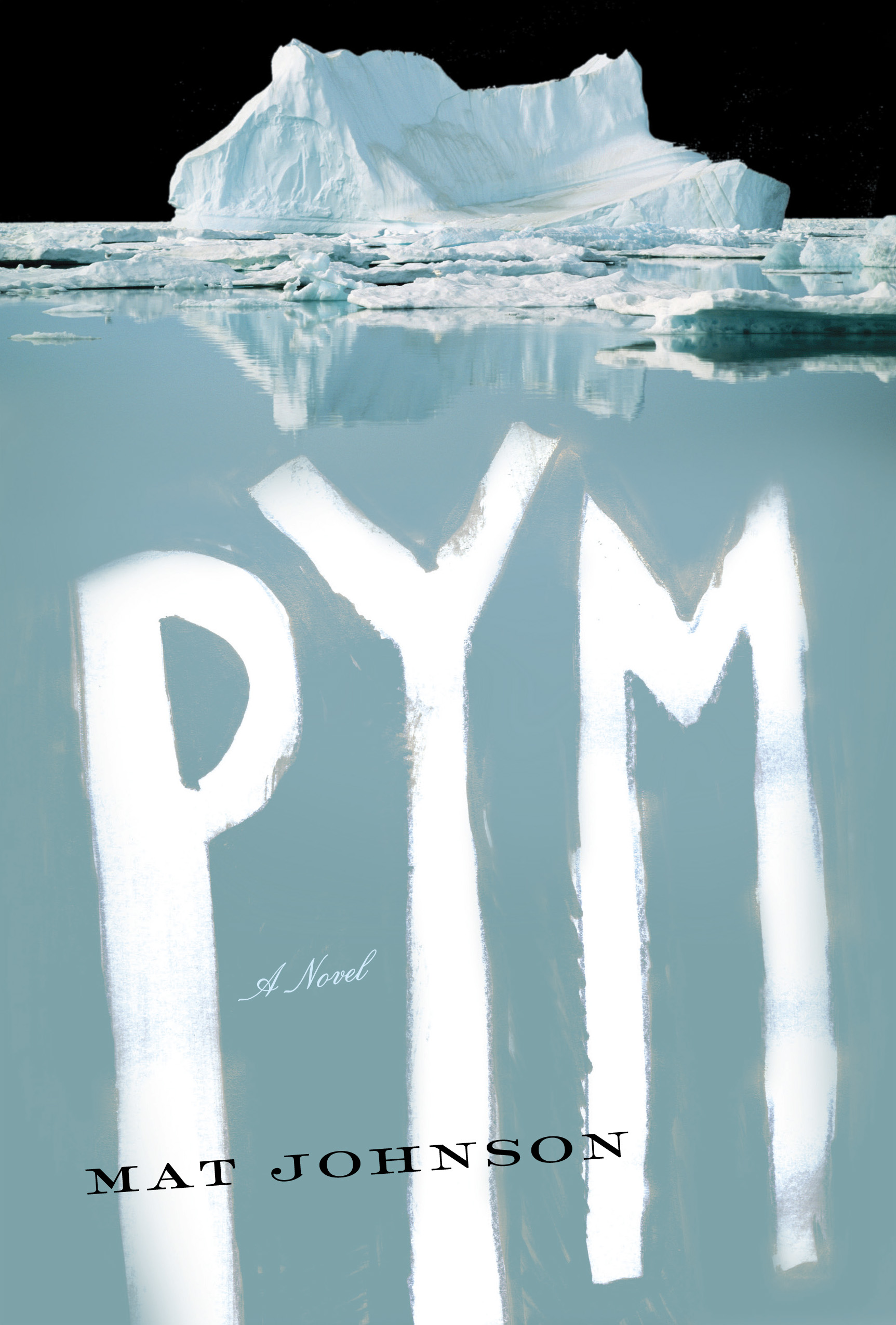
Pym: A Novel by Mat Johnson. Spiegel & Grau (2011).

When the first reviews of Mat Johnson’s Pym began circulating online, a couple of friends emailed me links about the book. They knew that I am working on a dissertation about academic novels, and they figured (correctly) that this novel would be right up my alley. The narrator of Pym is a self-described “blackademic” named Christopher Jaynes, the only black professor in the English department at a Northeastern liberal arts college.  Mat Johnson is a professor of creative writing at The University of Houston, and the author of four other novels, including the historical fiction work The Great Negro Plot about the 1741 slave revolt conspiracy in New York City.

My own research is on academic novels written by black writers and/or featuring black characters.  Some other examples in this genre include Percival Everett’s Erasure, Ishmael Reed’s Japanese by Spring, and Zadie Smith’s On Beauty. Writers of black academic novels have used the device of fiction to comment on the state of higher education and also to address political questions about the role of the black intellectual.  At some point in all of these novels, there is some discussion as to whether the black intellectual does or does not have a specific obligation to apply their knowledge and talents to the social and political problems facing the African-American community.  The characters are also forced to confront, in one way or another, the idea that black intellectuals do or do not act as representatives of the entire race.  Then of course there is the very idea of “race” itself which complicates matters even further with the contested boundaries of identity, skin color, and ancestry.  In Pym Mat Johnson uses an inventive blend of satire, literary criticism, and even a bit of science fiction, to examine how the idea of race continues to bedevil us in 21st century America.

The quest for tenure is a staple of the academic novel plot.  True to form Pym begins with Christopher Jaynes being denied tenure, in part because of his refusal to sit on the “Diversity Committee.” His argument is that “The Diversity Committee has one primary purpose: so that the school can say it has a diversity committee…People find that very relaxing.  It’s sort of like, if you had a fire, and instead of putting it out, you formed a fire committee.” Another reason why Jaynes is rejected for tenure is because his colleagues don’t think his research interests are quite black enough.   Though he’s competent in black literature, Jaynes is also interested in the proverbial Dead White Men, and the one that fascinates him most is Edgar Allen Poe.  He is particularly obsessed with The Narrative of Arthur Gordon Pym of Nantucket (1838), the only novel Poe ever published, and by all accounts a highly idiosyncratic mess of a work.  We can assume that at some point, probably in a graduate school seminar, our man Jaynes got his hands on a copy of Toni Morrison’s Playing in the Dark: Whiteness and the Literary Imagination. (Morrison’s book is never mentioned outright in Pym but it looms large in the background.)  In that influential work of literary criticism Morrison argued that there has always been an “Africanist” presence in American literature, even when the authors may not have consciously written about black subjects.  For Jaynes this theory helps to explain some of Poe’s wacky racial characterizations.

In Poe’s novel, Arthur Gordon Pym is a sailor who, in a series of wild events, ends up on a ship in the South Seas. Eventually the ship nears Antarctica where the crew comes upon a strange tropical island called Tsalal populated by a group of dark-skinned natives.  Among the crew of Pym’s ship is a man named Dirk Peters.  He is identified by Poe as a “half-breed Indian,” but Jaynes thinks that Poe’s description of him sounds awfully Negroid, especially compared to the way Poe had described black characters in his other stories.  Jaynes’s big intellectual breakthrough comes when he stumbles on to the holiest of holy grails for an American literary scholar – an unpublished pre-Civil War manuscript, and finds out that it was written by an African-American man named Dirk Peters who, it turns out, was a real person and not just a fictional character in Poe’s novel.  He tracks down a descendant of Peters in Gary, Indiana named Mahalia Mathis who is none too happy about her ancestor being called an African-American.  She professes to be a proud “Native American,” and she drags Jaynes to a meeting for an organization that turns out to be full of other delusional black folks claiming to be way more Indian than they obviously look. Jaynes’s investigations eventually lead him on his own wild expedition to Antarctica. The trip is arranged by a cousin named Booker Jaynes, described as “the world’s only civil rights activist turned deep sea-diver.”  Chris is joined by his childhood friend Garth Frierson, a tubby black bus-driver from Detroit with a weakness for Little Debbie snack cakes (a habit that ends up coming in handy on their trip in the most improbable way).  Of course there’s a romantic storyline involved, and in this case the romantic interest is Chris Jaynes’s ex-girlfriend Angela Latham, a businesswoman who has just remarried, and whose new husband unexpectedly joins them on the trip.  I won’t ruin too much about their trip to Antarctica, but the excursion turns into a mad cap adventure that involves: a group of weird humanoid snow creatures; the secret Biosphere-style compound of a neo-conservative American painter; “Arthur Gordon Pym” himself; and maybe even the end of the world.

The closest literary cousin to Pym is Percival Everett’s 2001 academic novel Erasure which deals with the discourse of racial authenticity in American cultural and literary history.  In Pym Chris Jaynes feels that he has been rejected by his academic colleagues because he was working on a project that was not “black” in the most immediately legible way.  It is no mistake that he ends up being replaced on the faculty by a self-anointed “Hip-Hop Theorist” named Mosaic Johnson.  Jaynes insists that he wasn’t being evasive by studying white writers.  In fact he was staring deep into the heart of whiteness itself to try to understand the race question.  As he says, “It wasn’t that I was an apolitical coward, running away from the battle.  I was running so hard toward it, I was around the world and coming back in the other direction.”  By the end of the novel Jaynes has done just that – and in a much more literal way than he ever imagined when he started out.

Through some clever bits of literary criticism inserted in the novel, Jaynes discusses the importance of the slave narrative to all forms of black literature that have come after it.  But he also admits to some feelings of exhaustion about the subject.  “I am bored with the topic of Atlantic slavery.  I have come to be bored because so many boring people have talked about it.  So many artists and writers and thinkers, mediocre and genius, have used it because it’s a big, easy target.”  However, he goes on to acknowledge that the topic is simply unavoidable in American history.  “It is the great story, the big one, the connector that gives the reason for our nation’s prosperity and for our very existence within it.”  The history of slavery and the racial codes that evolved out of it have thoroughly infiltrated the American psyche, and race continues to permeate American politics.  We’re all getting the ultimate object lesson in this right now with the ongoing saga of our first black president and the controversies over his racial identity, religious beliefs and place of birth.  Mat Johnson’s Pym is one of many examples of how black artists have tried to use humor and satire to ease the sting of racism, or to undermine the idea of race itself by exposing its absurdities.  There is a long and celebrated history of this kind of irreverence in black stand-up comedy. (Johnson cites the comedian Paul Mooney in one of his footnote digressions.)  But even with the best efforts in humor, or scholarship, or activism, the specter of race will not be so easily exorcised.  And it certainly won’t be removed just by uttering the word “post-racial.” If there is one big, corny, clichéd lesson to take from a novel like Pym, it is that the only way out is through.

(This review will be published in the May 2011 issue of the GC Advocate)

From Nieuw Haarlem to “New” Harlem

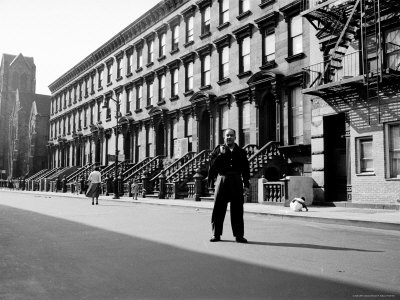
Poet Langston Hughes standing on a street in Harlem

From Nieuw Haarlem to “New” Harlem*

Jonathan Gill. Harlem: The Four Hundred Year History from Dutch Village to Capital of Black America.  New York: Grove/Atlantic, 2011.

Sharifa Rhodes-Pitts.  Harlem is Nowhere: A Journey to the Mecca of Black America.  New York: Little Brown and Company, 2011.

Jeffrey Perry. Hubert Harrison: The Voice of Harlem Radicalism, 1883-1918. New York: Columbia University Press, 2009.

If you want an interesting glimpse of what Harlem is like in 2011, go there on a Sunday morning.  Tour buses pull up to the sidewalk on 125th street and dump out scores of tourists near the Apollo Theater.  Take a walk up Seventh Avenue (now Adam Clayton Powell Jr. Boulevard).  In Harlem’s heyday, this wide boulevard was the preferred destination for Sunday “strollers,” black residents of Harlem who went to church decked out in their best formal attire and showed off on the promenade afterward.  This fashion phenomenon prompted some people to say Seventh Avenue was “like Easter Sunday 52 Sundays out of the year.”  These days Seventh Avenue on Sunday morning is clogged with “strollers” of a different sort: casually dressed tourists – many of them in blue jeans and T-shirts, which, if you know anything about black churches, is way too casual for the regal ritual of a black church Sunday morning anywhere in America.  The tourists come to Harlem and walk up and down the avenue to stop in one of the neighborhood’s churches hoping to hear some of this rousing, foot-stomping black gospel music they’ve heard so much about.  Most mornings it looks like there are more white people going into the churches than black folks. Outside of one the biggest and most popular churches, Abyssinian Baptist Church on 138th Street, the line often extends around the corner for the 11am service.  The ushers regularly have to turn dozens of tourists away.

I’m not being self-righteous when I talk about seeing white tourists in Harlem. You might even say I’m one of the parties to blame.  Since 2008 I have worked as a New York City walking tour guide.  Leading these tours, often with 25 or so people tagging along behind me, there’s no way to be inconspicuous. Heckling is a regular occurrence.  One time a middle aged black woman came up and started talking to my group. She began quizzing me about what I was telling the group.  You can never tell what’s going to happen when people stop by and cut in on a tour, but I’ve been doing this long enough to know that when New Yorkers on the street want to get chatty it is usually best to just let them speak their piece and move on.  Most of the time people turn out to be warm and interesting and informative.  Other times, they might be silly or hostile.  But it’s always interesting, so I just let it ride.  At first this particular woman began frantically pointing out some interesting places, such as a downstairs location that was once a bar where a scene from Superfly was filmed, and a corner where there was once a store owned by Brooklyn Dodgers catcher Roy Campanella.  Then she suddenly flipped on me, “You need to tell them to upgrade your stuff man.  You ain’t even from Harlem!” And then she walked away still muttering “He ain’t even from Harlem” and then kept shouting and pointing at me and my group from across the street.  It was then I noticed the woman wasn’t just being contrary with me, and that maybe she wasn’t all there.  But, crazy or not, she definitely had a point.

No ma’am, I ain’t from Harlem.  I was born and raised in Mississippi.  I’ve been living in New York for nine years.  I’m now a graduate student working on a Ph.D. in English.  The tour company I work for specifically hires graduate students.  Our guides are all serious researchers on New York history, but we may not necessarily be fully authentic native New Yorkers.  I am black, so I knew that I could at least play the black identity card when I started doing tours of Harlem.  I’m a graduate of Morehouse College, a historically black college in Atlanta, GA, the same school where Abyssinian Baptist Church pastor the Rev. Calvin O. Butts, III graduated (along with a number of other notable African-American men).  I have a B.A. in history, focusing on African-American history, and the dissertation I am working on deals with black literature and higher education.  But despite all of this, no, I can’t claim to be from Harlem.

I understand this kind of nativism.  That sense of ownership over place is pervasive throughout New York, but is especially prevalent in Harlem, a neighborhood with a proud history and tradition of black independence.  I don’t even need to repeat all the names of Harlem luminaries and all the important organizations that started there.  However, over the past decade gentrifiers have begun to move in.  125th St. is now filled with snazzy chain stores, (there’s an American Apparel there now for chrissakes, not to mention two Starbucks).  The price of housing has skyrocketed with new glass condos going up on the avenues.  Venerable black owned businesses have closed.  And now legions of curiosity seeking tourists are clogging the sidewalks to listen to people who aren’t even from Harlem talking about the history of the neighborhood.  I can understand why some folks might be a little sour.

But…someone else might say…New York neighborhoods have always evolved.  The Jewish immigrants have all gone from the Lower East Side.   The Italians have all gone from Little Italy.  New York’s ethnic history is one of constant movement and displacement.  This is an argument that our contemporary gentrifiers have noted well and have effectively incorporated into their arsenal.  Nativism just doesn’t work in New York. New York neighborhoods have always been a revolving door if you’re purely talking about racial and ethnic identity.  Adding economics and power to the mix, however, requires looking at things little differently.

These three recent published books all deal with the history of Harlem, this neighborhood that was once known as The Capital of Black America.  Jonathan Gill’s study of Harlem history begins in the early 1600s with the encounters between the Lenape Indians and the first Dutch explorers to set foot on the island.  Within days after the Dutch arrival there were violent clashes between the two groups.  In these first clashes between people who had been inhabiting the island for decades (at least) and these new arrivals from half a world away, Gill sees, “a foretaste of Harlem’s future.”

It is no secret that the clash of cultures has raged on in Harlem, and that tensions remain high there and in other parts of New York City as gentrification shows no sign of stopping.  Sharifa Rhodes-Pitts gives us a more intimate view of Gill’s point about the future.  In Harlem is Nowhere she tells one particularly juicy anecdote about sitting in a Harlem café near two white male yuppies, one a resident, the other a friend who was visiting the neighborhood for the first time.  The visiting friend seemed to be enjoying this trip to this exotic locale and he told the other guy, “This is fabulous…Really, you have to do something to get more people up here!” The quote is purely anecdotal, but anyone who has spent time in contemporary New York has probably overheard some version of this neo-colonial rhetoric tumbling out of the mouth of someone talking about Harlem or Washington Heights or whatever neighborhood in Brooklyn has been declared “rad” and infested by hipsters.  At first there was Nothing…then the hip, wealthy, (mostly) white people showed up….and then there was Something.  But not all of the gentrifiers are white, and that complicates matters a bit.  (At one point in her book Rhodes-Pitts ponders whether she is herself just another gentrifier.)

In his biography of Hubert Harrison, Jeffrey B. Perry explores the complexity of race and class politics in Harlem.   In the book Perry lays down his case that Harrison deserves a bigger place in the pantheon of Harlem’s great intellectual and political leaders.  As Perry describes him, Harrison was  “the most class conscious of the race radicals, and the most race conscious of the class radicals…more race conscious than [A. Philip] Randolph and [Chandler] Owen and more class conscious than [Marcus] Garvey.”  But his biography is much more than just another “Great Man” history.  Perry situates Harrison’s life in the historical and political context around him, and links Harrison’s life to the local, national and global struggle over labor power.  It this kind of understanding of the complex interaction between race and class that is precisely what is necessary to really make sense of Harlem’s past, present and future.

Jonathan Gill’s book Harlem: The Four Hundred Year History from Dutch Village to Capital of Black America is the first comprehensive history of the entire neighborhood of Harlem.  When I was beginning to learn tours, I turned to books such as Gilbert Osofsky’s Harlem the Making of a Ghetto and David Levering Lewis’s When Harlem Was in Vogue to establish a narrative of Harlem’s history from its beginning to the development of Black Harlem.  These and other books gesture toward a history of Harlem before it became black in the early 1900s, but few of them go into extensive detail about that early history. For the most part the non-black history of Harlem was tucked away in ethnic histories of Jewish, German, Irish and Italian immigrants.  For the early history of the island of Manhattan there are books such as the massive Gotham: A History of New York City to 1898 by Edwin Burrows and Mike Wallace.  That book, and others like it, contains some information about the founding of the Dutch village of Nieuw Haarlem in upper Manhattan in the 1650s (named for the city of Haarlem in The Netherlands).  But it appears that Jonathan Gill is the first to have gathered up all of that material, from the pre-history of New York all the way up to the latest information, and synthesized it all into a grand, epic story focused specifically on this distinct New York neighborhood.

Geographically, Harlem starts at the top of Central Park at 110th Street (Hence the title of the film and song Across 110th Street).  It stretches up to 155th Street, the northernmost of the 155 crosstown streets laid out in the original 1811 grid plan of Manhattan.  It stretches across from the Harlem River on the east side, to the Hudson River on the west side.  Within that broad expanse (a four square mile chunk of the thin island of Manhattan) there have been many Harlems over the years.  For New York history buffs Gill’s book is a treasure trove of historical information linking Harlem even more closely to the history and destiny of New York City.  For instance many people have heard of the infamous New York politician William “Boss” Tweed, who grew up on the Lower East Side and became the leader of the powerful political machine Tammany Hall.  The Tweed Courthouse downtown on Chambers St. was used by Tweed to bilk millions of dollars from the city’s coffers, and the building still sits there as one of the nation’s great symbols of political corruption.  However, Tweed’s influence extended uptown as well.  Tammany was involved in the push of speculative building that made Harlem into a residential community in the late 1800s, and they helped to filter some Irish immigrants into the neighborhood.  If you’ve been to Harlem you may have noticed how much wider the boulevards of Seventh and Lenox Avenues are than most streets in the city. From Gill’s book I learned those streets were designed that way as construction projects of the Tweed Ring.  Before he was exposed, Tweed was even planning another city building in Harlem like his downtown courthouse to make some more money disappear. It was the political cartoonist Thomas Nast, whose scandalous drawings eventually helped to publicize Tweed’s corruption.  Nast also lived in Harlem near 125th Street and 5th Avenue.

To illustrate the neighborhood’s history, Gill focuses on several other notable New Yorkers who have called Harlem home.  German Jewish entrepreneur Oscar Hammerstein lived in West Harlem.  His son Oscar Hammerstein II eventually teamed up with Richard Rodgers and Lorenz Hart to change the landscape of American music (drawing inspiration from the jazz music that eventually spilled out of the clubs of black Harlem.) There was also an Italian settlement in East Harlem.  The famous uptown restaurant Rao’s, which is still open on 114th Street, is one of the last vestiges of Italian East Harlem.  In the late 1920’s the Puerto Rican community of East Harlem began to take form, eventually evolving into the vibrant neighborhood affectionately known as El Barrio.  If I have one minor gripe with Gill’s book it is that his treatment of Puerto Rican Harlem gets lost in the shuffle as he moves on to discuss the ascent of black Harlem in the 1920s. The history of black Harlem itself is well-trod territory, but Gill deftly lays it all out here.  He capably sorts out the complex history of real estate in 1904 to 1907 involving Philip Payton the founder of the Afro-American Realty Company.  Payton was the man credited with placing the first black families on the blocks around 134th St. that would become the epicenter of black Harlem.

Harlem is Nowhere: A Journey to the Mecca of Black America grapples with the cultural, literary, and political legacy of this black neighborhood that formed when black families began to fill up the residential buildings that were thrown up in a fierce fit of speculation, a run which bottomed out with a real estate bust in the 1890s. The book is a creative mix of memoir, literary criticism and journalism woven into a first person narrative about a young black American intellectual as she moves to Harlem.  Rhodes-Pitts creatively captures the persistent attraction of Harlem by writing about some of the great characters in Harlem literature – from Helga Crane in Nella Larsen’s 1928 novel Quicksand to the nameless narrator of Ralph Ellison’s Invisible Man.  Rhodes-Pitts took the book title from an Ellison essay.  The concept of “Harlem is Nowhere” might seem a little flippant, but she (and Ellison) intended it to be a provocation.  The phrase does capture a certain essential quality about Harlem – that it has existed as much as a dream as a physical reality.  The dreams of Harlem – this mecca of blackness, this refuge from discrimination and indignity – did not take long to fade after the 1920s had passed and when the harsh realities of impoverished urban life began to set in for these agrarian Southerners who had moved there.  As Langston Hughes famously said, “The ordinary Negroes hadn’t heard of the Negro Renaissance. And if they had, it hadn’t raised their wages any.”

The phantasmic quality of Harlem is surely something to reconsider now that the place has transformed from a shining hope of black self-determination, and then into a drug and crime addled slum in the 1970s, and now into the potential paradise for rich Manhattanites who fall low enough in the ranks of the merely rich that they’ve been priced out of the West Village and Tribeca by the über-rich. Gill’s book ends on a somewhat triumphalist note, lauding the arrival of corporate charter schools and chain stores and Columbia University’s multi-million dollar expansion into West Harlem. However, Sharifa Rhodes- Pitts takes us inside the heated community meetings and listens to the grievances of working class black Harlemites who have organized against the city’s aggressive removal of businesses such as the Mart 125 where vendors operated a market on 125th Street.  People are still trying to fight the good fight, but a sense of resignation and defeat is starting to set in.  The tide has already turned. Rhodes-Pitts mentions seeing a young Harlemite at one rally wearing a T-Shirt that said, “Harlem isn’t for sale because Harlem has already been sold.”

Since the publication of Hubert Harrison: The Voice of Harlem Radicalism, 1883-1918 in the fall of 2009 historian Jeffrey Perry has been working tirelessly to spread the word about the life and work of this grossly undervalued black Caribbean intellectual.  A look at Perry’s website reveals a steady stream of speaking engagements at universities, libraries, community bookstores and labor organizations.  (I saw Perry give a presentation on Harrison here at the CUNY Graduate Center last year.) The book is not just a simple biographical narrative of Hubert Harrison’s life.  Instead, Perry meticulously reconstructs the social and intellectual history surrounding Harrison, and gives a thorough interpretation of Harrison’s political activism and his literary output.  For instance, Perry does not simply write about Harrison’s early life in St. Croix where he was born in 1883.  He also examines the history of the transatlantic slave trade and the impact that the legacy of the slave trade and post-slavery labor structures had on the Caribbean.  Hubert Harrison came to Manhattan in 1900 and settled into the neighborhood known as San Juan Hill in the west 60s, which was then the biggest cluster of black citizens in New York.  When Perry writes about Harrison’s move to New York and Harlem, he puts him in the context of the history of black New Yorkers and the struggle for racial and economic justice in the city.

Harrison was heavily involved in the labor movement, working at various points as a postal worker, then with the Socialist Party USA, and also with the American Federation of Labor. He was also the editor of the Negro World, the newspaper of Marcus Garvey’s Universal Negro Improvement Association (UNIA), and he wrote prodigiously throughout his life.  Harrison was well-known around Harlem as a soapbox orator and an independent lecturer.  He never attended college, but was a fierce autodidact.  Perry describes his voracious reading habits and his diligent commitment to writing and independent education.   In his time Harrison was recognized as a major talent by contemporaries such as A. Philip Randolph who called him “The Father of Harlem Radicalism.”  But for complex reasons – including poverty and politics – he faded from memory.  In particular Perry makes the case that Harrison’s commitment to atheism and freethought put him on the wrong side of the black political structure which has long been rooted in religion, and especially in the protestant Christian black churches. Harrison was a vocal critic of the black churches, which were too often fiefdoms of charismatic individuals.  The emphasis on spiritual escapism pulled people away from the historical materialism that he felt was necessary to understand the position of the black working classes, and the workings of race as mode of social control.

Because of all of this detailed historical analysis, which sometimes strays away from the specific details of Harrison’s life, I have to say the biography is a bit of a dense slog to read through. From hearing Perry’s lectures and from reading other reviews and articles about Harrison, I was familiar enough with the material that I did not get completely lost.  But for a reader who is new to Harrison, perhaps a better place to start would be The Hubert Harrison Reader (Wesleyan, 2001), Perry’s edited anthology of Harrison’s writings.  The introduction to the Reader is a more succinct primer on Harrison’s life, and the essays in the collection provide an opportunity to hear Harrison’s unfiltered voice as a writer.  On its own terms though, the biography is an impressive work of intellectual history that traces the context and circumstances of Harrison’s life, and analyzes the way that his thinking about race and class developed over his lifetime and helped to shape Harlem politics at the dawn of the “Harlem Renaissance.”  And about that so-called “renaissance” Harrison was circumspect.  In an essay on the idea of a “Negro Literary Renaissance” Harrison emphasized that most of the critics who were touting the literary production of 1920s Harlem as a “renaissance” were, in fact, overlooking “the stream of literary and artistic products which had flowed uninterruptedly from Negro writers from 1850 to the present.”  Though he dismissed the talk of renaissance as a white downtown fad, Harrison nevertheless took seriously the actual artistic production of his Harlem contemporaries, and he wrote numerous reviews of poetry, novels and plays.

In one chapter of Harlem is Nowhere, Sharifa Rhodes-Pitts dishes out some tough love to Harlem.  Well, she isn’t doing the dishing herself so much as she delves into the critiques from some black leaders that black Harlemites had not done enough to buy up property in Harlem and secure a black future for the neighborhood.  This is a critique that I also heard from several black leaders at an event in Harlem last year.  In her chapter “Land is the Basis of All Independence” she touches on an important idea when she writes about how some people in Harlem falsely subscribe to the idea that blacks have invested a valuable “sweat equity” into the neighborhood that should give them a right to the space, even if they don’t “own” property on paper.  That may be true, but the fact is the wealthy have the state power and the financial power to impose their will whether it’s on the Brooklyn waterfront in Williamsburg or on Lenox Avenue uptown.  It is hard not to make all of this sound like the usual litany of grievances about institutional racism and the historical legacy of slavery and Jim Crow. But, well, this is about the institutional racism and the historical legacy of slavery and Jim Crow.  Millions of blacks were brought to the Americas to work on plantations, subjected to a dehumanizing segregation under Jim Crow, essentially re-enslaved again in the post-Reconstruction era in exploitative sharecropping arrangements, and then subjected to a litany of injustices throughout the 20th century – from lynching to false imprisonment to red-lining and financial discrimination to the assassinations of black political leaders.  And somehow, in the midst of all that, black folks were somehow supposed to find the time and resources to buy up property and secure the neighborhood from gentrification.

Of course now that there is a black guy with the improbable name of Barack Hussein Obama II in the White House, some people are even less willing to hear such grievances. That’s just the rub:  Token diversity is the biggest weapon that the upper class uses against any accusations of inequality or, god forbid, white supremacy (a concept Hubert Harrison explored thoroughly in his political thought).  What is happening in Harlem now is bigger than that neighborhood, bigger than New York, bigger even than the United States.  The biggest lie of the “free-market” cheerleaders is the idea of a free market itself.  There is no accumulation of private wealth without active and aggressive state intervention to tip the scales in favor of the rich.  One way to do that is by making labor organizing illegal, as is happening in Wisconsin right now. All throughout New York the wealthy overclass is gobbling up space to create their own heavily policed and privatized suburban utopia.  But like the city of Fritz Lang’s classic film Metroplis, somebody has to be down below turning the gears in order to make the city work.  In this case, the people below the city are actually outside of it, pushed out to Queens and Brooklyn, New Jersey and Long Island and coming in to Manhattan to serve at the feet of the rich.  This was a city that once took pride in its viable working class. Now the best people hope for is to be buried with one of the Pharaohs.

I still love this city.  For better or worse I have made it my home for almost a decade and I plan to be here even longer.  The going is rough sometimes.  I am no trust-funder and this is not a great time to be looking for an academic career in the humanities. But I have enjoyed my walks through Harlem, even with the heckling.  Learning about New York history has deepened my appreciation for the city in ways I never imagined when I moved here.  I don’t have any positive notes of hope to say that something good will happen to the disenfranchised people of Harlem before they get completely wiped away in favor of their wealthier counterparts.  But these books make me hopeful that someone else out there might be reading, and dreaming, and scheming, and coming up with some kind of plan to help save our souls, and the soul of this city.

*[This article was first published in the March 2011 issue of the GC Advocate]
Japanese by Spring

I’m going to be presenting at The State of African American and African Diaspora Studies: Methodology, Pedagogy and Research, a conference co-hosted by the Schomburg Center for Research in Black Culture, and the Institute for Research on the African Diaspora in the Americas and the Carribbean (IRADAC) at the CUNY Graduate Center, January 6-8, 2011.  Here’s the full conference schedule.

Here’s the abstract I submitted for my talk:

“Black(ness) No More: Academia and the Culture Wars in Ishmael Reed’s Japanese by Spring.”

Ishmael Reed’s satirical novel Japanese by Spring (1993) is a humorous but sharply critical depiction of political debates in academia that took place in the 1980s and 1990s, commonly known as “the culture wars”.  These debates included conflicts over topics such as affirmative action, black studies, multiculturalism and feminism, all of which are depicted in the novel.  The main character of the novel is a black literature professor, Benjamin “Chappie” Putbutt III, a former Black Panther turned neoconservative, who is striving for tenure at the fictional Jack London College in Oakland, CA in the early 1990s.  This presentation is part of a larger project on academic novels and the politics of the black intellectual. I will consider Japanese by Spring as a novel that is simultaneously situated in the traditions of African-American satire (including writers such as George Schuyler, a literary influence on Reed’s work), as well as a work of “academic fiction,” a genre defined by its fictional depictions of professors and university life.

The particular panel I am on will be held on Saturday, January 8th, 10:15-11:45am, at the CUNY Graduate Center, Room C205.

James Baldwin in Obama’s America

(Originally published in the GC Advocate, October 2010)

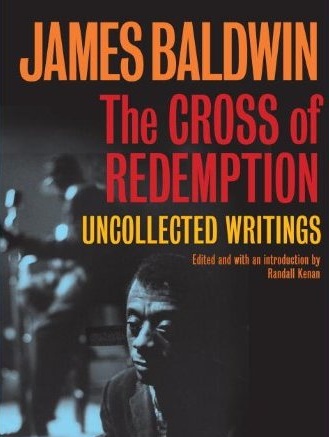
The Cross of Redemption : Uncollected Writings.  Random House, 2010.

Nearly every review I’ve seen of the Cross of Redemption so far has picked up on one particular quote from this new collection of James Baldwin’s writing.   It is the first paragraph of a piece titled “from Nationalism, Colonialism, and the United States: One Minute to Twelve – A Forum,” which is a transcript of a 1961 speech the 36 year old Baldwin gave in New York for the Liberation Committee for Africa:

Bobby Kennedy recently made me the soul-stirring promise that one day – thirty years, if I’m lucky – I can be President too.  It never entered this boy’s mind, I suppose – it has not entered the country’s mind yet – that perhaps I wouldn’t want to be.  And in any case, what really exercises my mind is not this hypothetical day on which some other Negro “first” will become the first Negro President.  What I am really curious about is just what kind of country he’ll be President of.

The quote is shockingly appropriate, not only for his comments about the potential of a black president, but also that it was given at an event on the liberation of Africa.  Barack Obama’s ties to the African continent through his father are now well known. (And will undoubtedly play a significant role again in the 2012 campaign since the “birther” conspiracies still persist.) Early in Obama’s political career, and early in his presidential campaign, he was wise enough to address his connection to Africa head-on.  It bespoke Obama’s intelligent grasp on the history of black political discourse in America. Black artists in the 1960s and 1970s, inspired by the international politics of anti-colonialism in that time, and inspired by the anthropological study of African survivals, began to re-connect with and embrace the continent and its culture.  They turned the “curse” of Ham and African lineage into a positive affirmation of global liberation.  By the next decade the black intelligentsia would be awash in kente clothe, and the term “African-American” would begin to seep into the American lexicon.  That quote also encapsulates Baldwin’s always razor-sharp analysis of race in America.  Baldwin understood that the symbolic progress of a few, especially the prospects of a black man in the White House, could very easily be used to discredit the persisting inequality among the many.

James Arthur Baldwin was born in Harlem in 1924. He was the oldest of nine children, and grew up in poverty.  His father was a strict, religious man (and actually his step-father) who was a minister of a storefront church in Harlem. Baldwin would depict this early life in the church and this troubled relationship with his father in his first novel Go Tell it on the Mountain (1953).   At the age of fifteen Baldwin accepted his own call to preach and did so for three years before leaving the church, and home, and moving downtown to Greenwich Village.  Eventually he made his way to Paris among the American expatriate community there.  He met a friend and lover Lucien Happersberger, a Swiss artist, who invited him to stay in his village in Switzerland where Baldwin completed writing Go Tell it on the Mountain.  Later, at the behest of a Turkish actor friend, he would also spend several years living off and on in Istanbul, Turkey where he completed his bestselling novel Another Country.  Baldwin was involved in the civil rights movement through marching and speaking, but became exhausted by the string of assassinations in the 1960s (“they’re killing my friends” he said in an interview once) and he spent more time in France in the 1970s.  He eventually died of cancer at his home in the South of France on November 30, 1987.

The writings featured in this collection are not entirely new.  Some of these were collected in The Price of the Ticket: Collected Non-Fiction a volume which is now out-of-print. The Cross of Redemption was compiled by Randall Kenan, a fine creative writer in his own right (author of the novel A Visitation of Spirits) and a professor of English at University of North Carolina-Chapel Hill.  It is meant to be a companion piece to the Library of America’s collection of Baldwin’s non-fiction essays by compiling other essays and interviews published in magazines over the years from 1947 to 1987.  The book reviews from the 1940s are especially interesting as they provide a look into Baldwin’s early years as a developing writer.

In his introduction Randall Kenan points out how easy it is to “pigeonhole” Baldwin as a writer who was limited to writing about race and blackness.  These were certainly subjects that Baldwin knew well, but he always wrote about them in the service of much bigger ideals.  As Kenan puts it, “…though it is too broad – if not useless – to say his true topic is humanity, it is useful to see how, no matter his topic, how often his writing finds some ur-morality upon which to rest, how he always sees matters through a lens of decency, how he writes with his heart as well as with his head.”

I would also add that in addition to head and heart, Baldwin knew the importance of the body as the site and source of human liberation.  This is the Baldwin who published Giovanni’s Room in 1954, an explicitly gay novel, now considered a classic, but which at the time was a massive risk, not only because he was a young writer, but also because this was a time when people were literally arrested for being in possession of such “obscene” material.  Baldwin understood that sex and the body were at the core of understanding American racial and political attitudes.  Reading through these essays one is never more than a sentence or paragraph away from the body, whether he is writing about the physical work of labor, the perplexities of love and sexuality, or the reality of death.   In this way Baldwin belongs in conversation with another of New York’s great writers, Walt Whitman.  Like Whitman, Baldwin knew New York City, and the nation it belongs to, backwards and forwards, from top to bottom.  Because of the circumstances of their birth – Baldwin born poor into a storefront church family in Harlem, Whitman born poor into a Long Island family full of alcoholism and disability – both writers learned what it means to be on familiar terms with a human desperation that most Americans spend their whole lives trying not to see.  Baldwin saw it all, the depths poverty in Harlem, the bright lights and glamour of the Broadway stage, the suffocating racial customs of the South, the staggering stupidity of Hollywood.  He also witnessed the perceptions of Americans abroad, in Europe (especially Paris) and in the Muslim world (particularly in Turkey where he lived off and on over a decade).

The essays in The Cross of Redemption are surprisingly fresh.  It is a credit to Baldwin’s genius as a writer that his work remains vibrant and timeless even thought he was writing about political figures and controversies that have since faded into the past.  I’ve been reading Baldwin for years, but I admit I came to this collection with the (arrogant) perception that I would somehow have to update his commentary to write about him.  I had the idea that Baldwin was a writer who, despite his split from the church, remained mired in Christian theology and yoked to a problematic notion of Christian victimhood.  I thought I would have to revise his work to account for all the political changes since his death in 1987.  I also thought I’d need to account for the growth of things like the Internet and new media, and its string of ridiculous spectacles passed off as “news.”

Nope.  Jimmy was way ahead of the game.

For instance, in “Mass Culture and the Creative Artist” Baldwin writes “The people who run mass media and those consume it are really in the same boat.  They must continue to produce things they do not really admire, still less love, in order to continue buying things they do not really want, still less need.  If we were dealing only with fintails, two-tone cars, or programs like Gunsmoke, the situation would not be so grave.  The trouble is the serious things are handled (and received) with the same essential lack of seriousness.”  Take out the references to cars and Gunsmoke, and essentially the commentary applies to today’s ridiculous new media spectacles.  In another example, “An Open Letter to My Sister Angela Y. Davis” and “A Letter to Prisoners,” Baldwin speaks to the conditions of our ever expanding prison industrial complex, as the profits of incarceration continue to be fueled by the bodies of the poor, most of them are young black and Latino males.

There are several pieces in the collection that I could spend this entire review quoting and parsing over.  But the one that stirred me the most was “The Uses of the Blues.”  Here Baldwin weaves together the genius of black music and ties it to the history and politics of the United States.  Certainly when he quotes Bessie Smith “Then it thundered and lightnin’d and the wind began to blow/ There’s thousands of people ain’t got no place to go” Hurricane Katrina comes to mind.  From “Brownie you’re doing a heckuva job” to a spaced out Barbara Bush saying that sleeping on the floor in a gym in Texas was “working out well” for the evacuees since they were dead broke anyway, the disaster impressed on a whole new generation of young people that the American government still possesses a shameful lack of regard for the poor, and in particular, poor people of color. (“George Bush does not care about black people”)  And yet, while Barack Obama certainly rode a wave of indignation about Hurricane Katrina, about Wall Street’s excesses, and about the economic inequalities throughout the nation, and harnessed them into his impressive run to the White House, that indignation and that guarded sense of suspicion the people have for this country still exists in spite of his historic win. Baldwin puts it this way:

“I want to make it clear that when I talk about Negroes…I am not talking about race; I don’t know what race means.  I am talking about a social fact.  When I say “Negro” it is a digression;  it is important to remember that I am not talking about a people, but a person…I’m talking about what happens to you if, having barely escaped suicide, or death, or madness, or yourself, you watch your children growing up and no matter what you do, no matter what you do, you are powerless, you are really powerless, against the force of the world that is out to tell your child that he has no right to be alive.  And no amount of liberal jargon, and no amount of talk about how well and how far we have progressed does anything to soften or to point out any solution to this dilemma.  In every generation, ever since Negroes have been here, every Negro mother and father has had to face that child and try to create in that child some way of surviving this particular world, some way to make the child who will be despised not despise himself.”

The danger in the Age of Obama is to think that November 4, 2008 somehow marked the end of the dilemma that Baldwin describes here.  The danger is in thinking that because the President shares the same skin color and texture of hair as your child that your child will now automatically get a fair shake in education, employment or the criminal justice system.  James Baldwin, tapping into that prophetic tradition, and seeing what had happened over the course of his own life, knew that a little progress can be a dangerous thing.  Having a black president in office didn’t help the 14 year old boy I saw in Brooklyn on Fulton and Tompkins the other day, surrounded by three NYPD officers, looking disgusted and helpless while sitting on his bike getting written up for the grave offense of riding his bike on the sidewalk.  People in the ‘hood see this, and know that they are caught in the quota game, and sooner or later, this kid gets cycled through the criminal justice system, and sooner or later the optimism of 2008 will fade if there is no substance behind it when it comes to the day to day conditions for the working poor.

As Baldwin continues in the same essay, “it is not a question of accusing the White American of crimes against the Negro…What I’m much more concerned about is what White Americans have done to themselves.”  Those white Americans, particularly the ones clinging to the Republican Party, may not feel the police breathing down their neck daily like the young man on Fulton, but economically they are not faring much better.  It is their faithful allegiance to corporate power that will eventually choke the life out of them.  These same corporations, Wal-Mart the most iconic among them, shamelessly tout patriotism while exporting jobs overseas, busting unions at home, and profiting from the influx of illegal immigrant labor domestically. The middle class, (black, white and otherwise) is decimated.  But we still clamor for that good life, and are now getting enslaved to consumer debt and homes we can’t afford, because buying and owning stuff is conflated with patriotic duty.  Yet, even amidst the financial crisis there is a very real prosperity that America has experienced over the years and can’t be easily dismissed.  Immigrants still risk life and limb for the possibilities of living here.  The dream still shines. As Baldwin says, “We really did conquer a continent; we have made a lot of money; we’re better off materially than anybody else in the world.” But, he cautions, “How easy it is as person or as a nation to suppose that one’s well-being is proof of one’s virtue.”

It is precisely this conflation of wealth and righteousness which has always been at the root of American capitalism and has grown even more intense since 1989 and “the end of communism,” just two years after Baldwin died.   And that brings us to “The Tea Party” a revival movement rooted as much in commerce as it is in spirituality or theology.  Defenders of the movement claim it is really about economic policy and not about race, and I don’t think we should be quick to dismiss that claim outright. Again from “Uses of the Blues,” Baldwin writes.  “To talk about these things in this country today is extremely difficult.  Even the words mean nothing anymore. I think, for example, what we call ‘the religious revival’ in America means that more and more people periodically get more and more frightened and go to church in order to make sure they don’t lose their investments.” Yes, the sacred economy has fallen, and in order to set it right a blood sacrifice must be made to the gods in order to restore order.  That’s what they really mean by “watering the tree of liberty with the blood of tyrants.”  Whiteness, capitalism and faith are all intertwined in this right-wing worldview.  In another essay “We Can Change the Country,” Baldwin writes. “One must face the fact that this Christian nation may never have read any of the Gospels, but they do understand money.” And that’s an apt description of this movement, equal parts anti-intellectualism, “free-market” ideology, and apocalyptic Christianity

There is much more here in The Cross of Redemption than I cover in these few paragraphs.  I think it is true that Baldwin did get “bitter” later in his career, as people claimed, and rightfully so.  Again, the assassinations wore him down.  Nixon and Vietnam wore him down.  And his artistic success allowed him the opportunity to get some reprieve by spending time in other parts of the world where he did not have to confront this trouble on a daily basis.   Though he felt some despair, he did not lose all hope.  In the documentary James Baldwin: Price of the Ticket (California Newsreel, 1990), Baldwin spoke in a clip about his guarded optimism for the future:  “I really do believe in the New Jerusalem.  I really do believe that we can all become better than we are.  I know we can.  But the price is enormous and people are not yet willing to pay it.”

Stoner by John Williams

“The icon­o­clasm need not be loud and messy.”

Accord­ing to Michelle Lati­o­lais, a for­mer stu­dent of John Williams at the Uni­ver­sity of Den­ver where he taught for many years, this was a recur­ring bit of advice that Williams gave to his cre­ative writ­ing stu­dents. Lati­o­lais wrote about this in her intro­duc­tion to another of Williams’s fine nov­els, Butcher’s Cross­ing. Both Butcher’s Cross­ing and Stoner were recently pub­lished through the New York Review of Books Clas­sics series which has brought back into cir­cu­la­tion sev­eral titles that deserve to be revis­ited. The cover designs in this series are all beau­ti­fully done as well, and the hand­some cover of Stoner fea­tures a Thomas Eakins paint­ing that per­fectly fits the somber, con­tem­pla­tive mood of the novel.

(For the record, this John Williams is not to be con­fused with “John A. Williams” the African-American nov­el­ist and author of The Man Who Cried I Am.)

Stoner is among the most beau­ti­fully writ­ten of all the aca­d­e­mic nov­els I’ve read. In Stoner John Williams cer­tainly ful­filled the prin­ci­ples that he taught to his own stu­dents. The novel was first pub­lished in 1965, and I have come to think of it as a novel of “The 1960s”, but one that took a dif­fer­ent angle on the social upheaval of that time. While you can turn to Gins­burg or Bur­roughs for the noise and messi­ness, Williams pro­vides a nuanced look at some of the social back­ground that pro­duced this rebel­lion: the con­for­mity of middle-class respectabil­ity, the sti­fling norms of gen­der and sex­u­al­ity, the wor­ship of wealth and finance, the vio­lence and death of per­pet­ual wars. It isn’t a book that aims to be loudly polit­i­cal. While all those themes are present in Stoner in var­i­ous forms, they are all tucked away into a sim­ple, pow­er­ful, and res­o­nant tale about the life and career of a sim­ple Mis­souri farm boy who becomes an Eng­lish professor.

On the first page of the novel John Williams gives us a bio­graph­i­cal blurb on Stoner that is as good a sum­mary of the novel as any reviewer could write:

“William Stoner entered the Uni­ver­sity of Mis­souri as a fresh­man in the year 1910, at the age of nine­teen. Eight years later, dur­ing the height of World War I, he received his Doc­tor of Phi­los­o­phy degree and accepted an instruc­tor­ship at the same Uni­ver­sity, where he taught until his death in 1956. He did not rise above the rank of assis­tant pro­fes­sor, and few stu­dents remem­bered him with any sharp­ness after they had taken his courses. When he died his col­leagues made a memo­r­ial con­tri­bu­tion of a medieval man­u­script to the Uni­ver­sity library. This man­u­script may still be found in the Rare Books Col­lec­tion, bear­ing the inscrip­tion: ‘Pre­sented to the Library of the Uni­ver­sity of Mis­souri, in mem­ory of William Stoner, Depart­ment of Eng­lish. By his colleagues.’”

That is his core story, but there’s so much more. Stoner is born into a poor farm­ing fam­ily in Booneville, Mis­souri. He goes off to col­lege with the idea that he will study agri­cul­ture and bring that knowl­edge back to the fam­ily farm. Instead he dis­cov­ers a pas­sion for medieval Eng­lish lit­er­a­ture, and when his advi­sor presents him with an oppor­tu­nity to teach some courses and pur­sue his Ph.D., Stoner finds him­self on his way to career in academia.

In his per­sonal life, Stoner ends up mar­ried to Edith, a socially awk­ward young soci­ety girl born into a fam­ily of “means” in St. Louis, Mis­souri. Her father is a pompous man of the finan­cial indus­try, and let’s just say 1929 was not kind to him and his fam­ily. Edith has been cul­ti­vated by her par­ents to be lit­tle more than orna­men­ta­tion for some wealthy hus­band who will give her the com­fort­ably dull life that she is accus­tomed to. Despite the fact that he is not well off, Edith senses some kind of free­dom in mar­ry­ing Stoner (though she is unable to artic­u­late it) and decides to accept his pro­posal. The social and sex­ual awk­ward­ness between them is appar­ent through­out their entire mar­riage, from their very first days together on through the later years as they grow into lit­tle more than emo­tion­ally dis­tant room­mates rais­ing a young daugh­ter together.

The most pow­er­ful sec­tion in the novel comes when Stoner falls into an affair with Kather­ine Driscoll, a grad­u­ate stu­dent who takes one of his sem­i­nars. Driscoll is younger than Stoner, but is a world wise and expe­ri­enced woman in her own right. This could eas­ily be dis­missed as just another in the long line of sor­did affairs por­trayed in aca­d­e­mic fic­tions (and nearly any fic­tional work involv­ing het­ero­sex­ual mid­dle aged men.) At one point Stoner acknowl­edges that his own sit­u­a­tion has devolved into just such a cliché and in a moment of despair he sees him­self as, “a pitiable fel­low going into his mid­dle age, mis­un­der­stood by his wife, seek­ing to renew his youth, tak­ing up with a girl years younger than him­self, awk­wardly and apishly reach­ing for the youth he could not have, a fatu­ous, gar­ishly got-up clown at whom the world laughed out of dis­com­fort, pity and contempt.”

Though Stoner and Driscoll’s rela­tion­ship is as inno­cent and sin­cere as extra-marital rela­tions come, they run aground of the moral­ity of the col­lege com­mu­nity. When a rival pro­fes­sor catches wind of their rela­tion­ship he uses it as ammu­ni­tion against Stoner. Even­tu­ally his med­dling forces Stoner and Driscoll to make a dif­fi­cult deci­sion about their relationship.

The lan­guage of the novel is quite beau­ti­ful and I could sin­gle out any num­ber of pas­sages that seem so pre­cise and res­o­nant in describ­ing phys­i­cal or emo­tional details in the story. I’ve seen more than one review com­pare it to Willa Cather’s The Professor’s House, another grace­fully writ­ten aca­d­e­mic novel full of long­ing and desire. One of the pas­sages that stands out is when Stoner has just buried his par­ents and pon­ders the fleet­ing insignif­i­cance of the mea­ger agrar­ian lives that they led:

“He thought of the cost exacted, year after year, by the soil; and it remained as it had been – a lit­tle more bar­ren, per­haps, a lit­tle more fru­gal of increase. Noth­ing had changed. Their lives had been expended in cheer­less labor, their wills bro­ken, their intel­li­gences numbed. Now they were in the earth to which they had given their lives; and slowly, year by year, the earth would take them. Slowly the damp and rot would infest the pine boxes which held their bod­ies, and slowly it would touch their flesh, and finally it would con­sume the last ves­tiges of their sub­stances. And they would become a mean­ing­less part of that stub­born earth to which they had long ago given themselves.”

As far as the aca­d­e­mic world goes, Stoner sub­tly por­trays some of the mun­dane activ­i­ties of the aca­d­e­mic life in a way few other nov­els accom­plish, and it does so in an engag­ing style that doesn’t alien­ate the non-academic reader. That said, one char­ac­ter who aca­d­e­mics will cer­tainly rec­og­nize is Charles Walker a grad­u­ate stu­dent in one of Stoner’s sem­i­nars. Walker is one of those stu­dents who never lets the fact that he is unpre­pared for class keep him from par­tic­i­pat­ing in the dis­cus­sions any­way. In one par­tic­u­larly scan­dalous scene Walker is sup­posed to be pre­sent­ing a paper of his own, but instead he impro­vises his pre­sen­ta­tion by bash­ing another student’s paper. Now much ink has been spilled over the way that some the­ory junkies in lit­er­ary stud­ies rely on their pre-fabricated psy­cho­analy­sis or post-structural jar­gon and apply the same dull terms to what­ever lit­er­ary work they hap­pen to be talk­ing about. Though “the­ory” came later, Williams shows us that the aca­d­e­mic bull­shit­ter was not invented in the 1980s and 1990s. When Stoner is drafted to sit in on Walker’s orals com­mit­tee he not only takes the shoddy stu­dent down a peg, he also pro­vides a rather use­ful sum­mary of the basic things that one should know as a scholar of early Eng­lish lit­er­a­ture. I think the best aca­d­e­mic nov­els man­age to be ped­a­gog­i­cal in this way, by not only dra­ma­tiz­ing the aca­d­e­mic life, but also teach­ing some­thing about the dis­ci­plines depicted in the work.

It’s no secret we are in a period of uncer­tainty about the future of the novel (or any other long forms of writ­ing for that mat­ter). I think of nov­els like Stoner when­ever I hear some­one crow­ing about how many hun­dreds of books they just down­loaded on their snazzy new Kin­dle. (I’m post­ing this on a blog, so obvi­ously I’m no Lud­dite.) For me, the worst part of these tech­no­log­i­cal changes is the brazenly arro­gant atti­tude some peo­ple seem to take toward the amount of toil, effort and care that goes into pro­duc­ing just one of the novel titles that these tech­nocrats so cal­lously flip through in their fancy gad­gets. It seems that the own­ers of e-readers always seem to brag about how many books they have accu­mu­lated on the device before they talk in detail about any par­tic­u­lar one that they have read. Stoner strikes me as the kind of finely tuned, ele­gant writ­ing that we will never see again in this fast, cheap and out-of-control media envi­ron­ment. Who has the patience to write such nov­els? Who has the patience to read them? Or even read about them? I love nov­els like Stoner because they remind me of the value of the novel, the plea­sures of read­ing the great ones over and over, and the abil­ity of the novel to cap­ture unique aspects of human­ity that can only be artic­u­lated by the hand of a dili­gent, care­ful observer of the human con­di­tion. A nar­ra­tive artist like Williams can give shape and form to that con­fus­ing jum­ble of accu­mu­lated con­se­quences and deci­sions that we call life. I just hope that we can find strate­gies to pre­serve and cul­ti­vate this type of art, and this type of con­tem­pla­tion, some­where inside or out­side of this dig­i­tal hive.