
“Percival Everett by Percival Everett”, my second essay for The New Inquiry, has just been posted. Click over there and check it out.
“Percival Everett by Percival Everett”, my second essay for The New Inquiry, has just been posted. Click over there and check it out.

Be on the lookout for “Percival Everett by Percival Everett,” my latest essay forthcoming in The New Inquiry.
Reading through Conversations with Percival Everett in the process of writing that piece. I discovered this outstanding primary and secondary online bibliography on Percival Everett compiled by Joe Weixlmann and hosted by African-American Review, LINK. (And, I was pleasantly surprised to find that the secondary bibliography lists my dissertation chapter on Erasure.)
Below is an abstract for my upcoming talk at the NeMLA conference in Toronto on the panel “College in Crisis: Higher Education in Literature and Popular Culture.” I’m particularly excited about this panel because it’s a rare opportunity for some face-to-face dialogue with other scholars of academic fiction.
“Academia and the Riddle of Race in Percival Everett’s Academic Fiction”
Though his work is often filed under the genre of “literary fiction” Percival Everett’s writing has bounded across an array of literary genres and themes. His first novel, Suder (1983) is the story of a black professional baseball player who is experiencing a batting slump and becomes obsessed with the music of jazz saxophonist Charlie Parker. Among his other novels are Frenzy (1997) a retelling of the Dionysus myth set in ancient Greece, and God’s Country (1994) an American Western set in the 1870s. In this presentation I will examine Percival Everett’s work in academic fiction, a genre defined by its fictional depictions of universities, students and professors. In his 2001 satirical novel Erasure Percival Everett examines the significance of racial authenticity in black literary and cultural production, and explores broader questions about authenticity, art and cultural politics, while delivering a scathing satire of literary academia’s pretentious excesses. Everett’s novel Glyph, published in 1999 (and recently reissued by Graywolf Press in 2014) features a silent, highly intelligent baby named Ralph who is conversant in literary theory and carries on an interior monologue of insults directed at his parents. Everett’s 2009 novel I Am Not Sidney Poitier includes scenes set at the historically black Morehouse College, featuring a professor named “Percival Everett” who teaches a class on “Nonsense,” and is critical of the college’s respectability politics. In all of these novels Everett engages, undercuts, ridicules and critiques academic discourses and racial logics. This presentation is part of a book project on academic novels and the politics of the black intellectual, and in this paper I will examine the ways in which Everett’s academic fictions generate provocative conversations about the role of black intellectuals in higher education, and the vexing history of race in American culture and literature.

In the grand tradition of #OccupyGaddis (on William Gaddis’s J R) and #AutumnalCity (on Samuel R. Delany’s Dhalgren), Lee Konstantinou has organized a “social reading” of another Big Novel: I Hotel by Karen Tei Yamashita. On Twitter there’s a running conversation about the book under the hashtag #WeHotel.
The reading started February 1st and today marks the end of the month. The goal is 10 pages of reading per day which means they’re up to about page 280.
After blitzing through the novel this morning I’m up to 236. (It was a very cursory reading)
Between teaching, writing, and job-searching I haven’t had much time to double-dutch my way in to this thing until this weekend. But I wanted to do it, and I think it’s worth making time for.
Initially, the description of the novel caught my attention:
“Dazzling and ambitious, this hip, multivoiced fusion of prose, playwriting, graphic art, and philosophy spins an epic tale of America’s struggle for civil rights as it played out in San Francisco’s Chinatown from 1968-1977. As Yamashita’s motley cast of students, laborers, artists, revolutionaries, and provocateurs make their way through the history of the day, their stories come to define the very heart of the American experience.”
Reading through the first sections of the novel, I slowly began to realize…HOLY CRAP this is an academic novel! And not only that, it’s very close in spirit to Ishmael Reed’s academic novel Japanese by Spring. Browsing through reviews I knew there would be some academic content, but now I’m thinking it really belongs in the book that I’m working on about academic novels and African-American literature. At the very least I’ll work it into the chapter on Japanese by Spring.
(By the way, Susan Choi’s The Foreign Student may be the only other academic novel that I know of with Asian-American characters. If anyone knows of others, please share. At some point I’ll have to go back and do a search through my bibliographies)
Writing about Japanese by Spring also prompted me to revisit theories of Afro-Orientalism, which I first learned about through Bill V. Mullen’s Afro-Orientalism. While reading through I Hotel I retrieved a library copy of the collection Afro Asia edited by Mullen and the late jazz musician and activist Fred Ho (R.I.P.)
I Hotel is hard to describe, and I’ll have to do some re-reading before I write anything coherent about it.
I’m still not at ease with this whole social reading practice of writing about a book before I’ve finished it completely. But maybe this experimental form of criticism is appropriate for an experimental novel like I Hotel.
The book is organized by years from 1968 to 1977.
Early in the novel I was taken with Professor Chen Wen-guang who teaches at San Francisco State in 1968. (The first Black Studies department was founded at SFSU.) Professor Chen is a mentor to the young poet Paul Lin, who in the beginning I expected would be the protagonist of the novel, but seems to have dropped out of the story (again, this is an incomplete reading here).
I also liked the section “Language and Reaction” where UC-Berkeley and San Francisco State are compared. There’s a reference to Clark Kerr’s commentary about the 21st century university as a “knowledge factory.” There’s Free Speech Movement leader Mario Savio’s famous address directed at Kerr and the administration. There’s the Black Power movement going on. There’s talk about Japanese, Chinese and Filipino immigration, Communism, Asian-American assimiliation, identity, and gender. And then there was this on pg. 20 in that section:
“One day a black instructor at Institution B, who was also a leader of a black organization, gave a speech that Institution B was a nigger-producing factory and called upon students to Pick Up the Gun! to defend themselves against a cracker administration.”
The line reminded me of Gil Scott-Heron’s novel The Nigger Factory, published in 1972, based on his experiences as a student at Lincoln University, and a scathing critique of the historically black college as an assimilationist institution. There are definite points of contact between MJUMBE, the black student organization in The Nigger Factory, and the black revolutionaries depicted in I Hotel.
I’ve really just started this thing and I need to do some re-reading and much more thinking about the structure and content of the novel before I say more.
At 10 pages a day it should take 61 days in all to finish, which means the reading should go on through April 3.
In the meantime, here are some links to a few things that I thought about from the first part:
-This is a very rough draft of a talk I gave on Japanese by Spring at a conference on Afro-Asian studies at UPenn in 2011, and in it there’s a little background on the culture wars, multiculturalism and multilingualism. I’ve finished a much longer and more detailed version of this which is under review at an academic journal right now. (Lord knows when I’ll hear about that.)
-My “Storifying the Academy” post gives some background on the form of the academic novel. Again, as I read through I Hotel I’ll have to think about how this book works within the genre.
-It just so happens that the African American Intellectual History Society blog is in the middle of a series on Afro-Asian politics. I think these two articles by Keisha N. Blaine provide some relevant historical context to the politics in I Hotel.
“The Deep Roots of Afro-Asia.”
“On ‘Transpacific Antiracism’: An Interview with Yuichiro Onishi.”
-And I’ll have to work hard not to slip up and call the book “We Hotel.”
Last semester’s course on Contemporary American Fiction turned out to be a success, with good effort and engagement from the students and interesting conversations each week. It was a “hybrid” course, my first time teaching in such a format. The course met in person Mondays, and online on Wednesdays. I was skeptical, but the format actually turned out to be fruitful and relevant to the subject matter of the course, which I gave the subtitle “Obsolete?: The University and the Novel in the Digital Age.” The course itself turned into a mixture of short-form digital writing (with discussion board conversations each week), long-form reading (five novels altogether) and more polished, formal writing (with short review essays due every two weeks).
With the online discussions on Wednesday it was obvious some students were just phoning it in with perfunctory responses to the first comments they came across. But I let that slide. Just putting some words together each week was good practice in developing a discipline of reading and writing. Serious writers learn to write consistently whether they “feel like it” or not, and I think that’s what they were learning to do with the weekly assignments.
So I wanted to record a few thoughts about the books we covered:

The Anxiety of Obsolescence – I assigned this book to add some more theoretically dense critical writing than the students might be used to. Fitzpatrick’s book was one of the main texts I had in mind for this course when I designed it. The very form of the text that we used, Fitzpatrick’s own online version of the book, is a clever experiment in merging theory and practice. Much has changed since 2006 when it was published. The collapse of bookstores, even the corporate chains, and budget cuts to libraries shows that fears of obsolescence are not entirely unfounded. But I liked the way that Fitzpatrick unpacks some of the cultural meaning behind declarations of obsolescence; mainly that they often come from gatekeepers (yes, often straight white men) who find their power and influence being challenged by the hordes of commoners. Again, the Ferguson protests are another instructive moment. Others have already written about the way that women, and women of color specifically, have wielded social media and used it in interesting ways politically and intellectually, and how they have often encountered vicious responses in these digital spaces. There’s so much hostility directed at women who have followings, so much resentment that certain women are being listened to and read, and so much of that male anger is driven by the assumption that these women do not deserve such platforms, and that merely reading and listening to them is somehow culturally and politically dangerous, and that therefore these women must be put back in their places and silenced. Fitzpatrick’s book is a welcome corrective to the reactionaries who warn us that new digital forms are destroying literature, journalism, or intellectual discourse, and she provides a convincing analysis of the sinister cultural politics lurking in those critiques.
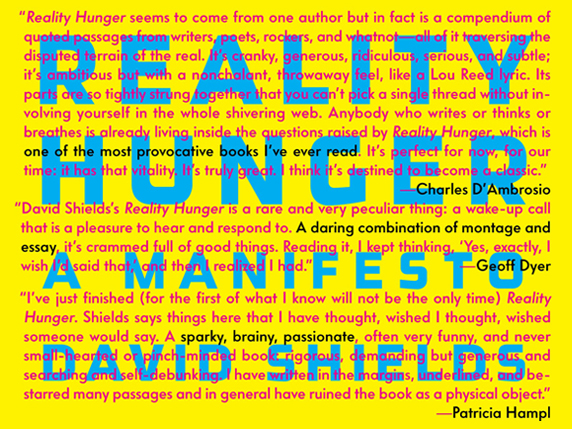
Reality Hunger – I know Shields’s book is a gimmick, and there might be other theorists who I could have assigned to get the same critiques into the conversation, but mostly the book was an effective and engaging introduction to some basic ideas about copyright, intellectual property, digital reproduction and writing. The students mostly resisted his skepticism about the form of the novel. As wired as they are, they are also not averse to all long form reading. After all, this is the generation raised on Harry Potter, and raised on the revived interest in say, Lord of the Rings or Chronicles of Narnia. Those examples of fantasy writing speak to Shields’s biggest blind spots. Yes, reality-TV and mockumentary and memoir are prevalent forms, and he gives some sound arguments (by cobbling together the words of others) about why these forms dominate in a digital culture. But the continued popularity of science fiction, fantasy, vampire, romance and supernatural novels (among other “genre” writing) seems to suggest that there’s still a thirst for fantastic fiction in literary form, and that the generation of social media seems to be interested in more than thinly veiled autobiographical forms of their own lives.
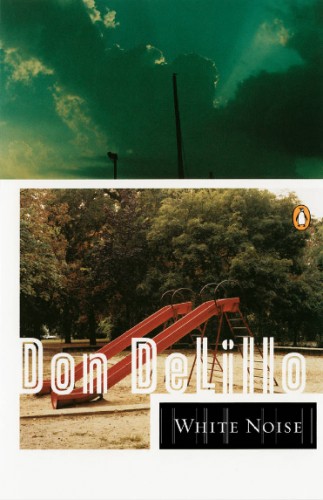
White Noise – I have written about this novel before (“Reading DeLillo’s White Noise in the Summer of Ferguson”) and I thought what I put down about was pretty darned perceptive especially in light of the Black Friday protests that came about later. (Though I didn’t take the argument far enough.) Many people have complained about the venal consumerism of Black Friday, the sacrilegious corporatization of a sacred Christian holiday, and the awful spectacle of people being trampled to death for cheap electronics. Despite all of this, it was last year in 2014 that we really saw the first substantial pushback against the gluttonous consumption of the Christmas shopping season. Black activism did that. And the Ferguson movement brought into stark relief the ways that American consumerism can (and will) be weaponized against movements for justice.
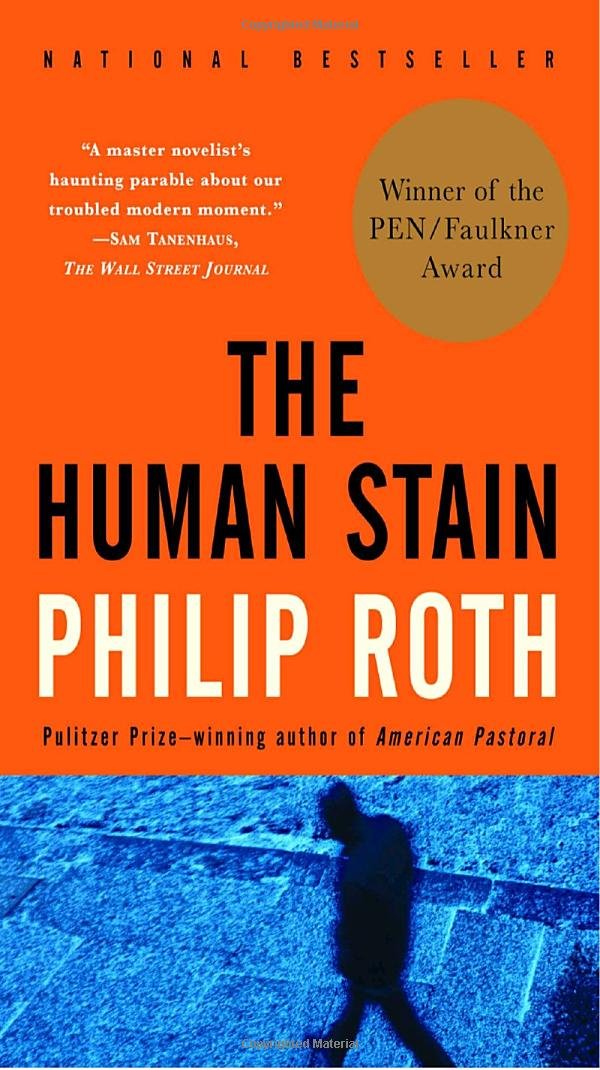
The Human Stain – Reading this book again deepened my appreciation for Philip Roth’s writing. Yeah, yeah, I know he’s a misogynist prick and I’m not supposed to like him. Yeah, I watched the PBS documentary Philip Roth Unmasked a couple of years ago when it came out and it occurred to me how many male novelists he cited as exemplars of the form. But he is undoubtedly important, and much of his writing is genuinely insightful. Even from a feminist perspective, a novel like The Dying Animal captures so well the changes that the movement brought to the culture of college campuses. Clearly Roth did his homework about the African-American experience in The Human Stain, capturing the drama of a black family living on the edge of the color line. The book also articulated so well that hysteria of the Clinton-Lewinsky moment, a moment, which by the way, fell into the realm of “history” for my students. (Most of them were too young to remember when that was all going down.) The discussion board conversation about The Human Stain was one of the best, as we talked about the concept of “passing” and racial identification. My perception of their comments is that they were indicative of a generation raised on consumerism, and trained in the language of choice. Their consensus about Coleman Silk’s decision to pass for white was that people should be able to choose to identify however they want. Nevertheless, I also pushed them to consider the ways in which race is embedded in particular histories of white supremacy and anti-blackness, a history which complicates the seemingly benign concept of “choice.” The idea that there are things we cannot choose seems to offend the sensibilities of the young, but understanding the difference between those identities you can and cannot choose is the beginning of empowerment and understanding.
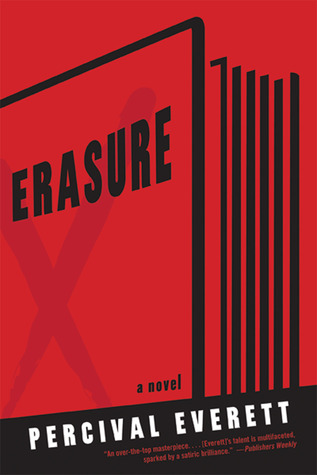
Erasure – I wasn’t sure how this novel would go over, but it turned out to be one of their favorite books. Their reactions to it were interesting. The centerpiece of the novel is My Pafology (later retitled Fuck) a satirical novel based on the plot from Richard Wright’s Native Son, and a parody rife with exaggerated caricatures of the black underclass. I was surprised that some of them found the backstory about literary fiction writer Theolonious Ellison less interesting and less funny than My Pafology/Fuck, but I suppose that is precisely the irony that Everett was going for, and maybe that reaction only serves to reaffirm what Everett was writing about in the first place, and shows how brilliant this novel really is. I shared with them some of my own writing on the book, and I think we had a good conversation about minstrelsy and the fraught history of black cultural performance in a white supremacist culture industry. Last year another of Percival Everett’s academic novels, Glyph was republished by Graywolf Press. I will be discussing both of these novels at the upcoming NeMLA meeting in Toronto in early May.

On Beauty – This is a novel that really deserved more than two weeks of discussion. The students struggled to get through it and I’m sure some of them cursed me for assigning it since it was so long, but mostly they seemed to enjoy it. I admit I was skeptical about this novel after my first reading a few years ago. Reading it again, however, I saw the beauty and power in Zadie Smith’s writing, and there were so many great passages I wanted to linger over but couldn’t do so in my push to get through. (Full disclosure: I’m working on a longer piece about it, so I will have several chances to re-read it again.) The book really does dig into and occupy the academic novel genre. I would not be at all surprised if it turns out Smith read several of them before composing this one. On Beauty hits all the conventions of the genre, but delivers them in a fresh and even subversive way. I loved Smith’s beautiful descriptions of the physical geography of academic spaces, and she nails the absurd pettiness of academic politics. While reading this novel I also read Smith’s compelling new short story published last year “Miss Adele Admist the Corsets” an inventive take on gentrification-era New York told through the story of an aging drag queen. (The full story was temporarily available on the The Telegraph.)
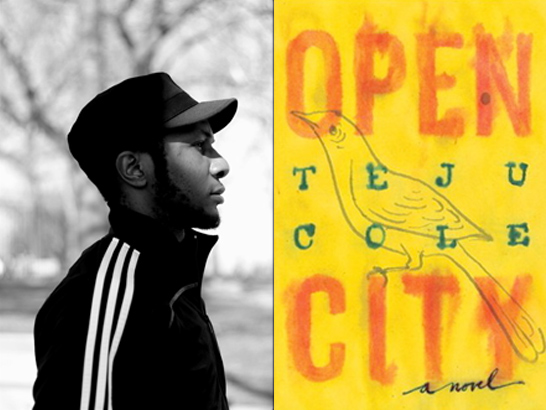
Open City – Well, this was a colossal flop. They HATED this book. I have to admit; I miscalculated. Mainly, I think I let my inner New York historian take over and distort my vision of the novel. One of the things that Cole has been so highly praised for with Open City is the novel’s rich, perceptive take on the geography and history of NYC. Without that context, yes, a reader might see it as just some book about a dude wandering around, seeing random shit and thinking deep thoughts about it. I did mention that this was in the tradition of the flâneur, and one student happened to be reading Baudelaire in another class. Despite the negative reactions to it I’m still glad we read it because Cole provided us with a different approach to the novel. We listened to this interview with Cole where he described Open City as an “idea-driven” rather than “plot-driven” novel, and that seemed to help clarify things a bit. They still didn’t like it, but I felt like we got an interesting conversation out of it, and selfishly, I was glad to re-encounter what I still think is a luminous and important piece of 21st century writing. And pedagogically, I felt it became a useful exercise in how to write intelligently, thoughtfully and fairly about a work one doesn’t like.
Along the way we talked about the politics of higher education, and some conventions of the academic novel, and we read Jeffrey Williams’s article “Teach the University.” I think we fulfilled that concept of teaching the university in this class, by addressing some of the pertinent issues in higher education in our readings of these novels.
No, I don’t have any grand pronouncements about obsolescence to conclude with, but whatever the outcome, the future of the novel and the university is in the hands of the next generation, and I am not without hope.

My review of the academic film Dear White People has just been posted in The New Inquiry. You should click over there and check it out: “The Souls of Ivy Folk”
 THE BLACKADEMIC LIFE: THE BLOG